
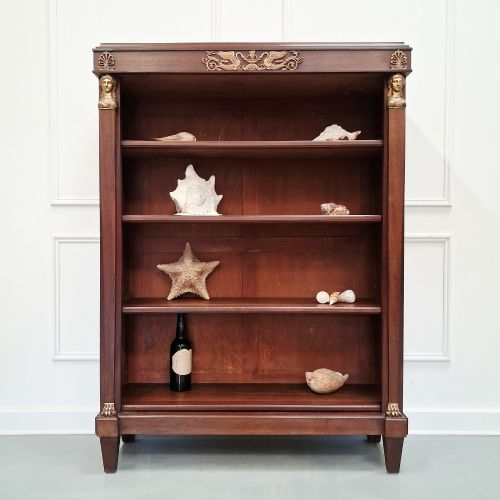
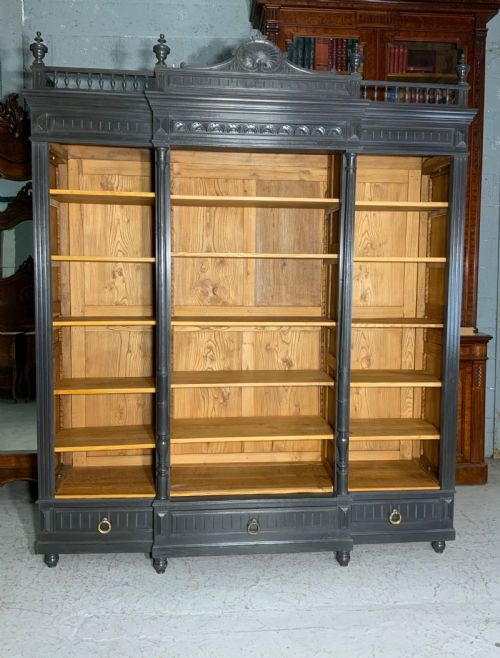
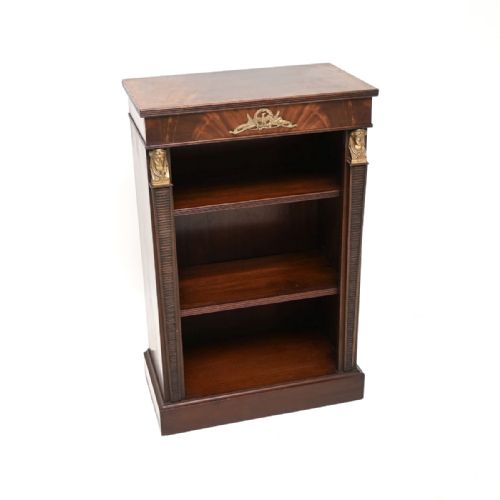
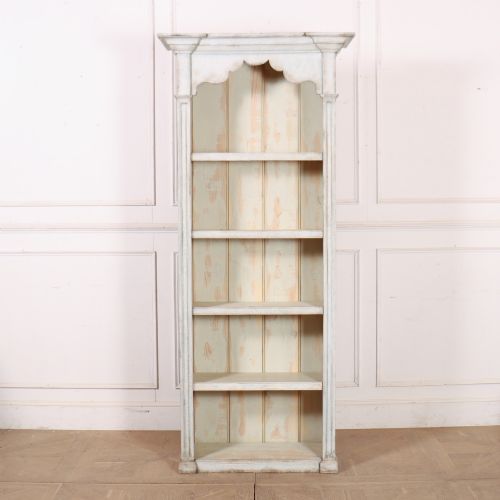
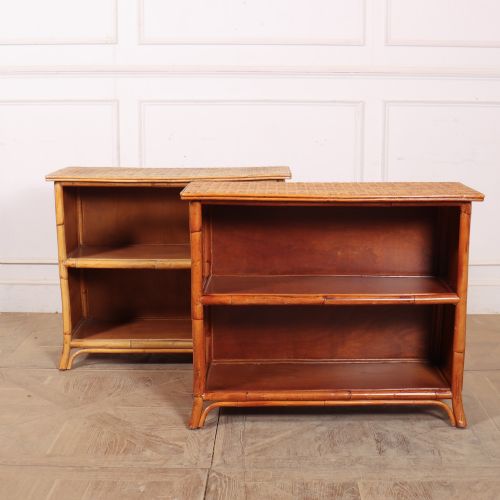
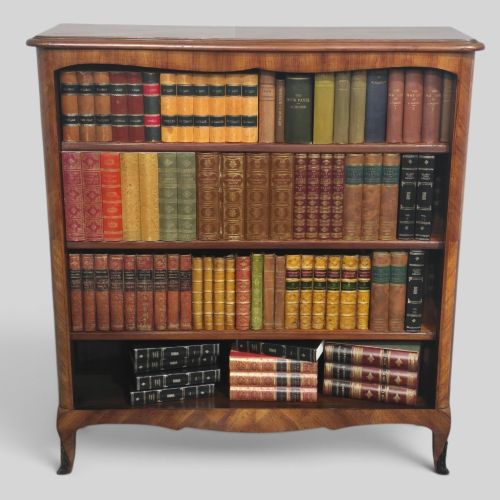
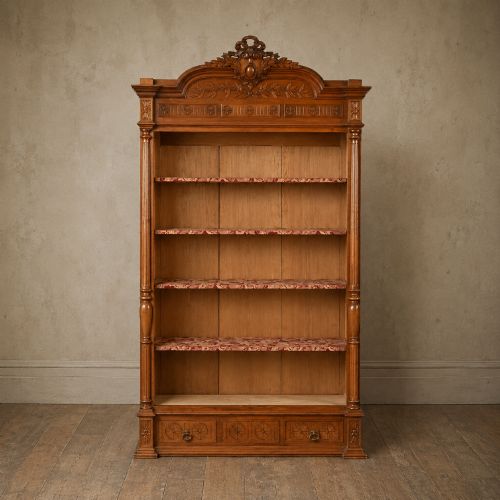
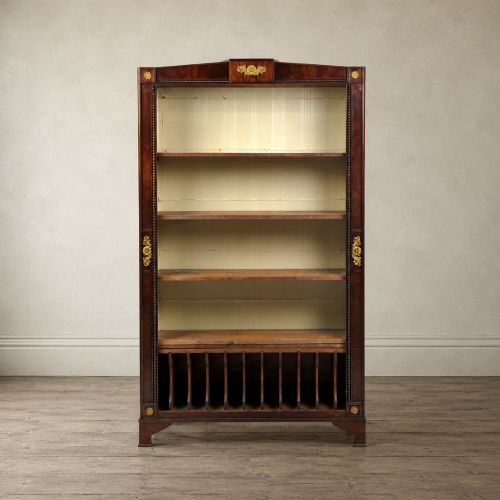


Antique French Bookshelf
These antique french bookshelf pieces bring warmth and architectural character to a room while keeping a collection of volumes orderly.
Antique French Bookshelf
An antique french bookshelf provides open storage for books and display items, taking the form of library bookcases, wall shelves, and corner cabinets. The selection on this page leans heavily toward nineteenth-century continental pieces.
Makers and designers drew upon French Empire, Napoleon III, and Rococo Revival styles to shape these items. Buyers encounter open library bookcases alongside diminutive dwarf bookcases and wall-hanging shelves.
The woods utilised include mahogany, walnut, rosewood, kingwood, and satinwood, often complemented by painted finishes. Dimensions range from very tall plum pudding mahogany editions down to compact corner cupboards.
How they were made
Cabinetmakers constructed the carcases from solid woods like walnut and mahogany, frequently applying veneers of rosewood, kingwood, or satinwood to visible surfaces. Carved solid wood details and hand-carved elements appear across multiple pieces.
Mounts and mounts of ormolu and brass provide metallic contrast against the timber grains. Marble tops add weight and a smooth horizontal surface to softwood carcases, while painted finishes offer an alternative to exposed wood.
Some dwarf bookcases are so diminutive they barely reach your waist, yet they still demand respect from the surrounding furniture.
What varies in quality
Quality rests on the selection of timbers, such as figured plum pudding mahogany or finely grained satinwood, and the crispness of any hand-carved ornamentation. The integration of cast ormolu and brass mounts reveals the original maker's investment in materials.
Construction methods also separate standard pieces from superior examples, particularly in the precision of adjustable library shelving mechanisms and the stability of large open carcases.
The Antique French Bookshelf Glossary
- Ormolu
- Gilded bronze mounts applied to furniture. This technique was widely utilised during the nineteenth century to accent mahogany, walnut, and kingwood cabinets.
- Dwarf bookcase
- A low bookcase designed to sit beneath dado height. These diminutive pieces provide accessible surface space on top while housing smaller volume collections.
- Napoleon III
- A French design period spanning the mid to late nineteenth century. It combines eclectic historical revivals with rich veneers and gilt metal mounts.
- Kingwood
- A dense exotic timber used for decorative veneers. Its contrasting dark and golden brown stripes suit refined cabinetwork.
Antique French Bookshelf: Frequently Asked Questions
Where should I place a large library bookcase?
These tall open bookcases require a sturdy wall with adequate clearance from direct heat sources. Position them where natural light assists reading without fading sensitive book bindings.
Ensure the floor level supports the considerable weight of solid timber and heavy volumes. Corner units fit snugly into architectural dead space while preserving central floor area.
How do I adjust wooden library shelves?
Adjustable library bookcases rely on traditional ratchet strips or pin supports set within the interior uprights. Lift the shelf slightly to disengage the supports before repositioning.
Take care not to force jammed timber runners in older soft or hardwood cabinets. Gentle lateral pressure usually releases seasoned wood safely.
Are wall hanging shelves secure?
Wall-hanging shelves require proper masonry or timber stud fixing to bear the weight of stacked volumes safely. Check the original hanging points on the backboards before installation.
Distribute book weight evenly across the shelf boards to prevent sagging. Lighter decorative items suit smaller cherry wood or giltwood wall units best.
How do I care for marble tops?
Patinated marble tops on softwood or veneered carcases need simple dusting with a dry microfibre cloth. Avoid acidic cleaners that etch the polished stone surface.
Use coasters under glasses or vases to prevent liquid rings penetrating porous areas. Periodic mild soap washing followed by thorough drying maintains the stone.
What is the difference between Empire and Napoleon III styles?
Empire style draws on classical Roman and Greek motifs, featuring bold mahogany surfaces and formal architectural lines. Ormolu mounts on these pieces tend to be geometric and martial in theme.
Napoleon III design incorporates greater eclecticism, often pairing exotic kingwood veneers with intricate Boullework or asymmetrical Rococo revival curves. These later pieces feel more ornate and decorative.