



Antique Foyer Wall Table
An antique foyer wall table anchors an entryway with architectural presence, offering a surface for a mirror or lamp.
Antique Foyer Wall Table
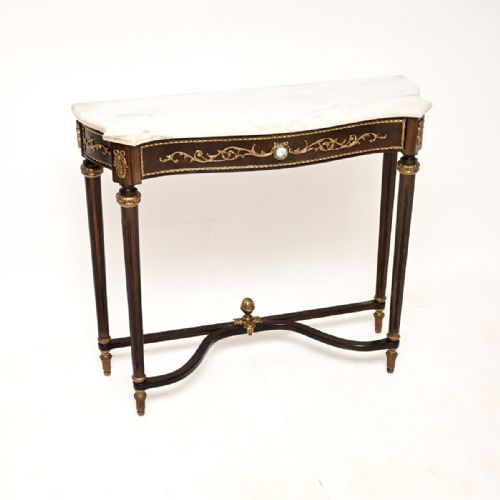
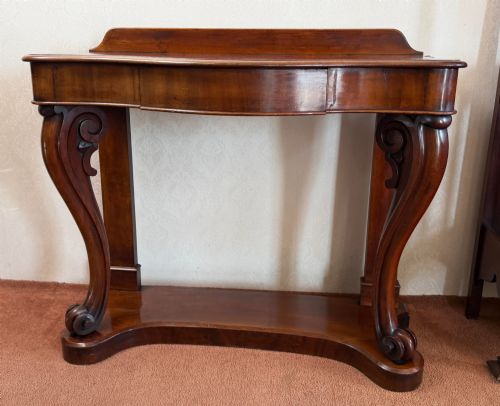
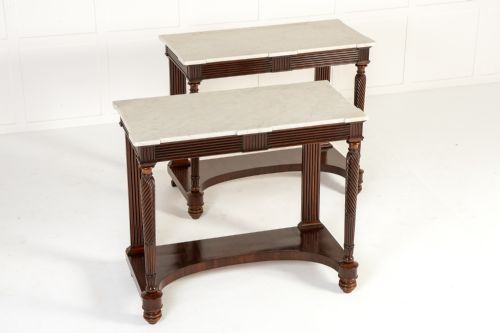
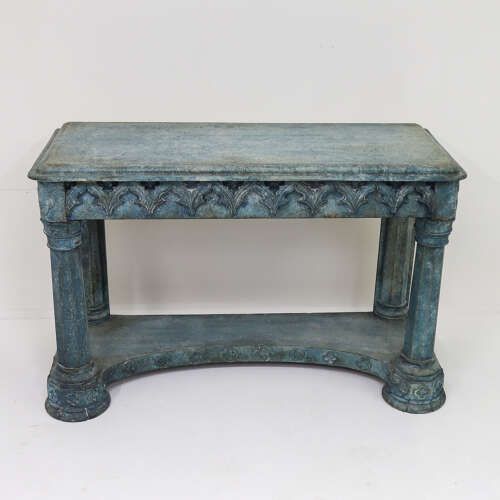
An antique foyer wall table typically takes the form of a console or narrow side table designed to stand against a wall, often accompanied by a matching wall mirror. These pieces serve as functional hallway furniture from periods spanning the eighteenth and nineteenth centuries, utilising compact depths to suit entrance spaces.
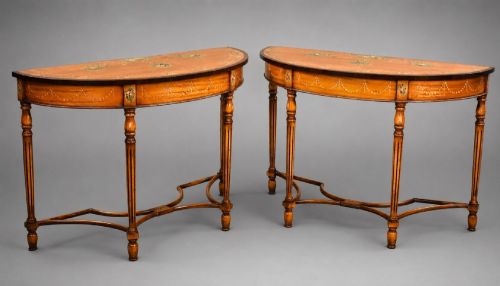
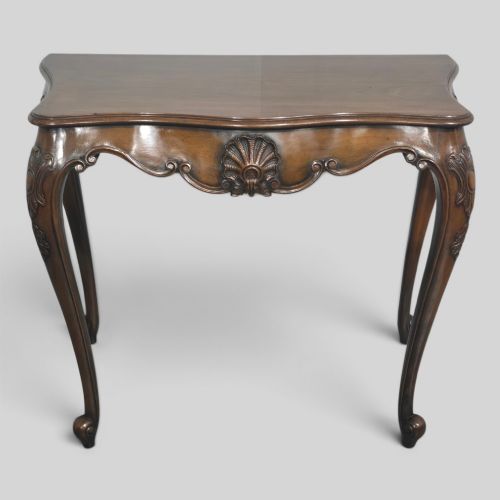
The selections on this page appear in various regional and revival styles, including Georgian, French Rococo, Italian Baroque, and Sheraton Revival forms. Buyers meet mahogany and walnut woodwork alongside giltwood frames paired with marble surfaces.
How they were made
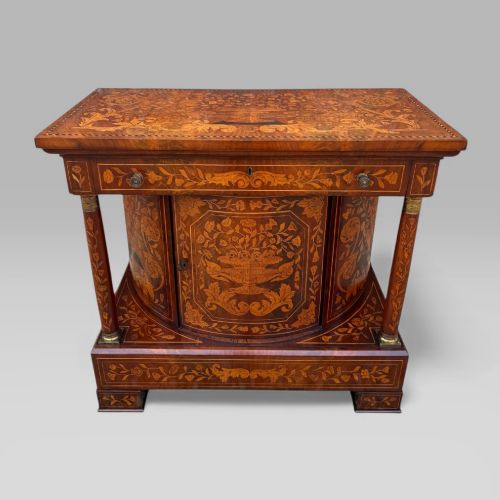
Cabinetmakers utilised dense timbers such as mahogany, walnut, and satinwood, often applying intricate marquetry inlay, painted decoration, or carving to the structural framework. Tables designed for formal reception spaces frequently incorporate heavy giltwood construction paired with heavy stone surfaces.
Many examples integrate inset marble tops - such as breccia - requiring precise joinery to support the weight of the stone. Surface finishes rely on traditional polish and gilding techniques applied to woods and carved gesso bases.
Some console tables feature carved lion's paw feet, ensuring your hallway furniture stands its ground against passing boots.
What varies in quality
The standard of an antique foyer wall table rests on the depth of hand-carving in the wood or giltwood, the choice of timber figurations like burr walnut or figured mahogany, and the integrity of the original marble top. Pieces displaying crisp relief work and balanced proportions demonstrate superior workshop execution.
Attribution to documented retail makers or cabinet-making firms elevates specific items, alongside matched pairs and sets that include original wall mirrors. The refinement of secondary details, such as inlaid satinwood motifs and brass mounts, distinguishes standard production from exceptional examples.
Maple and Co·Edward and Roberts
The Antique Foyer Wall Table Glossary
- Console table
- A wall-mounted or freestanding table designed to stand flat against a wall, frequently supported by front legs or wall brackets.
- Demi-lune
- A half-moon shape used for table tops and frames, allowing the piece to sit flush against a wall.
- Giltwood
- Timber coated with gold leaf or gold paint over a prepared gesso ground, common in decorative console frames.
- Marquetry
- Decorative patterns formed by fitting together thin veneers of different coloured woods.
- Breccia marble
- A type of multi-coloured stone composed of broken fragments cemented together, popular for high-status table tops.
Antique Foyer Wall Table: Frequently Asked Questions
How do I secure a wall table?
Many console and foyer tables were originally designed to rely partly on wall fixings for stability due to their narrow footprints. Using appropriate brackets ensures the piece remains secure in a busy hallway.
Heavier versions with marble tops require level flooring and proper positioning to distribute weight safely against the wall.
Can I place a lamp on marble?
Marble surfaces provide a durable, heat-resistant top suitable for lighting, decorative bowls, and everyday entrance items. The cool stone complements metal bases and glass shades.
Using protective pads underneath heavy objects prevents scratching and preserves the polished finish of the stone.
Are these tables good for small halls?
The narrow proportions of console tables make them well-suited for hallways and entrance spaces where floor area is restricted. Their shallow depth keeps walkways clear.
Matching the table width to the available wall space maintains balance without obstructing doorways.
How do I identify the wood type?
Examining the grain, colour, and weight helps distinguish between timbers like mahogany, walnut, and satinwood used across different periods. Finished surfaces often display distinctive natural figuring.
Consulting cabinet-making conventions from the eighteenth and nineteenth centuries provides further context for material selection.