






Antique Foyer Chairs
These antique foyer chairs are grand timber hall seating from the Georgian, Regency, and Victorian eras, chosen for an impressive hallway.
Antique Foyer Chairs
When you search for antique foyer chairs, you encounter formal timber hall seating designed for grand entryways and reception spaces. These pieces are predominantly represented on this page by Victorian and Regency examples, alongside earlier Georgian items.
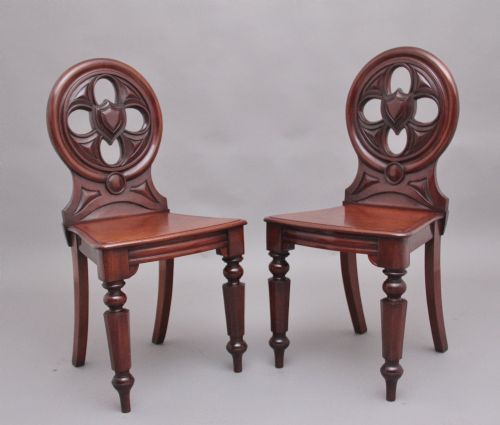
The primary forms found here are hall chairs and reception seats, frequently appearing in matched pairs or larger sets. Makers constructed these items from dense hardwoods intended to stand against hallway walls rather than for prolonged parlour lounging.
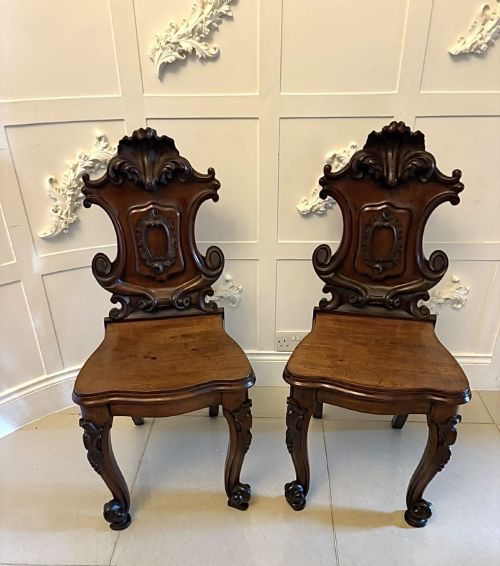
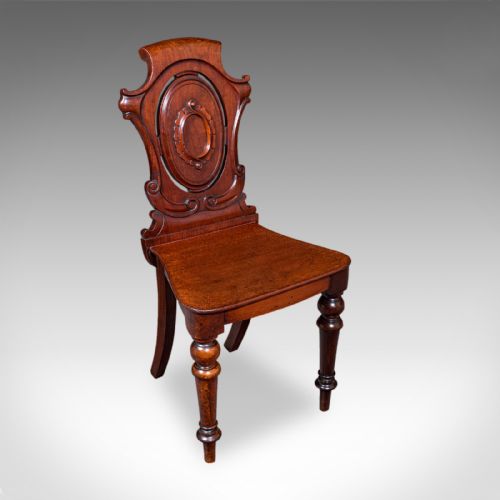
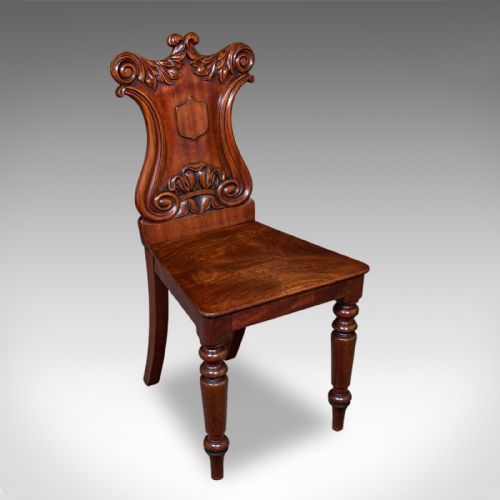
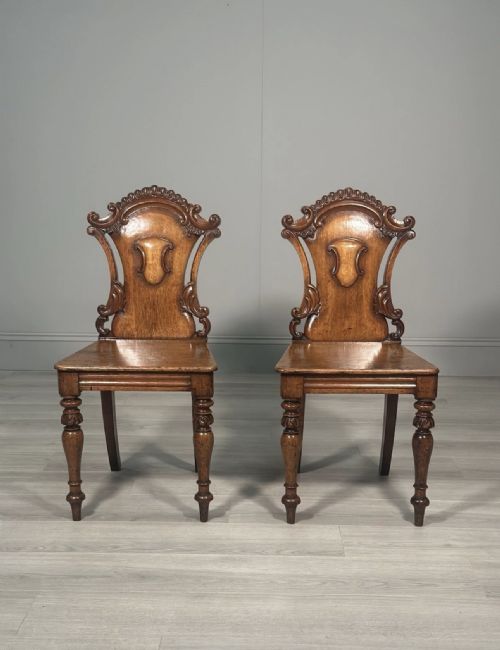
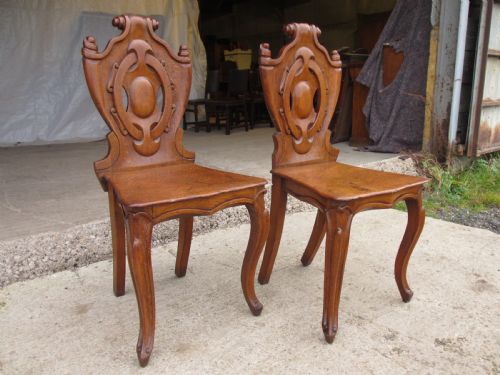
Distinctive back designs define these seats, ranging from solid carved shields and ovals to pelta backs and sculptural silhouettes. Origins span English workshops as well as Scottish and Irish regional commissions.
Construction and materials
Cabinetmakers utilised robust native and imported timbers, primarily mahogany, walnut, and oak, to build these rigid wooden seats. Wood selection dictated the capacity for deep carving on solid wooden backs and legs.
Joinery techniques relied on sturdy framing to support upright postures, occasionally incorporating brass details or upholstered velvet pads for occasional reception use. Surfaces were finished to highlight the natural grain of walnut, mahogany, and golden oak.
Antique Foyer Chairs Retail Price Guide 2026
Typical asking prices for foyer chairs among the pieces listed under this phrase on Sellingantiques today, from the lower quarter to the upper quarter. They describe what is for sale here now, not the wider market.
Strict Victorian hall etiquette dictated that guests sat upright without leaning back against the carved family crest.
Distinctions in quality
Quality in these hall seats rests upon the crispness of the timber carving and the architectural ambition of the backrest design. Sculptural pelta backs, shield forms, and pierced oval panels require superior joinery and carving skill compared to plain wooden boards.
The choice of dense timber, such as figured mahogany or rich walnut, elevates a piece above standard oak utility items. Matching pairs and larger sets command higher regard than single surviving chairs.
Holland & Sons
The Antique Foyer Chairs Glossary
- Hall chair
- A rigid wooden seat designed for an entrance hallway, usually featuring a solid timber back and no arms. These pieces were made to be viewed from the front against a wall.
- Pelta back
- A chair back shaped in the form of a classical crescent shield or low-slung arch. This distinctive outline draws inspiration from ancient Greek and Roman design motifs.
- Shield back
- A chair back carved in the outline of a heraldic shield, popularised during the Georgian period. Cabinetmakers often decorated the centre with painted crests or deep relief carvings.
- Regency
- A design period spanning the early nineteenth century, noted for classical lines influenced by Greek and Roman antiquities. Furniture from this era often incorporates clean architectural proportions.
- Cabriole leg
- A furniture leg that curves outward in a convex arc and tapers inward in a concave arc, resembling the leg of an animal. This form appears on later Victorian interpretations.
Antique Foyer Chairs: Frequently Asked Questions
Where should I place these chairs?
These firm wooden seats suit grand entryways, landings, and wide hallways where upright seating creates a formal architectural statement.
Because they lack upholstered padding and have upright wooden backs, they function best as decorative anchor points rather than comfortable lounge chairs.
Are these chairs comfortable for daily sitting?
They were designed for brief waits in reception rooms rather than prolonged relaxation. The solid timber backs and rigid wooden seats encourage an upright posture.
Some examples feature occasional velvet pads, but the primary purpose of the form remains decorative and formal.
How do I date a hall chair?
Dating relies on timber choice, carving style, and structural proportions. Georgian pieces show sculptural restraint, while Regency items draw on classical Greek motifs.
Victorian iterations often display heavier carved walnut or golden oak with elaborate shield or pelta back designs and cabriole legs.
Do these chairs come in pairs?
Many examples on this page are listed as matched pairs or small sets of four, which reflects how they were originally commissioned for opposing sides of a grand hallway.
Single pieces also appear, serving as striking standalone accent seats in smaller entrance spaces.