

Antique Footed Armchair
An antique footed armchair brings substance to a room, offering a grounding architecture of carved timber and tailored upholstery.
Antique Footed Armchair
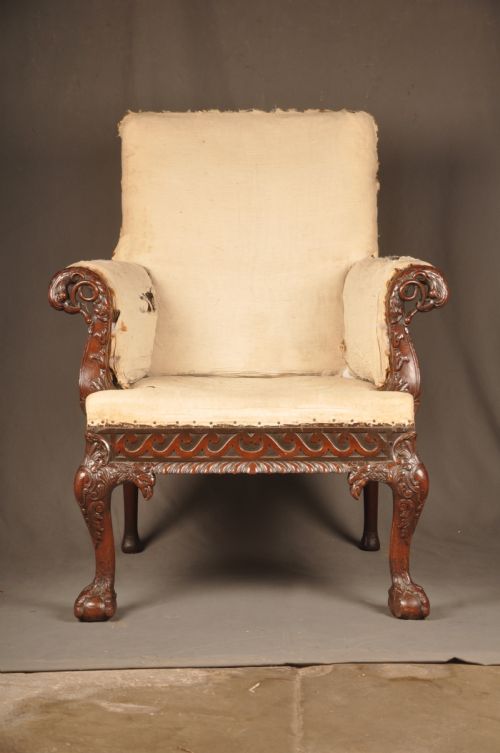
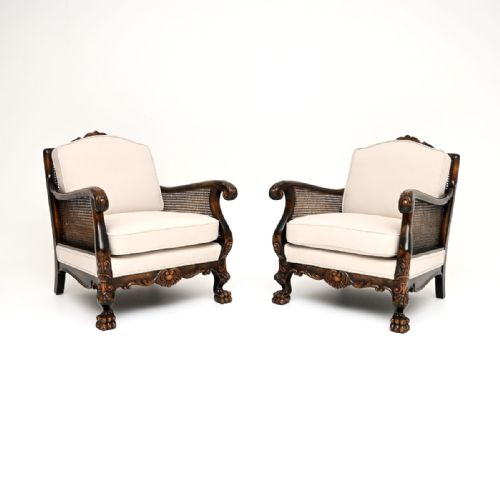
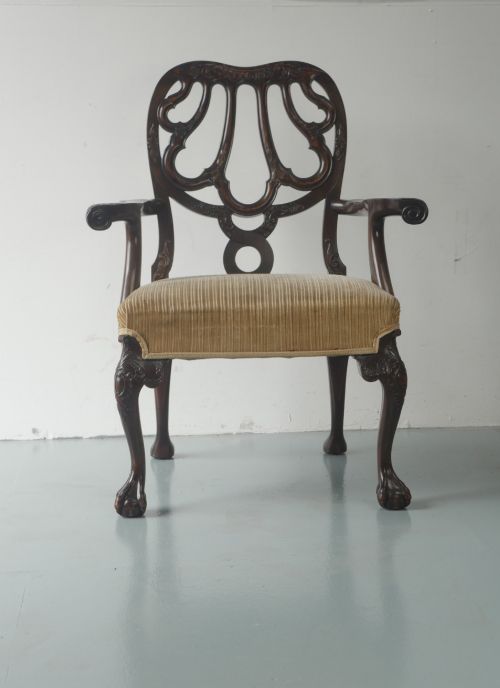
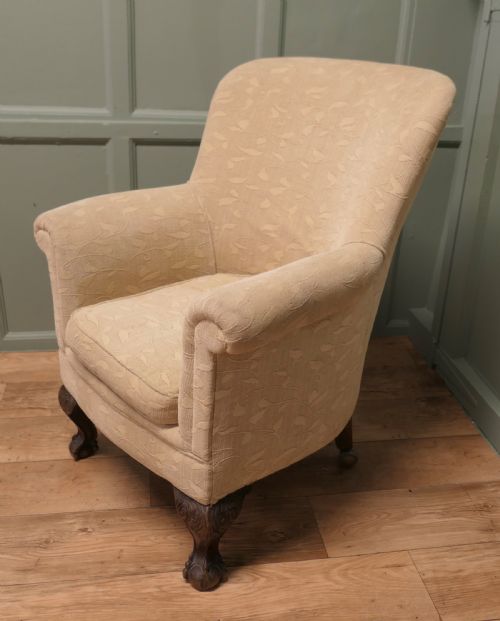
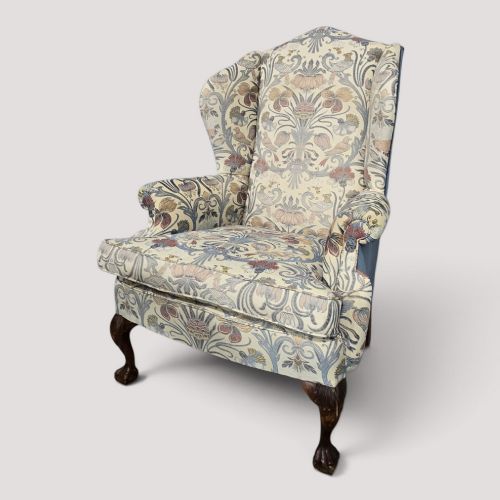
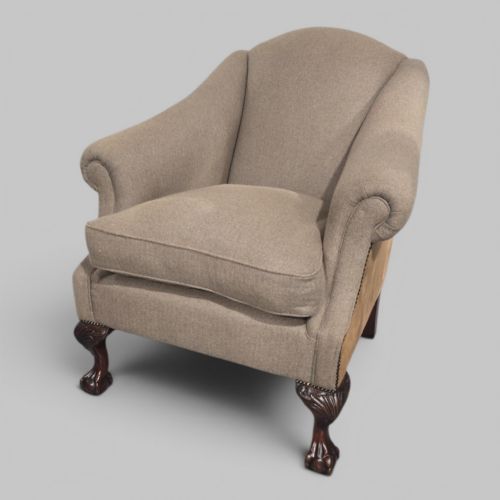
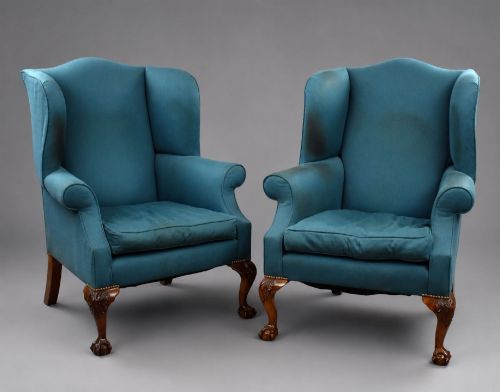
An antique footed armchair is defined by its supporting base, ranging from robust ball and claw feet to carved lion monopodia and polite brass casters. These seating forms span the eighteenth, nineteenth and early twentieth centuries, encompassing Georgian library models, Victorian button-back gentleman's chairs and deep country house loungers.
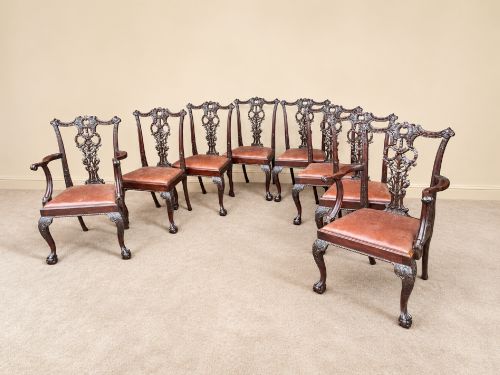
The varieties present on this page stretch from formal mahogany dining carvers with carved ball and claw terminals to expansive upholstered bridge-water and wing chairs upholstered in leather or velvet. Oak, walnut and mahogany form the structural timbers of these pieces, matched with period upholstery ranging from plain hide to patterned fabric.
Buyers will encounter robust reading chairs from the Georgian era alongside comfortable Edwardian and early twentieth-century library seats designed for sustained repose. Each piece relies on its specific foot configuration and timber frame to anchor its period style, whether following Chippendale revival lines or French Empire forms.
Construction and materials
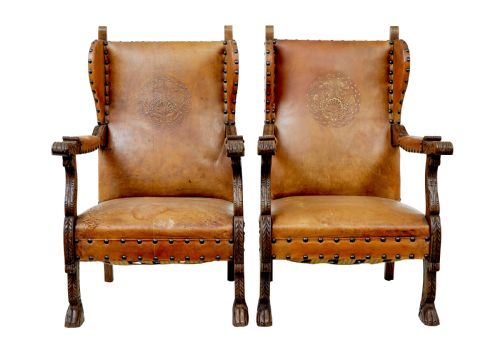
Makers constructed these frames predominantly from solid hardwoods such as mahogany, oak and walnut, joined with traditional mortise and tenon techniques to ensure structural longevity. Timber frames often received intricate hand-carving along the arms, rails and knees, terminating in distinct feet like ball and claw or carved wooden paws.
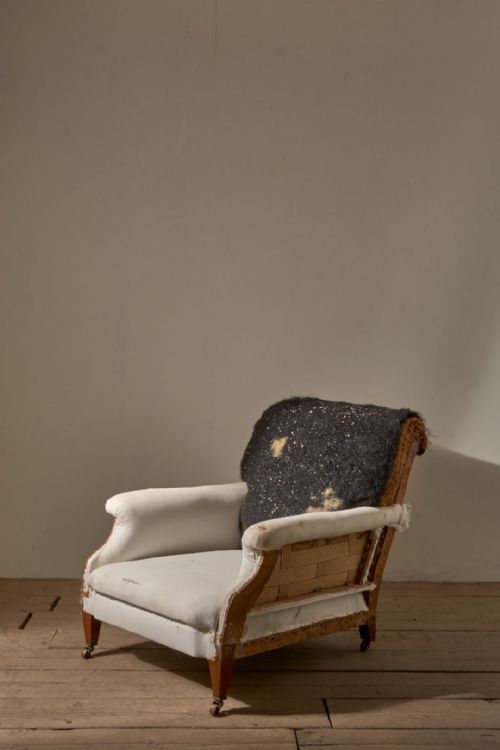
Upholstery methods utilised traditional stuffing materials encased in durable leather, velvet or woven fabric, secured with careful buttoning or decorative nailing. Iron and brass hardware supported mechanical elements in specialised seating, whilst polished wood surfaces preserved the natural grain of the underlying timber.
Antique Footed Armchair Retail Price Guide 2026
Typical asking prices for footed armchair among the pieces listed under this phrase on Sellingantiques today, from the lower quarter to the upper quarter. They describe what is for sale here now, not the wider market.
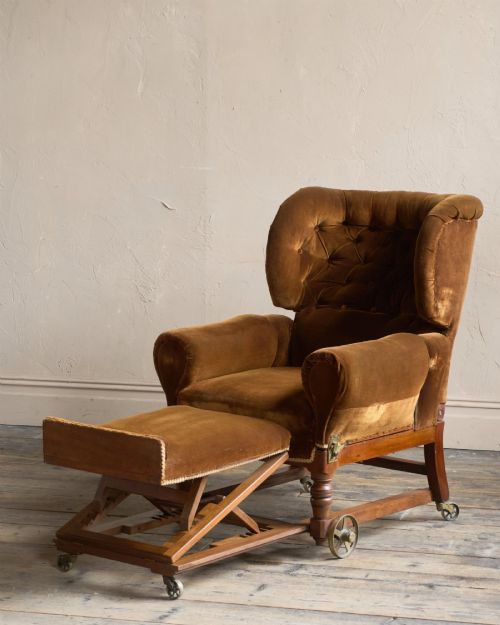
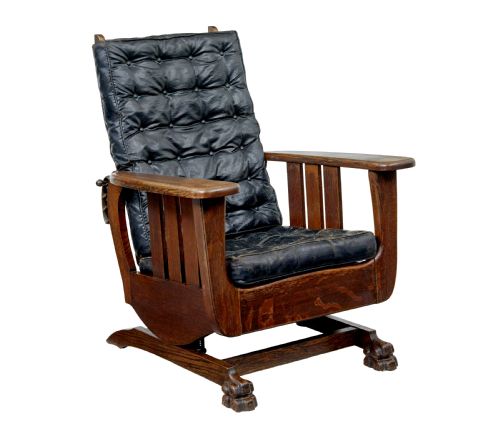
Several armchairs include clever mechanical adjustments for weary nineteenth-century readers who preferred their library seats to tilt on command.
Evaluating distinction and craftsmanship
Quality rests in the crispness of the timber carving and the architectural proportions of the frame, where fluid lines and substantial weight indicate superior cabinet-making. Pieces bearing maker stamps or attributed to notable workshops demonstrate a higher tier of historic execution.
The integrity of the original timber structure and the fidelity of subsequent upholstery choices separate standard utilitarian seating from exemplary library and drawing-room armchairs. Subtleties in timber selection, such as figured mahogany or rich walnut grain, elevate the overall presence of the chair.
Holland and Sons·Howard and Sons·Gillows·J Foot and Son
The Antique Footed Armchair Glossary
- Ball and claw
- A foot carved to represent a bird's talon clutching a ball, commonly found on eighteenth-century and revival mahogany chairs.
- Carver chair
- An armchair designed with open sides, traditionally placed at the head of a dining table or utilised as a light desk seat.
- Monopodia
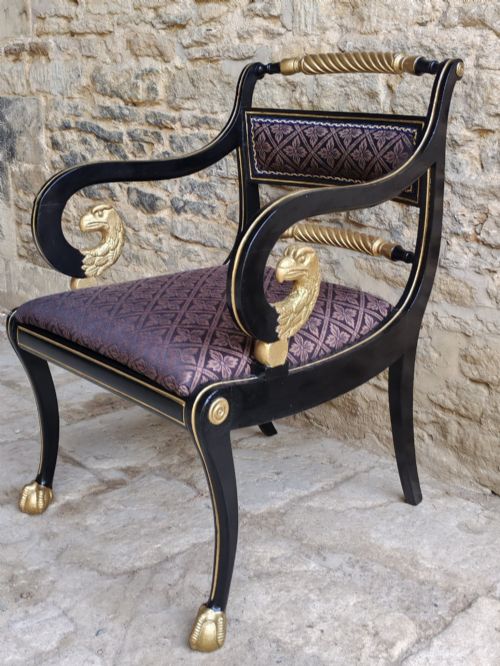
- A carved furniture foot resembling a lion's leg and paw, often associated with neoclassical and Regency design vocabulary.
- Bergere
- An enclosed upholstered armchair with exposed wooden framing and woven cane panels along the sides and back.
- Button back
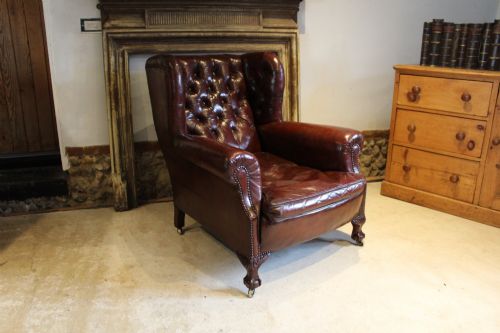
- An upholstery technique where deep depressions are formed by sewing through the padding to secure buttons in a geometric grid.
Antique Footed Armchair: Frequently Asked Questions
How do I date an antique footed armchair?
Dating relies upon examining the timber species, the style of the carved feet, and the construction methods visible beneath the upholstery webbing. Earlier pieces from the eighteenth century typically display dense mahogany and hand-cut joinery, whilst later nineteenth-century examples incorporate industrial iron-backs or stamped maker details.
Secondary clues include the wear patterns on the wooden feet and the ageing characteristics of the internal stuffing. Comparing the overarching silhouette against known Georgian, Victorian or Edwardian design books helps narrow the decade of production.
Were these armchairs used in libraries or dining rooms?
Armchairs served varied domestic functions depending on their scale and upholstery. Deeply padded leather and fabric models were designated for studies, libraries and drawing rooms to provide comfort during reading or conversation.
Sturdier wooden carvers with open arms were built to sit alongside matching dining tables. Library variants often featured wider armrests or reading desks to accommodate scholarly work.
How should I care for leather upholstery on an antique chair?
Historic leather requires gentle cleaning with a damp cloth followed by professional conditioning to prevent the hide from drying and cracking over time. Avoid placing these chairs near direct heat sources or in prolonged sunlight, which accelerates the degradation of both leather and wood.
Regular dusting with a soft brush prevents abrasive particles from settling into the natural crevices and carved details of the timber frame.
What is the difference between a gentleman's chair and a lady's chair?
Gentleman's chairs from the Victorian period were traditionally constructed with broader proportions, firmer padding and lower seats to accommodate male attire and posture. Lady's chairs were typically scaled slightly smaller, featuring open or lower arms designed to accommodate the wide crinoline skirts popular in the nineteenth century.
Both forms utilise matching button-backed upholstery and turned wooden legs, but the overall dimensions reflect the ergonomic expectations of their original users.