




Antique Foldover Desk
An antique foldover desk brings versatile transformation to a room, offering a concealed surface that opens for writing or play.
Antique Foldover Desk
When you search for an antique foldover desk, you encounter clever dual-purpose furniture designed to save space and serve multiple domestic needs. The examples found here span several distinct eras, including Georgian, Victorian, and Edwardian periods, reflecting shifting tastes in interior design over centuries.
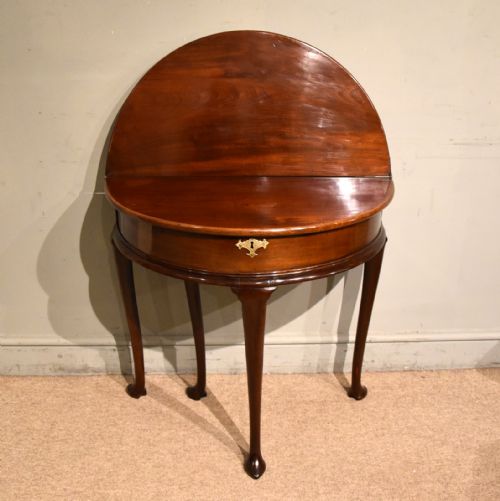
The most common forms you meet are card tables, tea tables, and games tables that double as writing desks when unfolded. These pieces typically feature hinged leaves that double the surface area or swing open to reveal baize-lined playing surfaces and hidden compartments.
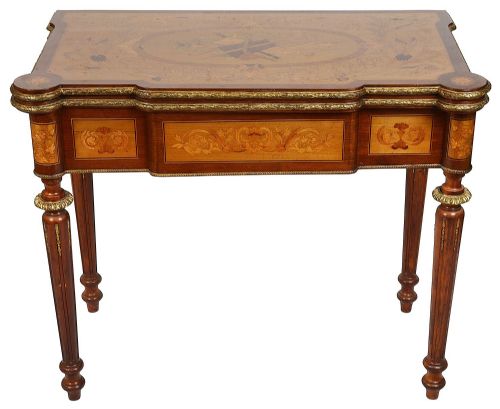
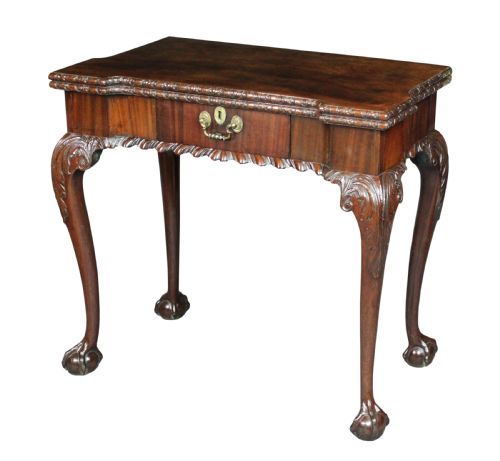
Origins range from English workshops influenced by Sheraton and Chippendale styles to French ateliers producing ornate revival pieces. Makers utilised sophisticated mechanisms to support the pivoting or folding top, ensuring stability when the furniture was fully extended.
How they were made
Cabinet makers relied on timbers such as mahogany, walnut, and satinwood, often embellishing the primary surfaces with intricate boxwood, kingwood, and marquetry inlay. These woods provided both structural integrity and a rich canvas for decorative banding and geometric patterns.
Brass fittings and hinges were integral to the construction, allowing the folding leaves to operate smoothly without putting undue strain on the wood joints. Artisans shaped the legs to match prevailing styles, from straight tapered supports to cabriole forms characteristic of revival periods.
Current listings demonstrate a prevalence of mahogany and satinwood across Georgian and Edwardian examples, complemented by French marquetry styles.
What varies in quality
The sophistication of the timber selection and the precision of the marquetry set finer examples apart from simpler utilitarian pieces. Grain matching across the foldover top demonstrates the skill of the original cabinet maker.
The complexity of the folding mechanism and the tightness of the joints when closed indicate the standard of construction. Superior pieces maintain alignment and stability whether closed against a wall or opened fully in the centre of a room.
The Antique Foldover Desk Glossary
- Foldover top
- A hinged wooden surface that doubles in size when opened out and laid flat. This mechanism allows a compact console or table to transform into a larger writing or playing space.
- Marquetry
- Decorative patterns formed by fitting small pieces of veneer into a wooden background. Artisans use contrasting woods to create floral or geometric motifs across the top and sides.
- Baize
- A coarse woollen fabric traditionally used to line the interior of gaming and writing surfaces. It provides a soft texture that protects cards and eases the movement of pens.
- Satinwood
- A lustrous, yellowish timber prized for its fine grain and reflective quality. It frequently appears in delicate stringing and crossbanding on late eighteenth and nineteenth-century pieces.
- Crossbanding
- A strip of veneer applied to the border of a table top with the grain running perpendicular to the centre panel. This technique frames the primary wood and adds visual depth.
Antique Foldover Desk: Frequently Asked Questions
How were antique foldover desks used?
These pieces functioned primarily as space-saving furniture in domestic parlours and drawing rooms. During the day, they stood closed against a wall as side tables or console surfaces.
When guests arrived or correspondence required attention, the top folded or pivoted open to provide a stable writing or card-playing area.
How do I tell Georgian pieces apart from Victorian ones?
Georgian examples generally favour cleaner lines, architectural proportions, and restrained mahogany or satinwood veneers. You often see Sheraton or Chippendale influences in the leg shapes and stringing.
Victorian and later revival pieces tend towards heavier proportions, elaborate marquetry, and exotic timbers like burr walnut or kingwood, reflecting more eclectic tastes.
Where should I place a foldover table in my home?
A foldover table suits hallways, living rooms, or studies where flexibility is useful. Placed against a wall in its closed position, it occupies minimal floor space.
Opening the leaf requires clearance around the piece, making it practical to position where you can easily walk around the extended surface.