


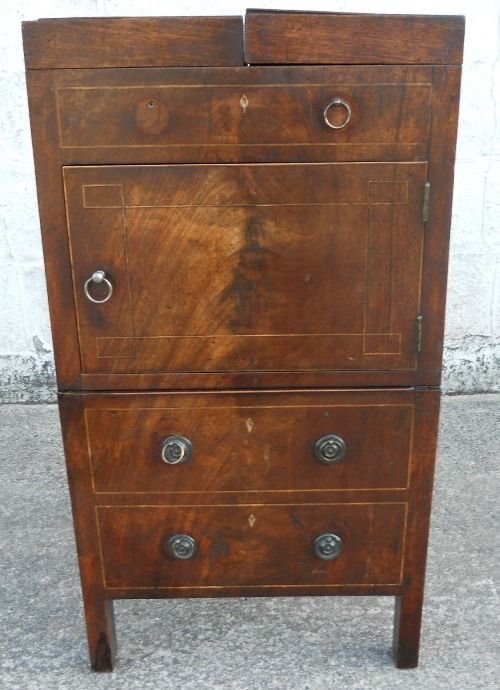
Antique Folding Washstand
An antique folding washstand is a clever piece of campaign or maritime furniture designed to conceal washing gear when not in use.
Antique Folding Washstand
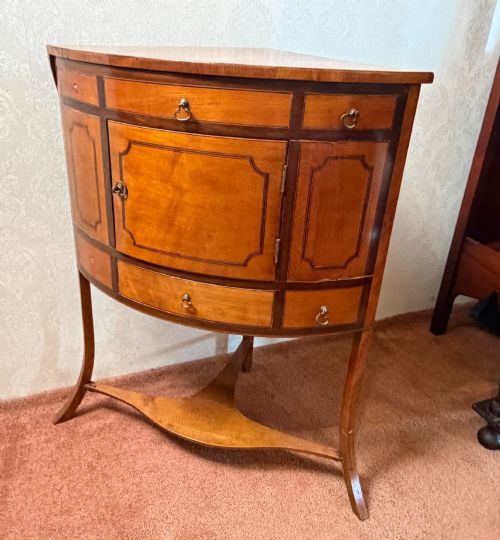
When you search for an antique folding washstand, you encounter practical furniture made for cabins, officers' quarters and bedrooms where space was at a premium. These pieces span the Georgian, 18th century and Victorian periods, taking forms such as corner washstands, dressing tables and vanity cabinets.
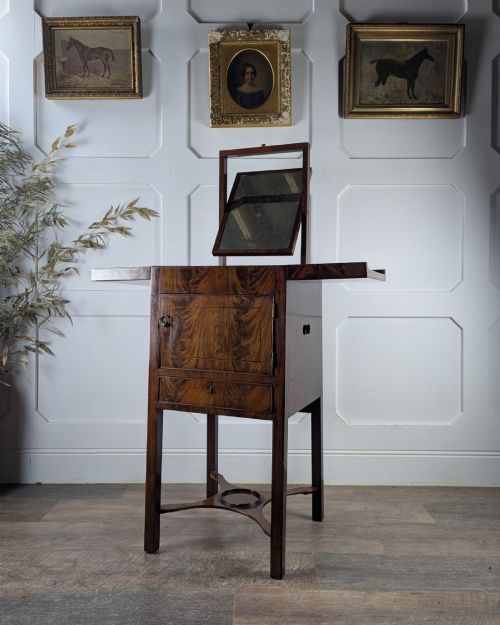
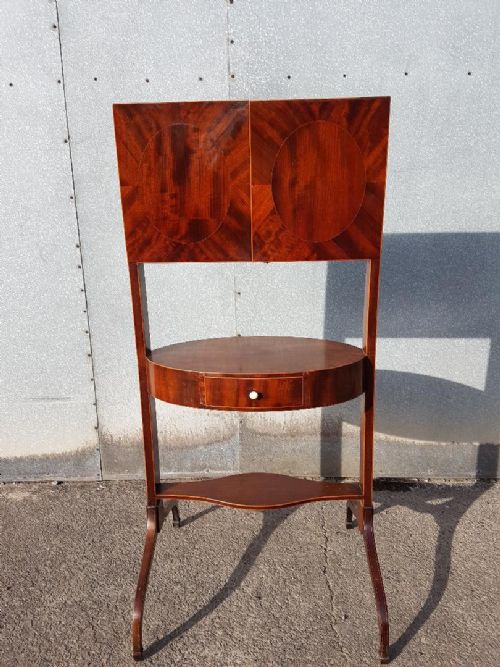
The versions you are most likely to meet on this page include mahogany campaign pieces, satinwood examples with boxwood inlay, and maritime cabinets built for yachts or ships. They fold down or conceal their basins, serving a dual purpose as a table or cabinet when the washing equipment is hidden.
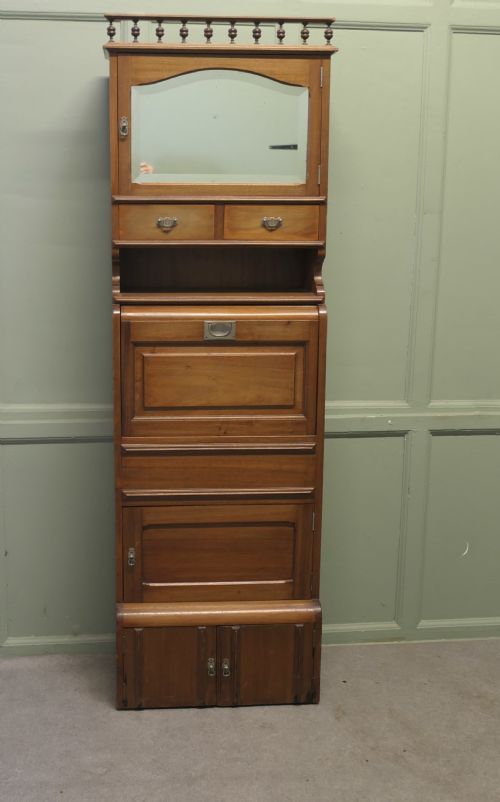
Makers adapted these stands for travel and compact living, resulting in ingenious folding mechanisms and hinged tops. Some take a bow front or corner shape to fit snugly into rooms, while others function as gentleman's dressing tables complete with mirrors.
How they were made
Cabinet makers utilised dense timbers such as mahogany, Cuban mahogany and teak to withstand the rigours of travel and damp maritime environments. These woods were often embellished with contrasting satinwood veneers and delicate boxwood inlay.
Functional elements required durable metals and ceramics, incorporating brass hardware for hinges and locks, alongside glass and ceramic basins for the washbowl stands. Craftspeople constructed these stands with folding lids and drop-down fronts to securely house the water vessels and mirrors.
Listings feature mahogany, satinwood and teak, alongside brass and ceramic fittings across Georgian and Victorian periods.
What varies in quality
The distinction between standard utility items and finer pieces lies in the selection of timbers, such as figured Cuban mahogany or finely grained satinwood. Cabinet work that incorporates precise boxwood stringing and well-integrated folding mechanics demonstrates superior workshop practice.
Makers' marks elevate certain pieces, distinguishing standard workshop production from stamped cabinet makers like Gillows of Lancaster. The cleverness and smoothness of the folding mechanism, alongside the preservation of original ceramic and glass components, separate ordinary examples from exceptional survivals.
Gillows Lancaster
The Antique Folding Washstand Glossary
- Campaign washstand
- Portable furniture built with folding frames and compact dimensions for military officers and travellers on the move.
- Corner washstand
- A space-saving triangular washstand designed to fit neatly into the corner of a room or cabin.
- Triplate dressing table
- A vanity table featuring a triple mirror arrangement, often folding to protect the glass during transit.
- Gentleman's dressing table
- A multi-functional cabinet equipped with compartments, mirrors and washing facilities tailored for male grooming.
- Boxwood inlay
- A decorative technique using thin strips of pale boxwood set into contrasting dark timbers like mahogany.
Antique Folding Washstand: Frequently Asked Questions
What is an antique folding washstand?
An antique folding washstand is a piece of portable or space-saving furniture designed to hold a basin and washing accessories while concealing them beneath a hinged lid or folding top when not in use.
These pieces were produced during the Georgian and Victorian eras, frequently utilised in bedrooms, officers' tents and ship cabins where traditional washstands took up too much room.
Where were folding washstands used?
They were primarily used in domestic bedrooms, private chambers and aboard ships, yachts and military campaigns where space was strictly limited.
Maritime and campaign versions were built to be sturdy and compact, allowing travellers to maintain personal hygiene while away from permanent residences.
What materials are folding washstands made from?
Cabinet makers built these stands using durable hardwoods such as mahogany, Cuban mahogany and teak, which handled travel and moisture well.
Finer examples featured satinwood veneers, boxwood inlay, brass hardware, and integrated glass, ceramic and metal washbowls.
How do I date a folding washstand?
Dating relies on observing the timber species, the style of the legs and cabinet work, and structural characteristics associated with Georgian or Victorian periods.
Pieces from the 18th century often display classic Georgian proportions and fine mahogany, while later 19th-century and campaign pieces incorporate specific maritime or folding hardware.