


Brown Mahogany Wash Table
These brown mahogany wash table pieces offer practical utility and period character for daily interiors.
Brown Mahogany Wash Table
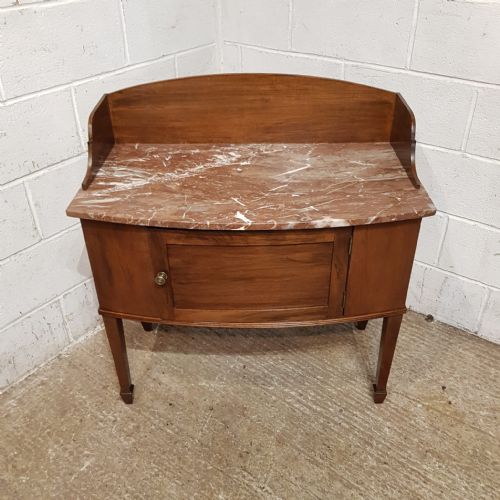
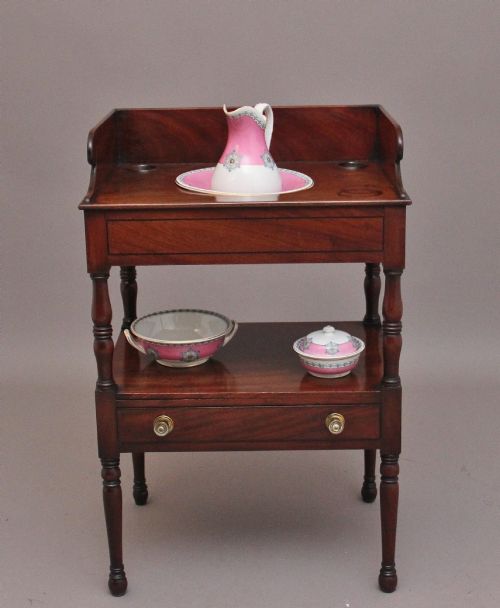
A brown mahogany wash table serves as a functional item designed for personal ablutions, typically featuring specialised surfaces and tiers. These pieces span several distinct historical eras, appearing in Georgian, Regency, Victorian, and Edwardian iterations.
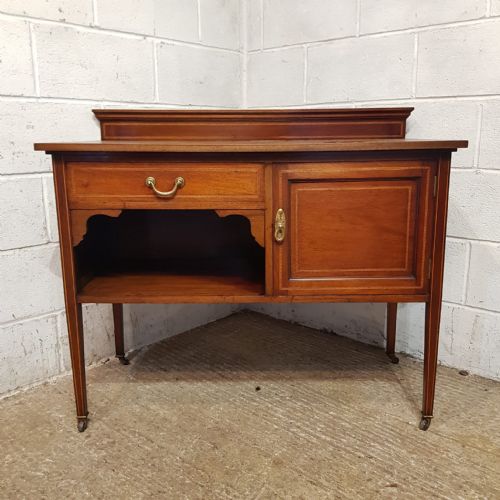
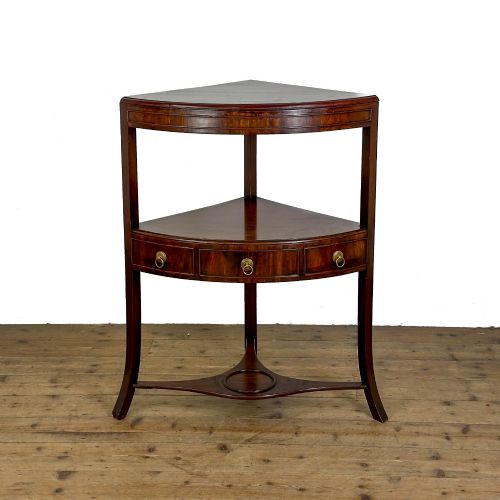
The assortment on this page includes corner washstands alongside bow fronted examples and dressing tables. Buyers frequently encounter variants incorporating marble tops, brass fittings, and satinwood stringing alongside simpler mahogany forms.
Originating as essential bedroom furniture, these tables adapt easily to modern rooms as side tables, occasional lamp tables, or plant tables. The selection preserves the specific proportions and timber choices recorded across multiple centuries of British cabinet making.
How they were made
Cabinet makers constructed these wash tables primarily using solid mahogany, frequently embellishing surfaces with satinwood inlay or brass hardware. Timber selection prioritised rich grain patterns and durable structural integrity to withstand daily use with water.
Advanced examples incorporate inset marble tops and glass elements to protect wooden surfaces from moisture during washing. Secondary materials such as leather occasionally appear on related writing surfaces within matched pairs.
Listings feature pieces spanning the Georgian, Regency, Victorian, and Edwardian periods, constructed in mahogany, satinwood, marble, and brass.
What varies in quality
Quality differentiates through the refinement of timber selection and the complexity of the form, such as bow front profiles or corner configurations. Pieces featuring integrated satinwood and mahogany contrast against simpler utilitarian constructions from later periods.
The presence of original materials like marble tops, brass fittings, and glass components elevates the overall standard of a piece. Finer examples display meticulous attention to proportion and joinery detail across Georgian and Regency outputs.
The Brown Mahogany Wash Table Glossary
- Bow front
- A convex curved front contour found on certain Victorian and Georgian case furniture. This shape softens room angles and demands advanced woodworking skill.
- Corner washstand
- A triangular form designed to fit neatly into room angles to conserve floor space. These pieces often feature tiered shelving for basins and ewers.
- Satinwood
- A yellowish-gold timber used for contrasting stringing and inlay work on mahogany furniture. It provides bright visual detail against darker primary woods.
- George III
- The stylistic period spanning the mid to late eighteenth and early nineteenth centuries. Furniture from this era emphasises classical proportions and refined mahogany veneers.
Brown Mahogany Wash Table: Frequently Asked Questions
What is a brown mahogany wash table?
A brown mahogany wash table is a period furniture piece originally designed to hold washbasins and pitchers for morning hygiene routines. These items utilise rich mahogany timbers and span eras from the Georgian period through to Edwardian times.
Modern buyers often repurpose these versatile stands as lamp tables, plant stands, or occasional corner tables in living spaces. Their distinctive architectural forms bring historical character to contemporary interiors.
How do I date a mahogany washstand?
Dating relies on observing structural characteristics, hardware, and stylistic traits associated with periods such as Georgian, Regency, Victorian, or Edwardian. Earlier George III examples typically exhibit restrained classical lines, whereas Victorian pieces may incorporate curved bow fronts and heavy marble tops.
Examining secondary woods, timber thickness, and construction methods helps clarify the era of manufacture. Subtle shifts in design preferences across the centuries guide the identification process.
Were these tables used only for washing?
While primarily built to accommodate basins and washing equipment, many designs included tiers and drawers for toiletries and personal items. Some versatile configurations functioned additionally as dressing tables or incidental surfaces.
Today, the adaptability of these tables allows them to serve multiple roles around the home beyond their original washroom purpose. Their compartmentalised tops accommodate modern decorative uses.
How do I care for antique mahogany furniture?
Maintenance involves keeping mahogany surfaces clean using a soft, dry cloth and avoiding excessive moisture or direct sunlight. Preserving the timber requires stable room humidity to prevent wood movement.
Marble tops and glass elements require gentle cleaning appropriate to their specific composition. Regular, careful upkeep protects the historic finish of the wood.