

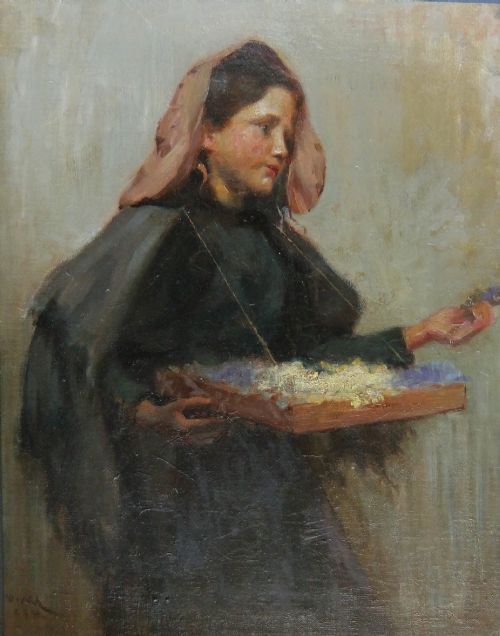


Antique Flower Portrait
An antique flower portrait captures botanical subjects alongside human figures through enduring nineteenth and eighteenth century fine art traditions.
Antique Flower Portrait
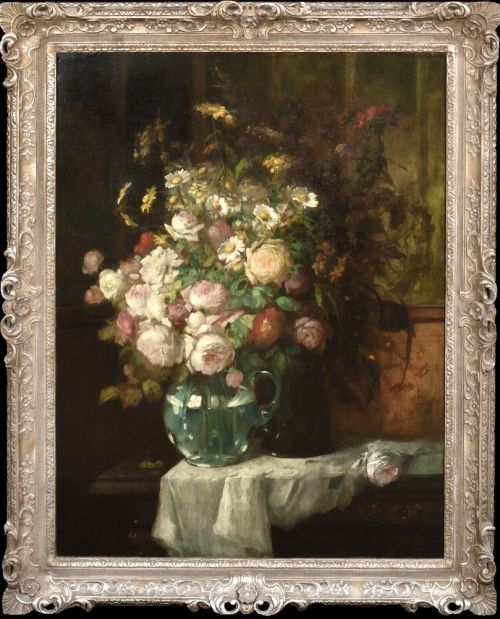
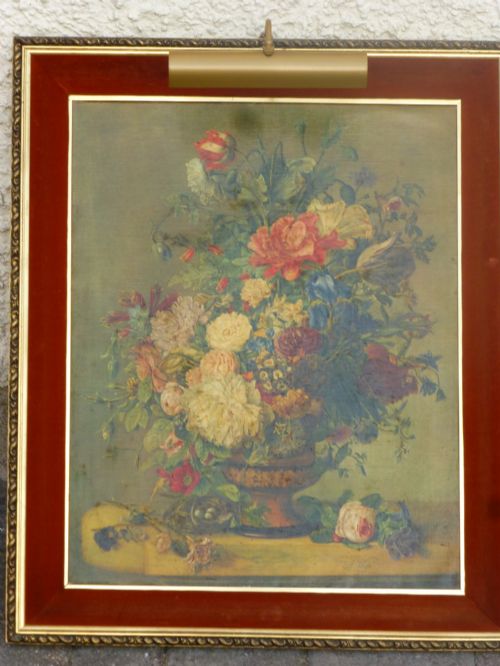
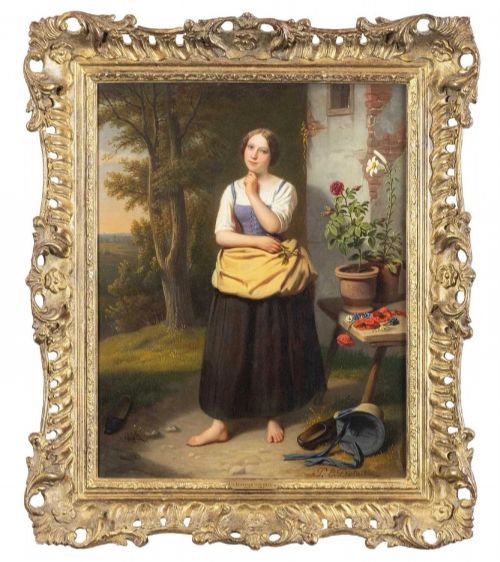
An antique flower portrait combines figure painting with botanical study, frequently depicting young women accompanied by seasonal blooms or gathered meadow flowers. These works span from eighteenth century canvas portraits to Victorian watercolours and late nineteenth century academic realism.
The most common examples encountered here are oil paintings on canvas and framed works on paper using watercolour and gouache. Such pieces often place subjects within distinct historical periods ranging from the Georgian era through to Edwardian impressionism.
How they were made
Artists executed these works using oil paint on stretched canvas or applied watercolour and gouache onto paper supports. Brushwork ranges from precise academic realism to looser impressionistic application.
Finished works found housing within period frames constructed from wood and gilded wood, occasionally featuring ornate moulding characteristic of Victorian and Napoleon III workshops.
Antique Flower Portrait Retail Price Guide 2026
Typical asking prices for flower portrait among the pieces listed under this phrase on Sellingantiques today, from the lower quarter to the upper quarter. They describe what is for sale here now, not the wider market.
Listings feature works spanning the eighteenth, nineteenth, and early twentieth centuries, executed in oil, watercolour, and gouache.
What varies in quality
The integrity and preservation of the original medium, whether oil on canvas or watercolour on paper, dictate the visual depth and longevity of the piece. Period framing similarly contributes to the overall coherence and preservation of the artwork.
Konstantin Stoitzner·William Watt Milne·Alice Anne Renshaw·Rowland Holyoake·Jane Maria Bowkett·Tilly Kettle·Harold Arthur Burke
The Antique Flower Portrait Glossary
- Oil on Canvas
- Pigment suspended in drying oil applied to a woven fabric stretched across a wooden frame. This method allows for rich colour blending and textured brushwork.
- Watercolour and Gouache
- Water-soluble media painted on paper where watercolour provides translucent washes and gouache adds opaque highlights.
- Academic Realism
- A style of painting produced under the influence of European academies of art, prioritising accurate representation and classical technique.
- Giltwood
- Wood carved and coated with a thin layer of gold leaf, commonly utilised for ornate nineteenth century picture frames.
Antique Flower Portrait: Frequently Asked Questions
What periods do these paintings come from?
The available selection spans several centuries, starting from eighteenth century works by artists such as Tilly Kettle and extending through nineteenth century Victorian pieces up to Edwardian examples from the early nineteen hundreds.
Different decades brought distinct stylistic approaches, moving from formal portraiture towards looser impressionistic and academic realists depictions of figures with flowers.
Are these works painted on canvas or paper?
Both mediums appear frequently in this category, with many traditional portraits executed in oil on canvas while lighter botanical character studies utilise watercolour and gouache on paper.
Each medium required different framing methods, with canvases stretching over wooden supports and works on paper sitting beneath protective glazing within ornate period frames.
How should I live with these artworks?
These pieces suit traditional and transitional interiors alike, where their historic subjects and muted nineteenth century palettes add character to reception rooms or studies.
Placement should avoid direct sunlight to protect delicate watercolours and oil pigments from fading over time, preserving the integrity of the original materials.
How do I identify a Victorian portrait?
Victorian examples often feature romantic or realistic portrayals of young women with seasonal blossoms, reflecting the era's fascination with the language of flowers and sentimentality.
Signatures, biographical dates of artists such as Alice Anne Renshaw, and period framing styles help anchor these works securely within the nineteenth century.