


Antique Floral Wash Pitcher
These antique floral wash pitchers and their matching basins represent the practical washing vessels of past bedrooms before plumbed bathrooms arrived.
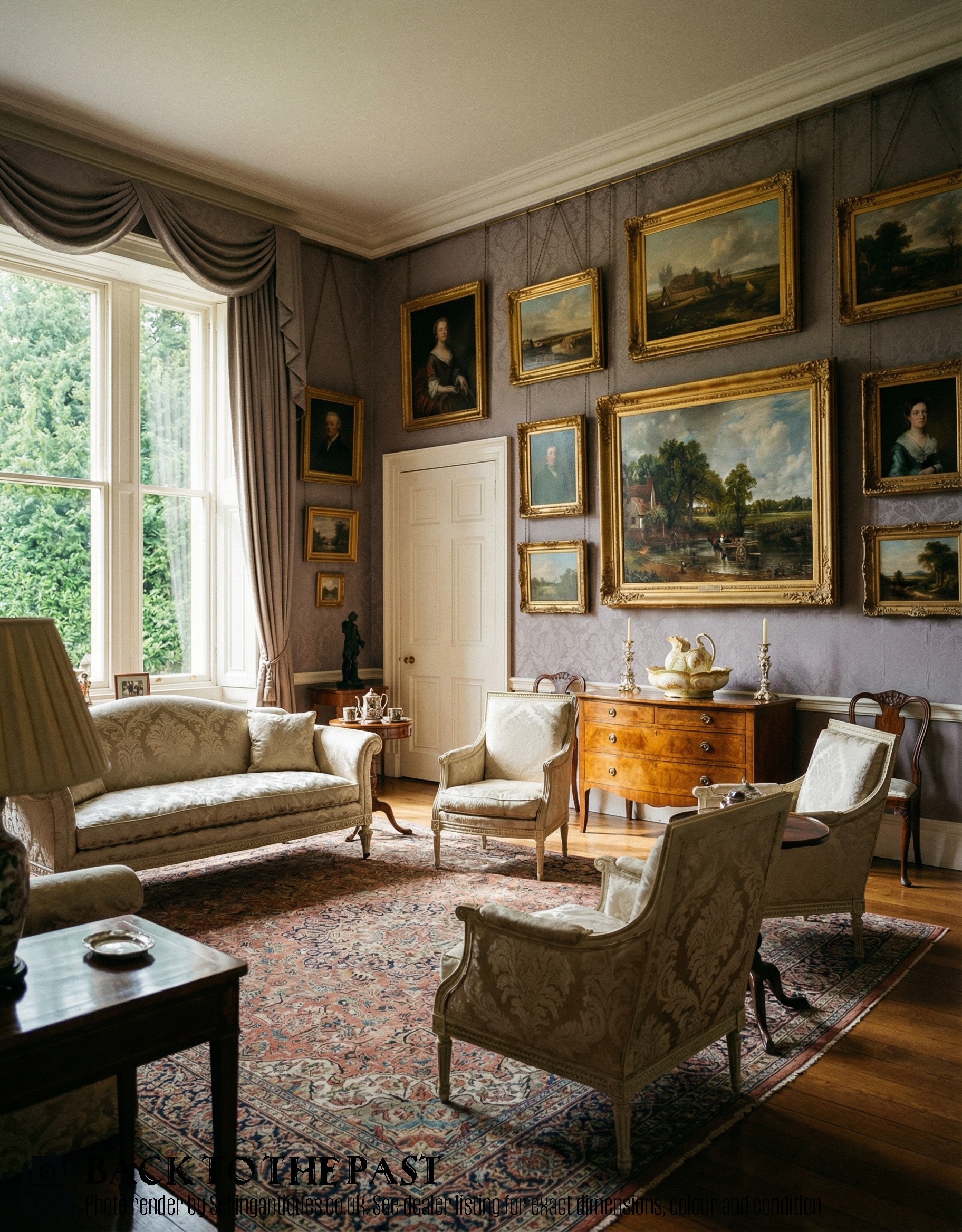
Antique Floral Wash Pitcher
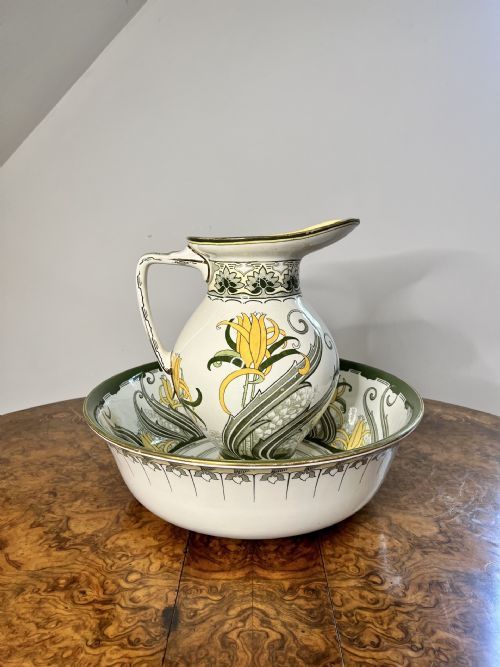
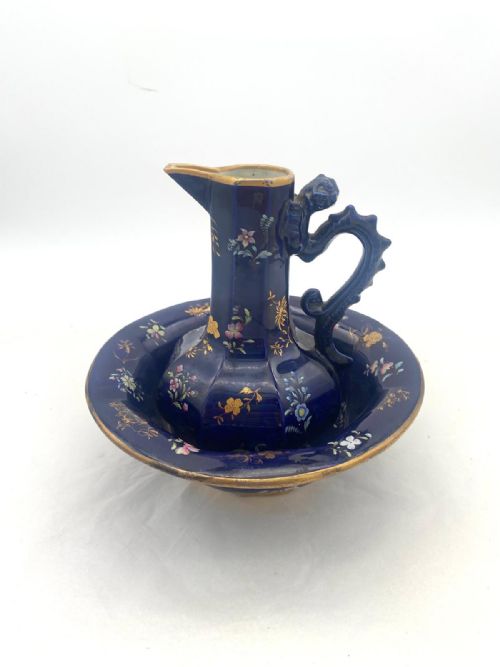
When you search for an antique floral wash pitcher, you find bedroom washing vessels designed to hold water for morning ablutions. These items appear primarily within larger sets that include a matching basin, forming the centrepiece of a nineteenth or early twentieth-century washstand.
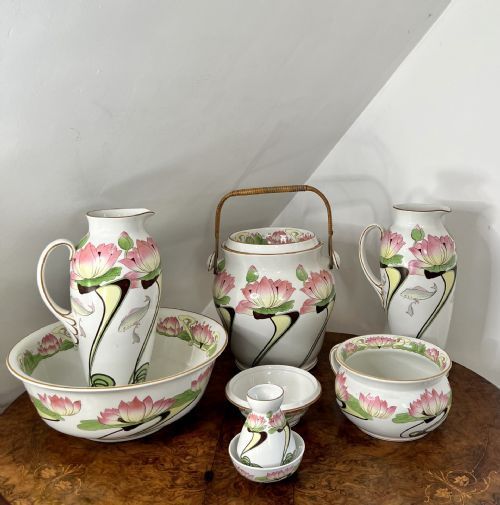
The pieces on this page span several decades, ranging from Georgian earthenware up to Edwardian and later ceramic sets. You will encounter various forms, including miniature sets alongside large one-gallon jugs and complete four-piece bathroom suites.
Makers and potteries applied diverse aesthetic movements to these vessels, moving through Georgian and Victorian formality into the flowing lines of Art Nouveau. Floral decoration dominates the surface patterns, rendered in blue and white or polychrome enamel.
How They Were Made
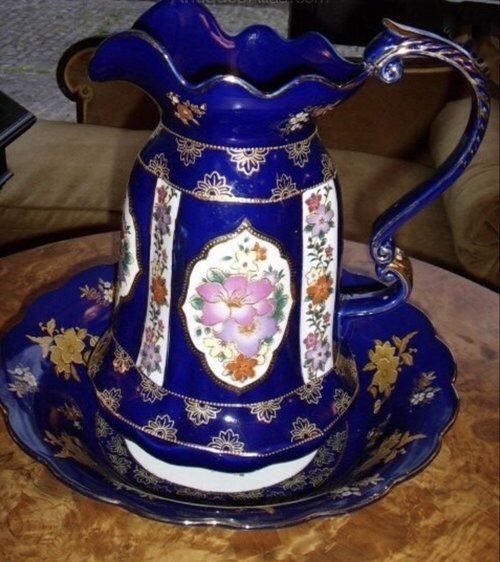
Potters shaped these vessels using earthenware, ironstone, and porcelain, applying a protective glaze over the clay body before firing. Certain luxury pieces received hand-painted enamel flower designs or touches of gold leaf to accentuate the moulded contours.
Blue and white transfer printing proved a popular method for transferring intricate botanical patterns onto the ceramic surface prior to glazing. Other examples utilised cobalt glaze directly beneath the surface to create deep blue floral motifs.
What Varies in Quality
The standard of a wash pitcher rests on the crispness of the ceramic moulding and the precision of the floral transfer or hand-painting. Superior examples maintain a harmonious balance between the jug and its basin, with clean glazes free from excessive firing blemishes.
Marked pieces from established potteries or workshops command greater attention from collectors than unmarked utilitarian wares. The complexity of the floral design and the inclusion of complete multi-piece sets further elevate the standing of an item.
Doulton Burslem·Christofle·John Baley·Mark Jones And Sons
The Antique Floral Wash Pitcher Glossary
- Earthenware
- A porous pottery body fired at lower temperatures, requiring an impermeable glaze to hold water. It forms the foundation for many traditional bedroom jugs.
- Ironstone
- A durable, heavy type of feldspathic earthenware patented in the nineteenth century. It resists chipping far better than standard pottery.
- Cobalt glaze
- A metallic oxide colourant producing a deep, rich blue tone that withstands high kiln temperatures without fading. It appears frequently on blue and white floral ceramics.
- Washstand
- A dedicated wooden piece of bedroom furniture designed to hold the pitcher and basin securely on a marble or wooden top. It often featured a tiled splashback.
- Transfer printing
- A mechanical decoration technique using an engraved copper plate to transfer ink onto paper and then onto the ceramic biscuit. This allowed factories to produce intricate floral patterns consistently.
Antique Floral Wash Pitcher: Frequently Asked Questions
How were wash pitchers used?
These pitchers stood on bedroom washstands to hold fresh water for daily washing before indoor plumbing became standard.
Servants filled them from kitchen water supplies so household members could pour water into the matching basin for face and hands.
How do I date a wash pitcher?
Dating relies on the ceramic material, the style of the floral decoration, and any factory stamps or registry marks found underneath.
Victorian pieces often feature robust ironstone bodies with transfer-printed florals, while Edwardian versions lean towards lighter earthenware and softer floral palettes.
Can I use these pitchers for flowers?
Many collectors repurpose these large ceramic jugs as decorative vases for holding cut flowers or garden foliage.
Their wide bodies and sturdy handles accommodate heavy stems easily, provided you check the interior glaze for historical hairline fractures first.
What is the difference between a jug and a basin?
The jug is the tall vessel with a handle and spout designed to pour water, while the basin is the wide bowl meant to catch it.
Together they formed a matched set, sharing the same floral pattern and earthenware body to maintain a uniform bedroom aesthetic.