





Antique Floral Textile Art
These pieces of antique floral textile art bring centuries of hand-stitched botanicals and woven garden scenes straight onto the wall.
Antique Floral Textile Art
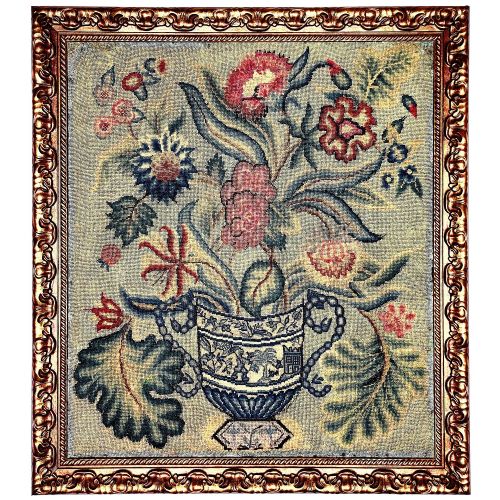
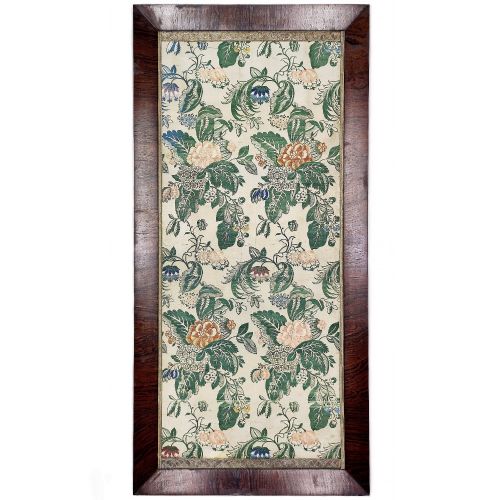
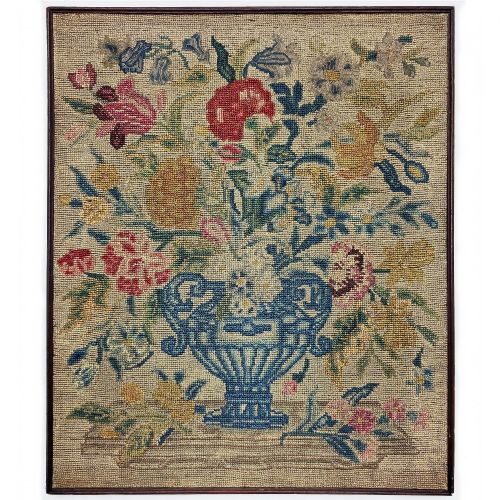
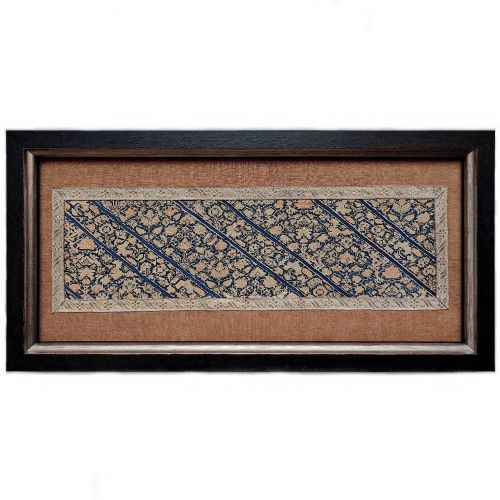
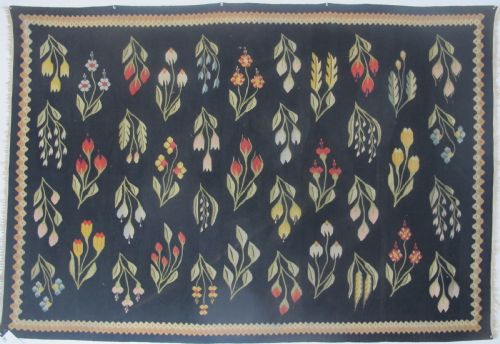
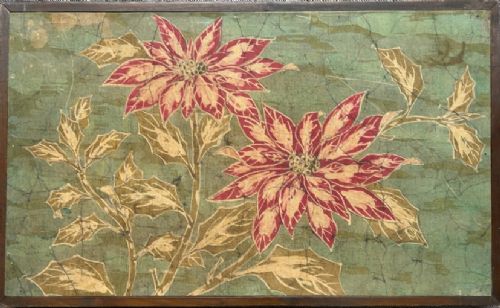
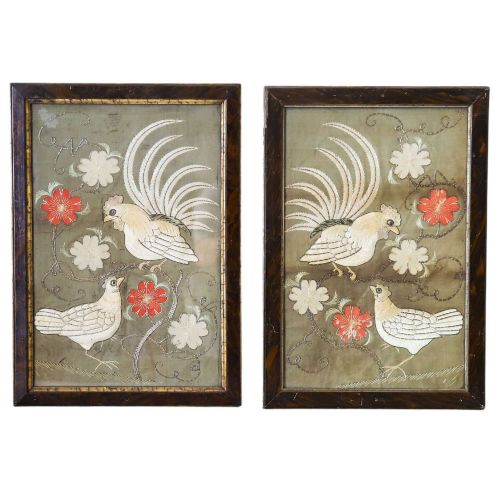
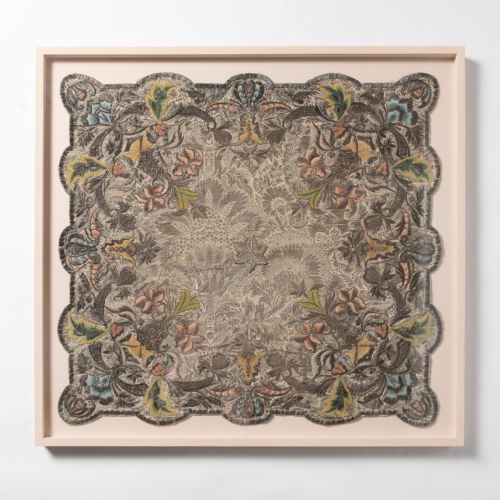
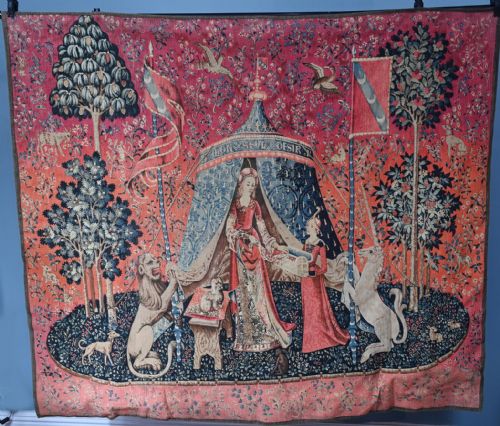
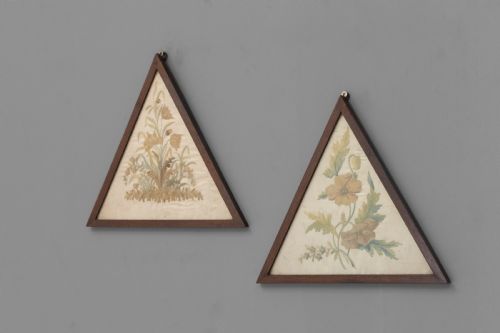
Antique floral textile art encompasses framed needlework pictures, embroidered panels, and large woven wall hangings. These works range from English needlework samplers and French silk embroideries to Central Asian suzanis and European verdure tapestries.
The pieces on this page lean heavily toward 18th-century and 19th-century examples, alongside earlier 17th-century fragments and turn-of-the-century folk pieces. Common formats include wall art, textile art, tapestries, and mounted embroidery panels.
Origin points stretch from Britain and France to Uzbekistan, China, Scandinavia, and Germany. Buyers encounter everything from large room-scale wall tapestries to intimate framed silkwork panels.
What Varies in Quality
Execution and precision in needlework separate finely detailed silk embroidery from simpler folk stitching. The choice of materials also dictates calibre, with pure silk grounds and intricate metallic threadwork sitting above basic wool or cotton.
Preservation of the textile ground and the vibrancy of surviving threads influence the standing of a piece. Original framing or mounting helps maintain the structural integrity of fragile fabrics over centuries.
Antique Floral Textile Art Retail Price Guide 2026
Typical asking prices for floral textile art among the pieces listed under this phrase on Sellingantiques today, from the lower quarter to the upper quarter. They describe what is for sale here now, not the wider market.
Listings feature periods spanning from the 16th century through to the early 20th century, executed in silk, wool, cotton, and linen.
The Antique Floral Textile Art Glossary
- Suzani
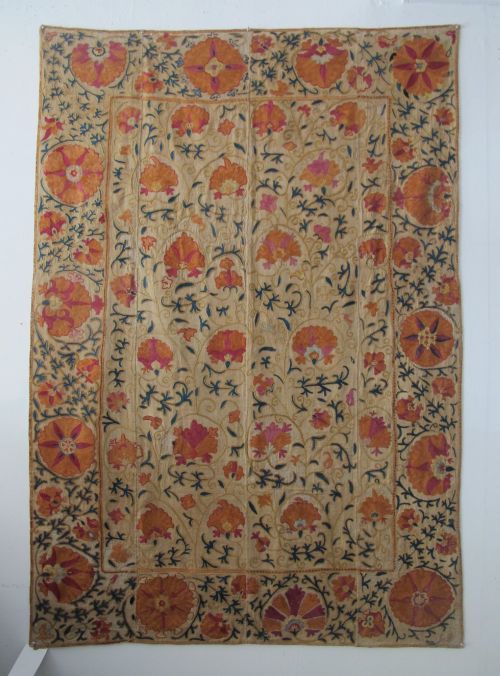
- An embroidered tribal hanging originating from Central Asia, typically worked in silk on a cotton ground with bold floral motifs.
- Verdure tapestry
- A woven wall hanging dominated by lush foliage, trees, and garden landscapes, often produced in European workshops during the seventeenth and eighteenth centuries.
- Sampler
- A piece of needlework produced to demonstrate a maker's proficiency in various stitches and patterns, frequently featuring alphabets and floral borders.
- Needlework
- Art created by using a needle to apply thread or yarn to a fabric ground, encompassing canvas work and embroidery.
- Tapestry
- A thick woven textile produced on a loom where coloured weft threads form pictorial designs across warp threads.
Antique Floral Textile Art: Frequently Asked Questions
How should I hang antique textile art?
Support the weight evenly across the structure using professional mounting or framing methods that avoid piercing fragile historic fabrics.
Keep pieces away from direct sunlight to protect natural silk and wool threads from fading over time.
Where were suzanis made?
Suzanis originate primarily from Central Asian regions including Uzbekistan and areas associated with Bokhara traditions.
Nomadic and workshop makers stitched these textiles by hand using vibrant silk threads on cotton foundations.
What is a verdure tapestry?
A verdure tapestry is a woven wall hanging that depicts plants, trees, leaves, and occasionally birds or animals in a woodland setting.
These pieces date frequently from the seventeenth and eighteenth centuries in European weaving centres.
How do I care for antique needlework?
Maintain a stable indoor climate with minimal humidity changes to protect organic materials like wool, silk, and linen.
Dust gently with a soft brush or low-suction vacuum through a protective mesh screen.