

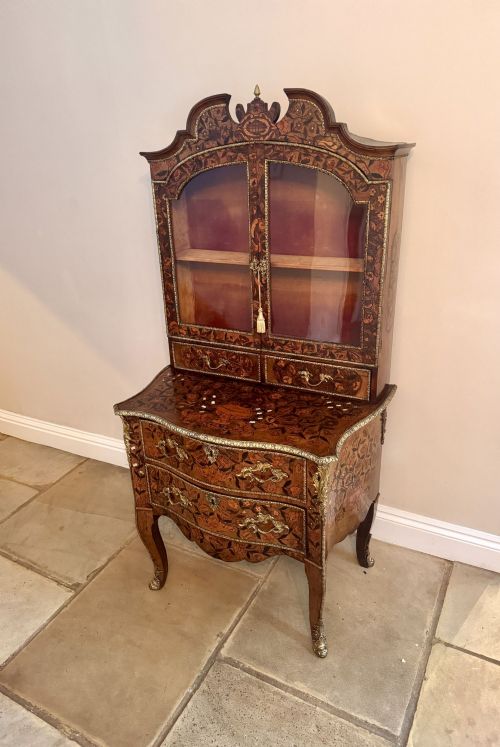
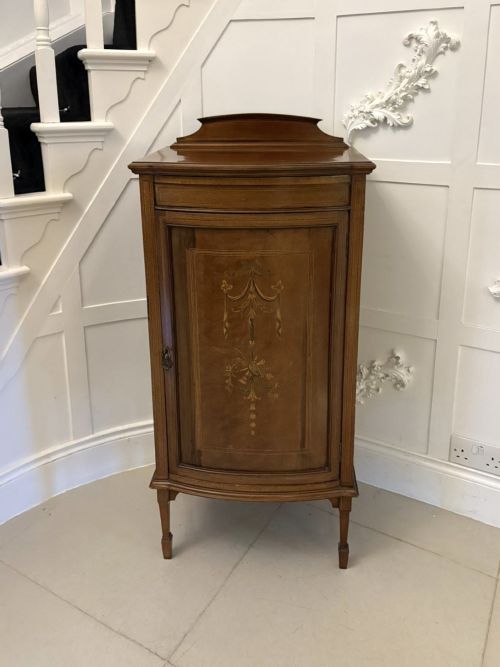
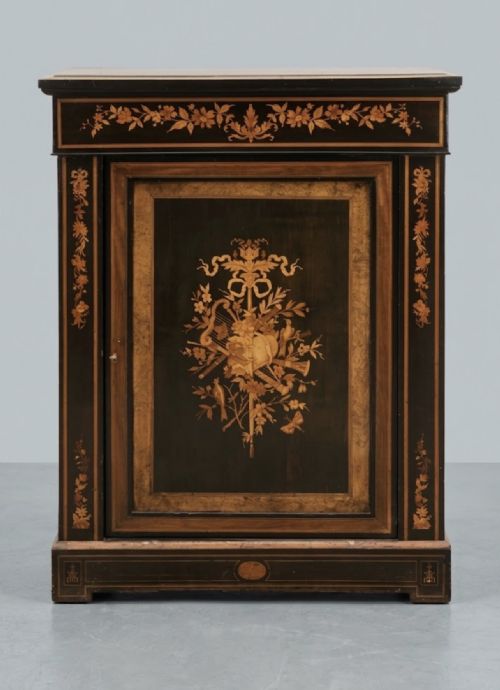
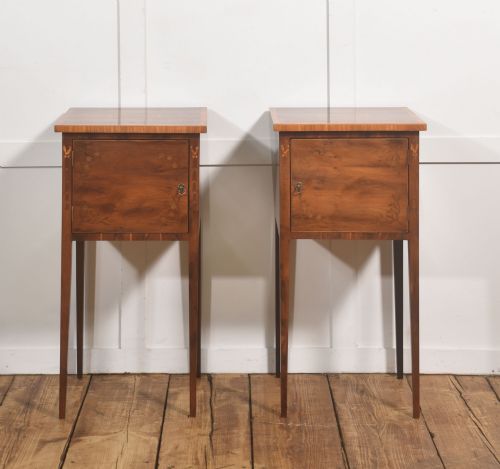
Antique Floral Cupboard
An antique floral cupboard brings intricate botanical marquetry and painted blooms into a room, offering both storage and decorative focus.
Antique Floral Cupboard
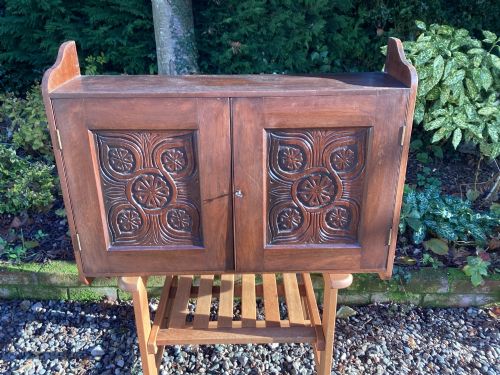
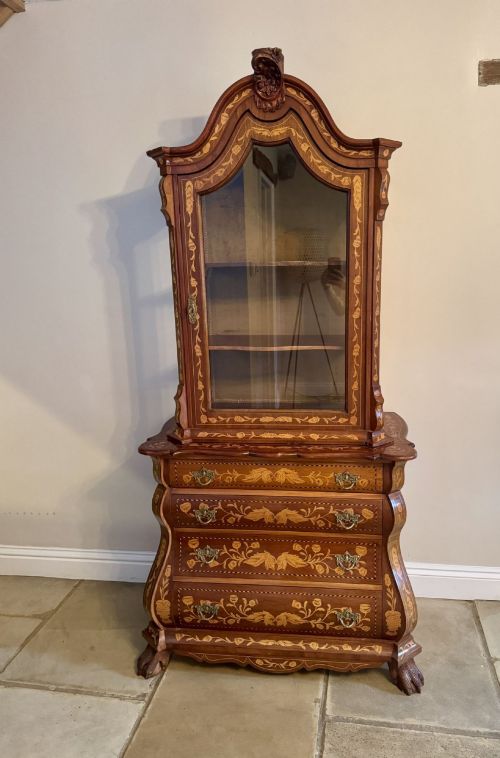
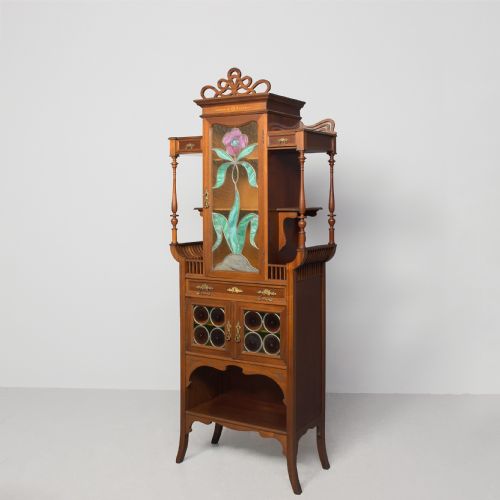
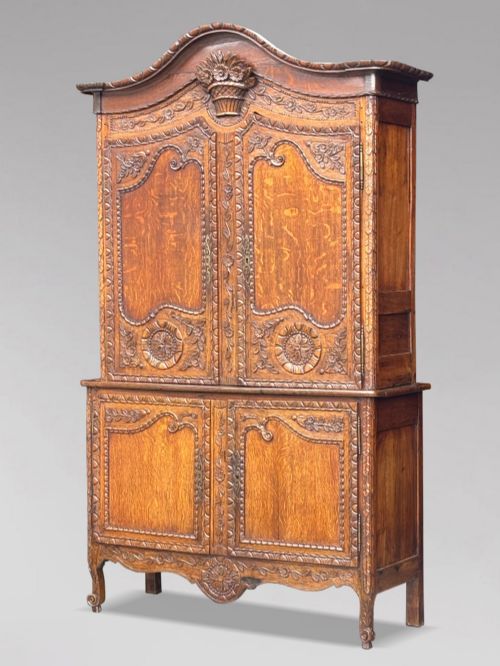
When you search for an antique floral cupboard, you encounter a variety of forms spanning display cabinets, side cabinets, corner cabinets, and wardrobes. These pieces originate from the 18th century through to the early 20th century, reflecting periods such as the Victorian and Edwardian eras.
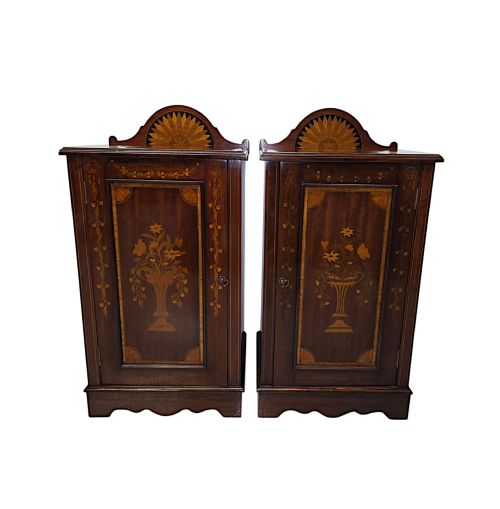
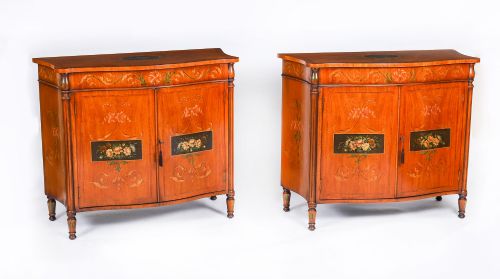
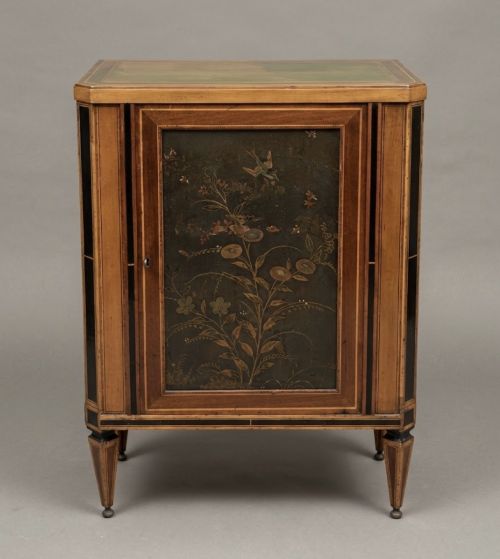
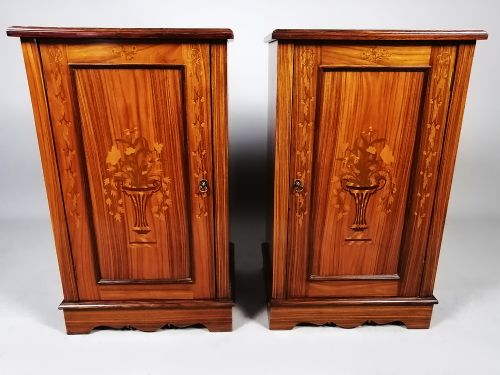
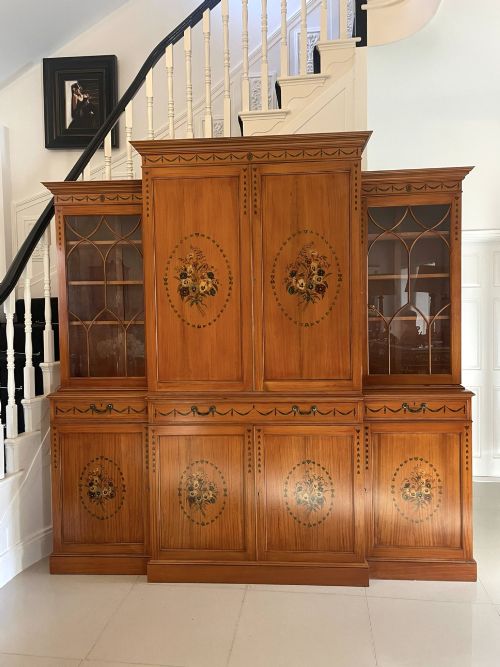
The most frequent examples on this page are Dutch marquetry pieces and Edwardian satinwood or mahogany cabinets decorated with floral inlay. Alongside these stand French Louis-style cabinets, Arts and Crafts wardrobes, and bedside cupboards finished with painted or inlaid botanical motifs.
Materials and construction
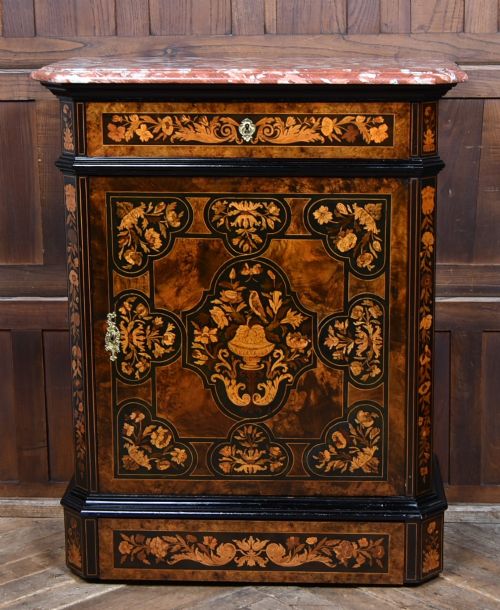
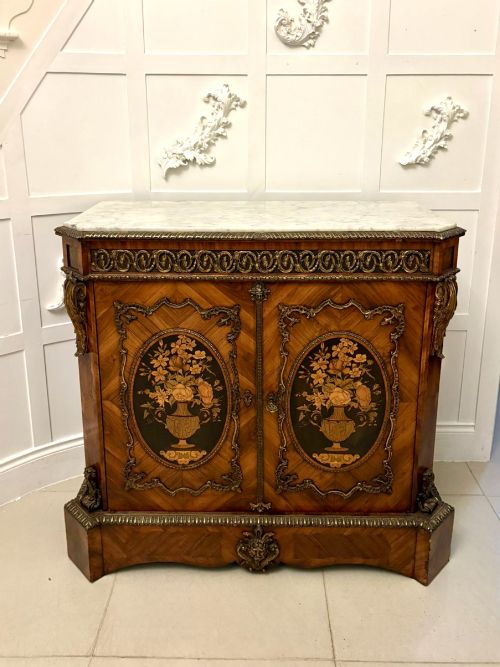
Cabinet makers utilised dense timber foundations of mahogany, walnut, and rosewood, often pairing them with lighter contrasting veneers like satinwood, fruitwood, and burr walnut to render floral designs. Inlaid pieces employ precision cutting of wood veneers to assemble floral marquetry, sometimes accented with pewter or brass.
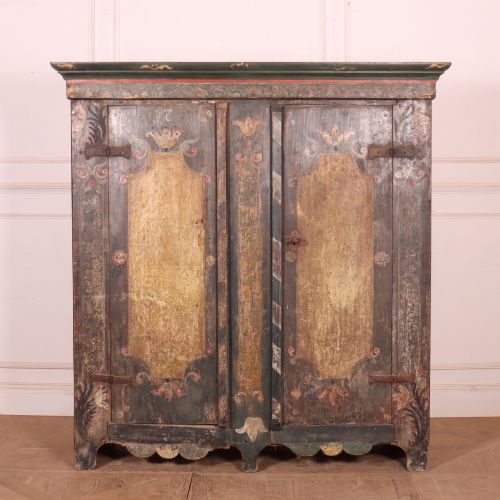
Other examples achieve their botanical decoration through original hand-painted surfaces directly onto wood, accompanied by brass hardware and occasionally marble tops. Construction involves traditional joinery suited to the period, supporting varied formats from wall-hanging cupboards to large breakfront bookcases and linen presses.
Antique Floral Cupboard Retail Price Guide 2026
Typical asking prices for floral cupboard among the pieces listed under this phrase on Sellingantiques today, from the lower quarter to the upper quarter. They describe what is for sale here now, not the wider market.
Distinctions in quality
The standard of an antique floral cupboard rests upon the crispness of the botanical inlay and the precision of the veneer work. Finer examples display meticulous shading within the floral petals and leaves, executed with heated sand or expertly fitted wood varieties, rather than simpler surface printing or crude cutting.
Quality also shows in the selection of the primary timber and secondary woods, the depth of the hand-painted decoration where present, and the integration of original brass mounts or marble tops. Subtlety in proportion and the harmony of the floral composition against the carcase distinguish the superior pieces from standard production.
Edward Holmes Baldock
The Antique Floral Cupboard Glossary
- Marquetry
- Decorative veneer work arranged in pictorial patterns such as floral sprays. The pieces of wood are fitted together precisely before being glued to the carcase.
- Demi-lune
- Half-moon shape in furniture design. This term describes cabinets with a curved, semicircular front and flat back designed to sit flush against a wall.
- Breakfront
- A piece of furniture with a central section that projects forward from the flanking sections. It adds architectural depth to large bookcases and side cabinets.
- Pier cabinet
- A narrow cabinet designed specifically to fit against the wall space between windows. These pieces often feature glass doors for displaying collected objects.
- Linen press
- A tall cupboard originally used for storing household linen. They frequently combine upper shelving enclosed by doors with lower drawers.
Antique Floral Cupboard: Frequently Asked Questions
What periods do these floral cupboards come from?
The pieces span several centuries, with representation from the 17th, 18th, 19th, and early 20th centuries. You will find styles ranging from Dutch Baroque and Sheraton Revival to Victorian, Edwardian, and Art Nouveau.
Craftsmanship evolves across these eras, moving from elaborate Dutch floral marquetry on walnut to refined satinwood painted decoration and Arts and Crafts naturalism.
How were floral cupboards used historically?
These cabinets served multiple domestic functions depending on their form, acting as display spaces for porcelain, bedside storage for personal items, or wardrobes for garments. Larger versions functioned as linen presses or bookcases in principal rooms.
Their decorative floral surfaces meant they were placed in public areas of the home where guests could admire the craftsmanship and botanical motifs.
How do I distinguish between inlaid and painted floral decoration?
Inlaid floral decoration, or marquetry, consists of individually cut pieces of contrasting wood veneer flush-fitted into the background timber. Under close inspection, you can see the natural grain of the wood within the petals and leaves.
Painted floral decoration sits on top of the timber surface as a pigmented artwork, sometimes protected by a clear finish. Painted pieces often appear on satinwood or specific regional furniture types like Venetian sideboards.
How do I care for an antique floral cupboard?
Maintain a stable room environment away from direct sunlight and sudden temperature shifts to protect old wood and delicate veneer work. Excessive heat can cause shrinkage and lift the intricate marquetry pieces.
Apply suitable wax polish sparingly to nourish the timber and preserve the historic finish without building up heavy residues over the floral details.