


Antique Flemish Lighting
Antique flemish lighting brings heavy metal and dark wood into a room, offering genuine period character through centuries-old chandeliers and wall lights.
Antique Flemish Lighting
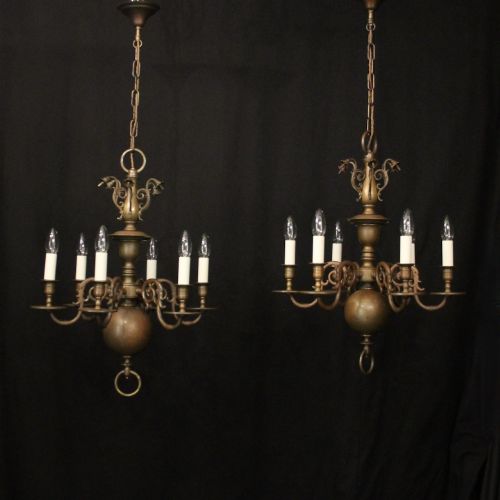
When you search for antique flemish lighting, you encounter robust chandeliers, wall lights, and candlesticks drawn from centuries of craft. The pieces on this page span the seventeenth, eighteenth, and nineteenth centuries, alongside revival works from the early twentieth century.
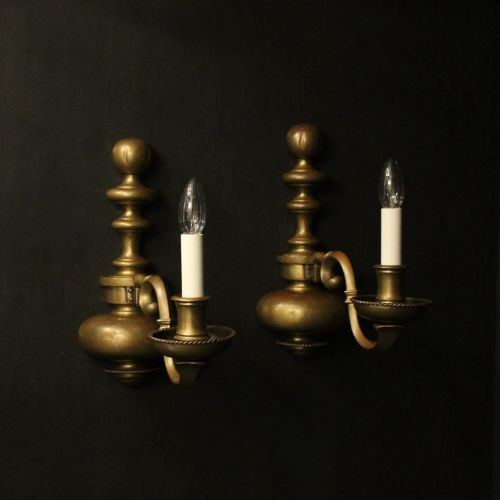
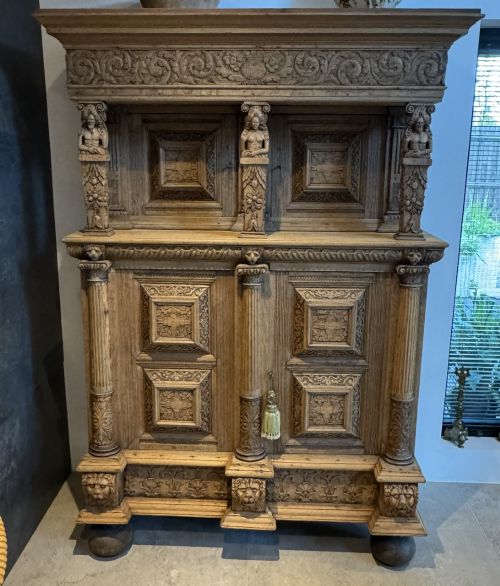
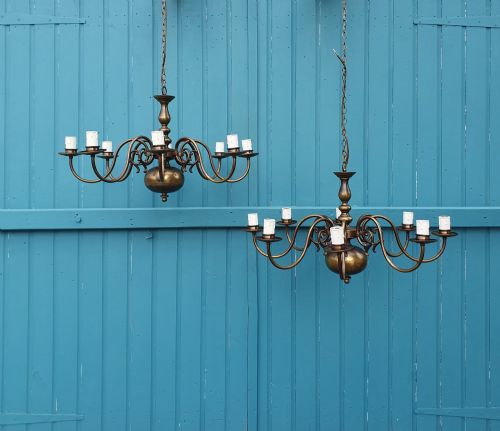
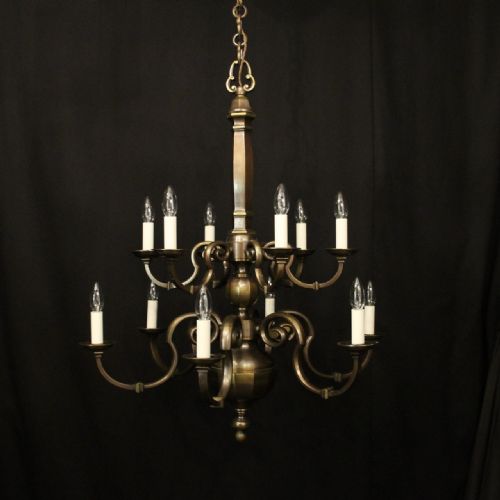
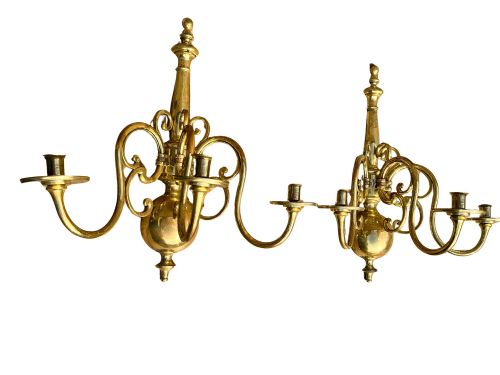
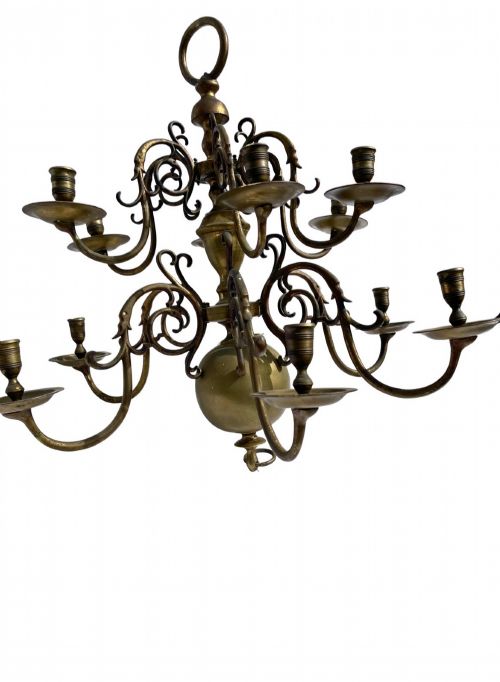
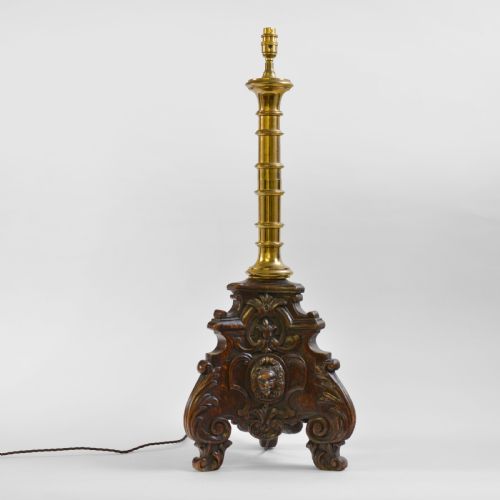
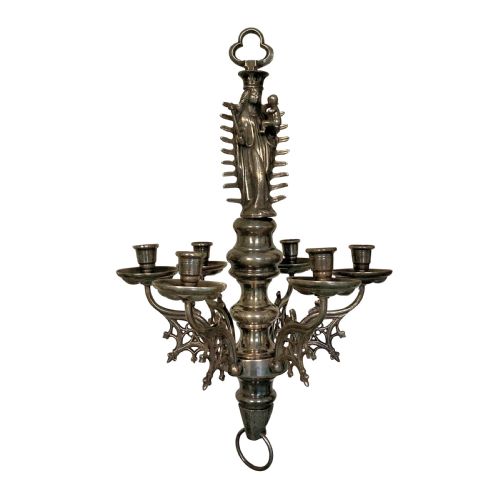
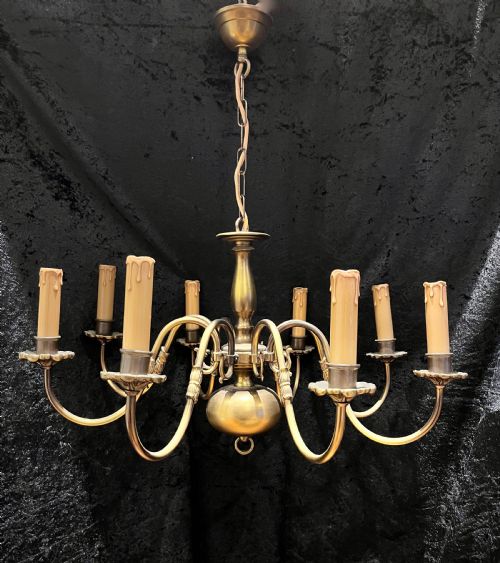
Chandeliers dominate the selection, often featuring multiple branches or tiers in solid brass. Alongside these hanging fixtures, you find carved oak table lamps, brass wall sconces, and early pricket candlesticks originating from the Low Countries.
The aesthetic bridges domestic utility and stately presence, drawing on Flemish Baroque, Dutch Baroque, and Gothic traditions. Buyers typically select these items to anchor historic interiors or to introduce genuine metalwork texture into modern spaces.
What varies in quality
Quality rests in the weight and integrity of the cast metal, the crispness of the hand-carving on oak elements, and the survival of original components across the centuries. Superior examples display balanced proportions, substantial multi-arm branch arrangements, and deep, unforced metal patination.
Lesser or later revival pieces often rely on thinner gauge brass, simplified casting, or mismatched replacement branches. The depth of historical detail, from collar forms on candlesticks to the complexity of multi-tier chandelier structures, defines the upper tier of the range.
Listings feature brass as the dominant material, complemented by occasional oak, iron, and silver plate across centuries of lighting production.
The Antique Flemish Lighting Glossary
- Pricket candlestick
- A candlestick featuring an upward-pointing spike that secures the base of a candle, common in seventeenth-century Low Countries metalwork. This form predates socket-style holders in many domestic settings.
- Flemish Baroque
- An ornate artistic style originating in the seventeenth century, characterised by dynamic curves and rich ornamentation. It heavily influences the design of regional chandeliers and wall brackets.
- Two tier chandelier
- A hanging lighting fixture arranged with multiple branches set across two distinct vertical levels. This construction increases branch counts, often reaching twelve arms for larger spaces.
- Solid brass
- An alloy of copper and zinc cast or turned into structural and decorative components without inner cores of baser metals. It provides the heavy, durable framework for traditional chandeliers and sconces.
- Silver plated
- A thin layer of silver applied over a brass foundation metal to create a reflective, bright finish. This technique appears on specific twentieth-century interpretations of traditional Dutch forms.
Antique Flemish Lighting: Frequently Asked Questions
How do I wire an antique brass chandelier?
Most antique metal chandeliers require professional conversion to accept modern internal wiring without compromising their historical structure. Electricians typically run insulated cords discreetly through the central hollow stem and along the branching arms.
Ensure that the weight of the fixture is supported independently by a ceiling joist rather than the electrical box alone. Consulting a specialist familiar with historic metalwork protects the integrity of the antique components.
What is the difference between Flemish and Dutch styles?
Flemish and Dutch lighting styles share regional Low Countries origins and heavy metal construction, yet they reflect distinct artistic centres. Flemish designs often lean towards carved oak elements and ornate Baroque curves.
Dutch designs frequently emphasise multi-tier brass branch configurations and polished metal surfaces. In practice, makers often blended these aesthetic traditions over successive centuries.
How do I clean antique brass lighting?
Dust brass surfaces regularly with a soft, dry cloth to prevent the accumulation of grime in decorative crevices. Avoid harsh chemical polishes that strip away the aged patination valued by collectors.
If cleaning is necessary, use mild soap and water on a damp cloth, drying the metal immediately. Preserving the dark oxidation marks confirms the age of the piece.
How do I date a brass candlestick?
Dating early brass candlesticks relies on construction methods, such as the presence of collar rings, multi-part assembled stems, and pricket spikes. Seventeenth-century examples often display simpler, heavier turning and rougher casting marks from Low Countries workshops.
Later eighteenth-century pieces introduce refined socket designs and cleaner lathe lines. Comparing base weights and assembly seams helps separate period originals from later revival work.