



Antique Fisherman Sculpture
An antique fisherman sculpture captures the rugged character of coastal life through skilled carving and metalwork.
Antique Fisherman Sculpture
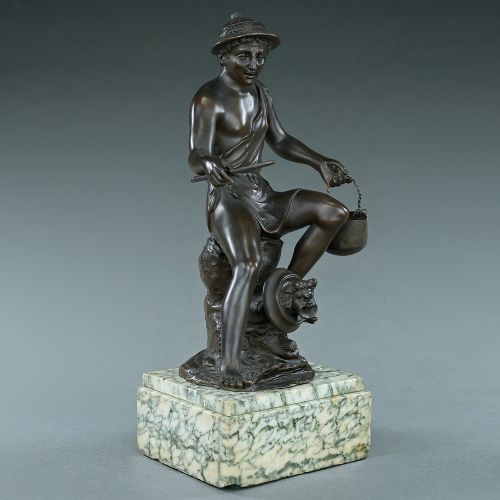
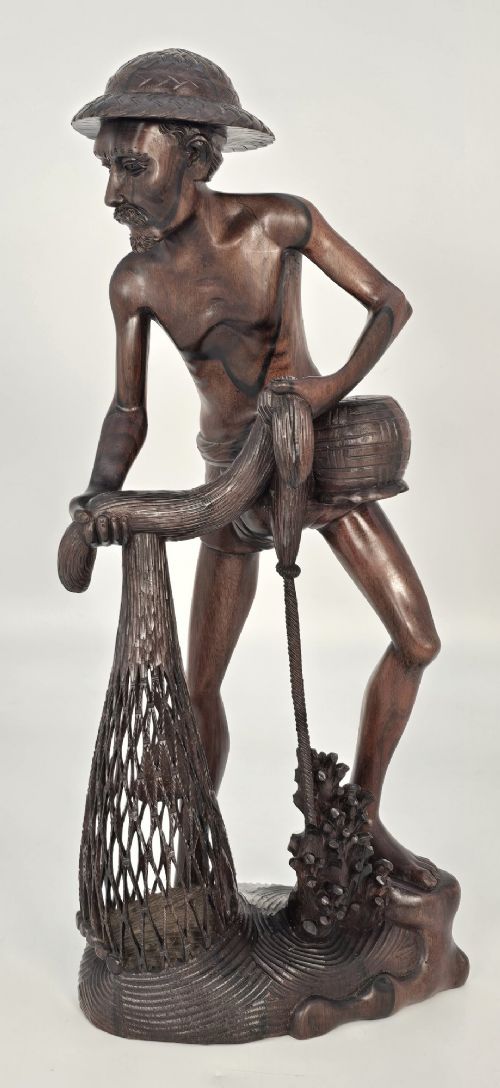
When you search for an antique fisherman sculpture, you encounter figures cast in bronze and spelter, carved from hardwood, and modelled in porcelain and ceramic bisque. These pieces depict solitary figures with nets, traps, and fish, capturing coastal trades from the nineteenth century and the Edwardian era.
The versions most commonly met on this page range from Japanese Meiji period wood netsuke and okimono to nineteenth-century French bronze boatmen and Chinese hardwood carvings. Makers from Bohemia to Vienna produced these sculptural representations in various sizes, from small desktop okimono to large mantel clock garnitures.
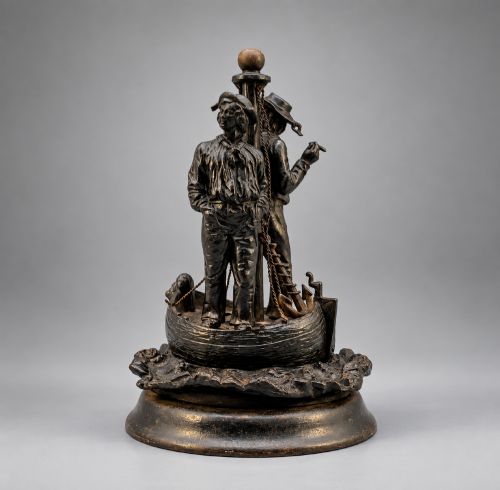
Regional styles dictate the appearance of the subject, showing distinct differences between European foundry casts and Asian carved wooden figures. The grouping includes standalone figurines, decorative groups on fishing boats, and clock sets featuring nautical motifs.
How they were made
Metal sculptures utilise traditional lost-wax casting in bronze or patinated spelter, often enhanced with gilt highlights or cold-painted finishes. Foundry work from the nineteenth century achieved fine detail in the facial expressions, clothing textures, and fishing gear.
Wooden examples rely on hand-carving in dense hardwoods, where artisans defined the grain and movement of clothing through precise chisel work. Ceramic and porcelain figures were moulded, glazed, and painted before being fired in kilns, sometimes incorporating bisque finishes for unglazed matte texture.
Antique Fisherman Sculpture Retail Price Guide 2026
Typical asking prices for fisherman sculpture among the pieces listed under this phrase on Sellingantiques today, from the lower quarter to the upper quarter. They describe what is for sale here now, not the wider market.
Lobster boys and boatmen share shelf space with deities, proving that maritime mishaps happen to everyone.
What varies in quality
The distinction between ordinary and superior pieces rests on the crispness of the modelling and the depth of the chisel work or casting. Master carvers and foundry artists achieved anatomical precision and natural movement, whereas lesser examples exhibit stiff postures and simplified details.
Material integrity and surface finish define the upper tier of the range, showing well-preserved patination, original polychrome, or untouched hardwood grain. Wear patterns and the stability of applied finishes, such as cold paint or gilt, indicate the original standard of manufacture.
Tomochika·Royal Dux·Carl Kauba·Lavergne
The Antique Fisherman Sculpture Glossary
- Okimono
- A Japanese ornamental carving intended for display, commonly depicting figures, animals, or daily scenes. These objects appeared in homes during the Meiji period.
- Spelter
- An alloy of zinc and lead used as a cheaper alternative to bronze for sculptural casting. It accepts patination readily to resemble heavier metals.
- Netsuke
- A small carved toggle used in traditional Japanese dress to secure a pouch or basket to a kimono sash. They are frequently carved from boxwood or ivory with intricate detail.
- Gilt
- A thin layer of gold applied to the surface of metal or wood to provide a decorative metallic sheen. It distinguishes high-status decorative objects from plain casts.
Antique Fisherman Sculpture: Frequently Asked Questions
What materials are used?
The listings show figures produced in bronze, patinated spelter, hardwood, porcelain, ceramic bisque, and gilt finishes. Artisans selected these materials to suit regional carving traditions or European foundry practices.
Metal pieces rely on casting techniques, while wooden sculptures showcase hand-chiselled details reflecting nineteenth-century and Edwardian craftsmanship.
How do I identify periods?
Periods are identified through stylistic cues such as the naturalism of Art Nouveau curves, the distinct characteristics of the Japanese Meiji period, or nineteenth-century European foundry marks.
Examinations of material patination, clothing styles, and mounting techniques also help place a piece within the listed Victorian, Edwardian, or nineteenth-century timeframes.
Where were these made?
Origin points span several regions, including France, China, Japan, Bohemia, and Vienna. Each region imparted distinct regional aesthetics and technical methods to the depiction of fishermen and maritime figures.
European workshops focused on bronze and ceramic figures, while Asian carvers utilised dense hardwoods and boxwood for netsuke and okimono.
How were they displayed?
These sculptures served as tabletop decorative objects, cabinet pieces, and components of larger decorative schemes like mantel clock garnitures. Their scale suited domestic display in studies, parlours, and drawing rooms.
Netsuke functioned primarily as wearable toggles before becoming standalone collector pieces, while larger bronze and wooden figures stood independently on desks or shelves.