

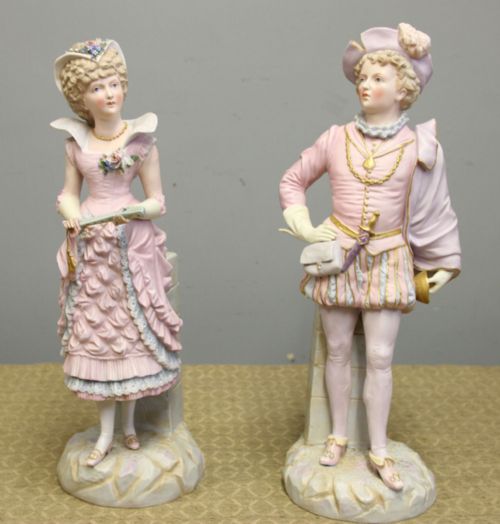


Pastel Ceramic Ornament
A pastel ceramic ornament brings delicate nineteenth-century charm and romantic figures into a room.
Pastel Ceramic Ornament
The objects available span the nineteenth century, including pieces originating from France, Germany, and England. You will frequently find matching pairs of figurines as well as standalone ceramic studies reflecting the ornate tastes of the period.
How they were made
Potters shaped these figures from porcelain and bisque porcelain, employing detailed mould-making techniques to achieve fine facial expressions and clothing folds. Artisans then applied delicate enamel paint and glaze, often highlighting details with gold leaf.
The firing process required precise temperature control in kilns to fix the ceramic body and the surface colours. Many pieces combined unglazed bisque porcelain with touches of hand-painted enamelling for varied texture.
Pastel Ceramic Ornament Retail Price Guide 2026
Typical asking prices for pastel ceramic ornament among the pieces listed under this phrase on Sellingantiques today, from the lower quarter to the upper quarter. They describe what is for sale here now, not the wider market.
Object types seen on this page focus heavily on decorative figurines, porcelain pairs, and ornate chariot vases.
What varies in quality
The subtlety of the pastel palette and the precision of the hand-painted enamel influence the visual appeal of a piece. Finer examples retain delicate shading and crisp application of gold leaf without heavy-handed touch-ups.
Volkstedt·Meissen·Sitzendorf
The Pastel Ceramic Ornament Glossary
- Bisque porcelain
- Unglazed ceramic fired once to produce a matte, porous surface resembling marble. It became popular in the nineteenth century for detailed portrait and figure studies.
- Rococo Revival
- A nineteenth-century design style drawing on eighteenth-century French motifs, featuring asymmetrical scrolls, floral garlands, and ornate, curving lines.
- Enamel glaze
- A vitreous composition fused to the ceramic surface during firing to provide colour and protection. It allows for soft pastel tones across decorative figures.
- Chariot vase
- A decorative vessel shaped in the form of a classical or fanciful chariot. These uncommon nineteenth-century ornamental pieces served purely display purposes.
Pastel Ceramic Ornament: Frequently Asked Questions
How were these figures displayed?
Owners placed these ceramic figures on mantelpieces, side tables, and within glass-fronted cabinets. Pairs were frequently arranged symmetrically to anchor a decorative scheme.
Their primary purpose was aesthetic display rather than functional use within the Victorian home.
How do I care for antique porcelain?
Dust these delicate ceramic pieces gently with a soft, dry brush to prevent the accumulation of dirt within intricate mouldings. Avoid using water or liquid cleaners, particularly on bisque surfaces.
Keep them positioned away from direct sunlight and areas prone to accidental knocks or vibrations.
How can I tell the age of a figure?
Dating relies on examining the ceramic paste, the manufacturing technique, and the style of the clothing and base. Nineteenth-century pieces often display specific factory marks or characteristic mould seams.
Stylistic cues such as Rococo Revival scrolls and Victorian colour choices also help narrow down the period of production.