





Bisque Ceramic Figurine Group
A bisque ceramic figurine group brings quiet pastoral charm and classical narrative to a mantelpiece through unglazed, matte porcelain figures.
Bisque Ceramic Figurine Group
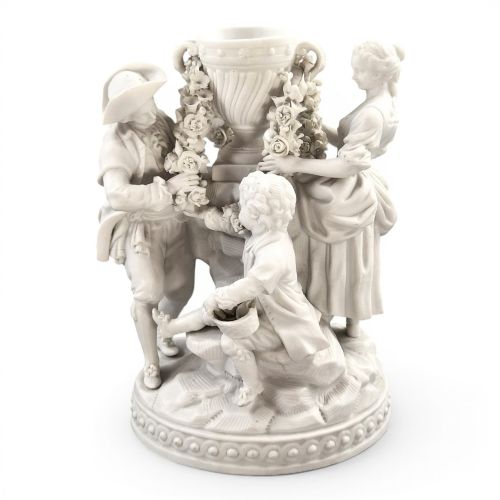
A bisque ceramic figurine group brings together multiple unglazed porcelain figures modelled into theatrical, mythological, or domestic scenes. These sculptural compositions range from classical figures like the Three Graces to romantic French courtly pairs and Victorian family groups.
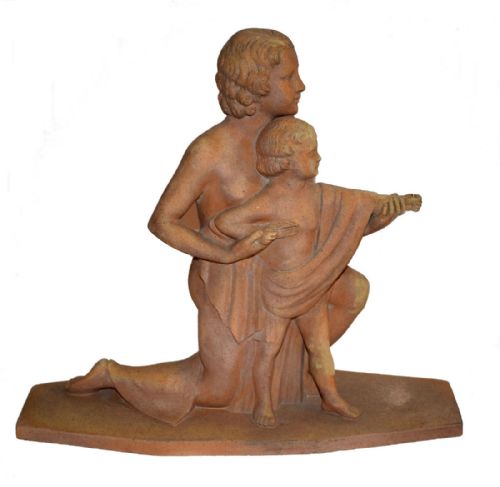
The versions most commonly met on this page span the Victorian and late nineteenth-century periods, alongside earlier Georgian derivations and later Art Deco interpretations. They often feature delicate details such as floral garlands or maritime settings, rendered entirely in matte white or softly tinted porcelain.
Makers from various European ceramic centres produced these groups to serve as sophisticated table centrepieces or decorative parlour ornaments. Buyers seek them for their tactile matte surfaces and the intricate modelling that captures human expression without the distraction of heavy glaze.
How they were made
These sculptural groups rely on biscuit porcelain, also known as bisque or Parian ware, which is fired once to harden the clay body without applying a glossy glaze. This technique leaves the ceramic with a smooth, chalky finish reminiscent of carved marble.
Bisque Ceramic Figurine Group Retail Price Guide 2026
Typical asking prices for bisque ceramic figurine group among the pieces listed under this phrase on Sellingantiques today, from the lower quarter to the upper quarter. They describe what is for sale here now, not the wider market.
Fishermen toil on waves and fortune-tellers read palms while Cupid faces distress, all frozen forever in stubborn white clay.
What varies in quality
The reputation of the manufactory and the skill of the individual modeller dictate the artistic ambition of the piece. Well-modelled groups display fluid drapery and balanced proportions that draw the eye naturally around the entire multi-figure arrangement.
Luca Madrassi·Triebner Ens And Co·Vion Et Baury·Royal Dux Bohemia·Copeland·B Rezl
The Bisque Ceramic Figurine Group Glossary
- Bisque Porcelain
- Unglazed ceramic fired once to create a matte, porous finish that resembles white marble. It is frequently employed for figurative sculptures to highlight fine modelling.
- Parian Ware
- A fine-grained type of biscuit porcelain developed in the nineteenth century to imitate carved marble. It contains a high feldspar content which vitrifies slightly during firing.
- Biscuit
- An alternative term for unglazed ceramic ware that has undergone its initial firing. It provides a receptive surface for delicate hand-painted enamel details.
- Vieux Paris
- A collective term for porcelain produced by various independent workshops in and around Paris during the eighteenth and nineteenth centuries. These pieces often incorporate rich gilding and sculptural modelling.
- Neo-Rococo
- A nineteenth-century revival style characterised by asymmetrical scrolls, naturalistic floral motifs, and theatrical movement. It heavily influences the composition of many Victorian figure groups.
Bisque Ceramic Figurine Group: Frequently Asked Questions
How should I clean bisque porcelain figures?
Dust these unglazed ceramic pieces gently using a soft, dry brush to prevent dirt from settling into the porous matte surface.
Avoid using water or chemical cleaners, as moisture can permanently stain the unsealed white ceramic body.
Where were these figure groups displayed historically?
Owners typically placed these decorative sculptures on drawing room mantelpieces, side tables, or as centrepieces for formal dining tables during the Victorian era.
Their detailed multi-figure narratives were intended to spark polite conversation among guests in domestic reception rooms.
How do I distinguish Parian ware from standard bisque?
Parian ware possesses a subtle sheen and a slightly heavier weight due to its high feldspar content, which allows it to mimic carved marble more closely than standard matte bisque.
Standard bisque porcelain remains entirely chalky and flat in appearance without that characteristic marble-like translucency.
Are these groups marked with maker signatures?
Many examples bear impressed numbers, factory stamps, or moulded initials on their flat undersides, though older Georgian pieces often remain unmarked.
Signatures or applied seals help identify specific European potteries and individual modellers from the nineteenth century.