


Antique Fish Prints
These antique fish prints and related marine works offer a direct look into nineteenth-century natural history and coastal life.
Antique Fish Prints
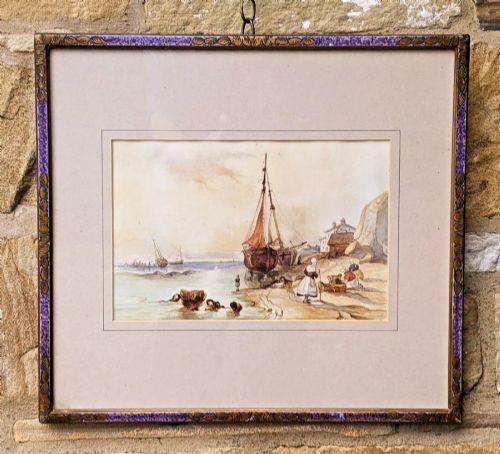
When you search for antique fish prints, you encounter a specialised selection of nineteenth-century engravings, watercolours and decorative works focusing on marine subjects and angling. The pieces available range from detailed natural history studies to framed prints and watercolours depicting coastal scenes and fishing boats.
The selection includes nineteenth-century engravings by Jonathan Couch, sets of embossed prints, and Chinese gouache paintings on pith paper. Alongside these specific fish studies, you will find broader angling prints and coastal watercolours from the eighteenth and nineteenth centuries.
How they were made
The works rely upon traditional paper supports decorated with ink, watercolour pigment and gouache. Several examples utilise specialised surfaces such as pith paper, combining delicate painting techniques with organic materials.
Framed presentation is common, with wood and glass utilised to protect the paper works. Engravings and etchings employ inked plates to transfer fine lines onto the paper ground.
Fish illustrations demonstrate that nineteenth-century scientists took art just as seriously as their scales.
What varies in quality
Quality rests upon the precision of the draughtsmanship and the clarity of the ink or watercolour application. Fine hand-colouring and detailed scaling elevate natural history engravings above standard decorative sheets.
The condition of the paper surface and the integrity of the original framing elements influence the overall presentation. Works signed by known artists or originating from distinct natural history publications carry greater visual and historical interest.
The Antique Fish Prints Glossary
- Engraving
- A printmaking technique where an artist cuts lines directly into a metal plate with a burin. This method produces crisp, highly detailed lines suited for scientific illustration.
- Gouache
- An opaque water-based paint that provides solid, vibrant colour areas. It often appears on alternative supports like pith paper.
- Pith paper
- A delicate, spongy material made from the pith of the Tetrapanax papyrifer plant. It absorbs watercolour and gouache with a distinctive velvety texture.
- Aquatint
- An etching technique that creates tonal areas resembling watercolour washes. It is frequently combined with standard etching lines in print production.
Antique Fish Prints: Frequently Asked Questions
How should I hang antique fish prints?
Keep these paper works away from direct sunlight to prevent the watercolour pigments and inks from fading over time. Maintain stable room humidity to protect the paper and wooden frames.
Group smaller framed prints together or pair coastal watercolours to create a balanced display on a study or hallway wall.
Are all these prints from the nineteenth century?
The selection spans from the late eighteenth century through the Victorian era and into the twentieth century. While nineteenth-century pieces predominate, you will also find earlier items dated around eighteen hundred.
Check individual listings for specific period attributions, as styles range from early natural history engravings to later sporting art and etchings.
What is pith paper?
Pith paper is a fragile natural material derived from plant pith, historically used in China for export paintings. It has a unique absorbent quality that gives gouache and watercolour pigments a bright, velvety finish.
Because of its delicate nature, works on pith paper require careful framing behind glass to prevent physical damage.
How do I distinguish natural history prints from coastal art?
Natural history prints focus specifically on scientific or detailed taxonomy, such as engravings of fish by named authorities like Jonathan Couch. Coastal art, by contrast, depicts broader scenes of fishing boats, harbours and angling.
Both categories share a marine theme but serve different aesthetic purposes within a collection.