


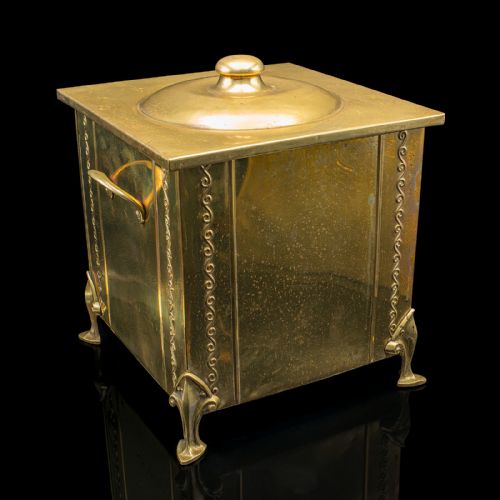


Antique Fireplace Fuel Bin
An antique fireplace fuel bin brings both practical storage and period character to a hearth, housing coal, logs, and peat neatly beside the fire.

Antique Fireplace Fuel Bin
When you search for an antique fireplace fuel bin, you encounter a variety of fireside storage containers designed to hold coal, logs, and peat near the hearth. The pieces on this page span the eighteenth, nineteenth, and early twentieth centuries, encompassing Victorian, Edwardian, and Arts and Crafts eras.
The most common forms you meet here include wooden coal boxes with carved or inlaid details, metal buckets and scuttles in brass and copper, and larger lidded bunkers or purdoniums. English, Scottish, and French origins appear across the selection, alongside specific regional designs like coopered peat buckets.
Materials and Technique
Makers utilised a combination of sturdy hardwoods and durable metals to construct these fuel bins, selecting oak, mahogany, walnut, and pine for wooden bodies and liners. Brass, copper, and wrought iron provide the metallic strength needed for daily hearth use, often shaped through hand-beating, casting, or coopered stave construction.
Decorative techniques visible in the evidence include fine wood carving, marquetry inlay, and hammered metalwork associated with the Arts and Crafts movement. Ormolu mounts and incised Galleon designs further embellish the surfaces, uniting utility with the aesthetic tastes of the Victorian and Edwardian periods.
Object types include coal boxes, purdoniums, log bins, peat buckets, and scuttles, originating from English, Scottish, French, and Belgian makers.
Craftsmanship and Material Selection
Quality in these fuel bins rests on the integrity of the construction and the calibre of the materials selected by the maker. Solid hardwoods like oak and mahogany, joined with durable dovetails or coopered staves, distinguish the sturdier pieces from simpler containers.
The finesse of the metalwork and ornamentation also divides the range, from plain utilitarian iron and brass to intricate Arts and Crafts hand-beaten copper and carved walnut. Superior examples display thoughtful detailing, such as fitted metal liners and secure mounts, which ensure the vessel endured the heavy work of carrying fuel.
Petrus Ramus·Liberty London
The Antique Fireplace Fuel Bin Glossary
- Purdonium
- A specialised coal box, usually featuring a sloping drop-front door and a shovel stored in an internal compartment. This design allowed clean access to fuel while containing dust.
- Coopered
- A method of construction where tapered wooden staves are joined edge-to-edge and bound with metal hoops, traditionally used for round vessels like buckets and tubs.
- Ormolu
- Gilded bronze or brass applied as decorative mounts on furniture and metalware. It provides bright metallic highlights against darker woods.
- Aesthetic Movement
- A late nineteenth-century design style emphasising visual and material beauty over narrative or moral themes. It favoured simplified forms and artistic craftsmanship.
- Scuttle
- A metal or wooden container with a handle, designed for carrying coal to the fireplace. Many include a shaped lip or spout for controlled pouring.
Antique Fireplace Fuel Bin: Frequently Asked Questions
What is a coal purdonium?
A coal purdonium is a dedicated fireside cabinet featuring a hinged, sloping front door that opens to reveal a metal liner for holding fuel. They often include a matching coal scoop tucked inside.
These pieces were designed to keep domestic coal neatly stored and out of sight in the Victorian or Edwardian parlour.
How do I tell an oak coal box's age?
You determine the age by examining the construction methods, the wood finish, and the decorative style applied to the exterior. Carved motifs and brass fittings often correspond to specific periods like the Victorian or Arts and Crafts eras.
Looking inside for original metal liners and assessing the wear on the handles also provides clues to the piece's history.
Can I use an antique fuel bin for logs?
Many of these containers were built specifically as log bins, coal buckets, or bunkers to handle solid fuels by the hearth. Sturdy wooden boxes and iron or copper buckets easily accommodate modern firewood.
Checking for a robust interior liner helps protect the antique wood or metal from dampness and bark debris.
What is an Arts and Crafts fuel bin?
An Arts and Crafts fuel bin typically showcases hand-beaten copper or ironwork, emphasising honest craftsmanship and simple, robust forms. These pieces often feature exposed rivets, hammered textures, or stylized natural motifs.
They reflect the late nineteenth and early twentieth-century movement that valued handmade decorative arts over mass production.