
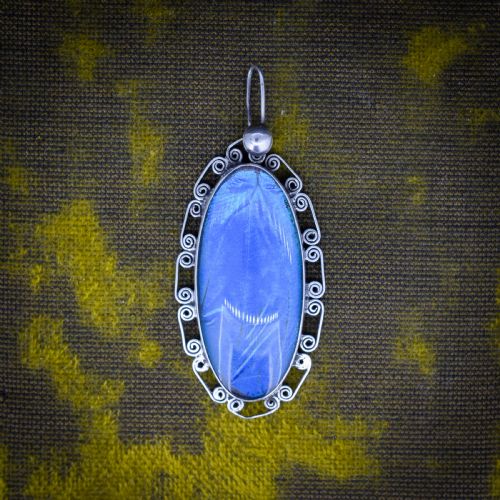


Antique Filigree Necklace
An antique filigree necklace combines intricate wirework metal with gems from the Victorian, Edwardian, and Art Deco periods.
Antique Filigree Necklace
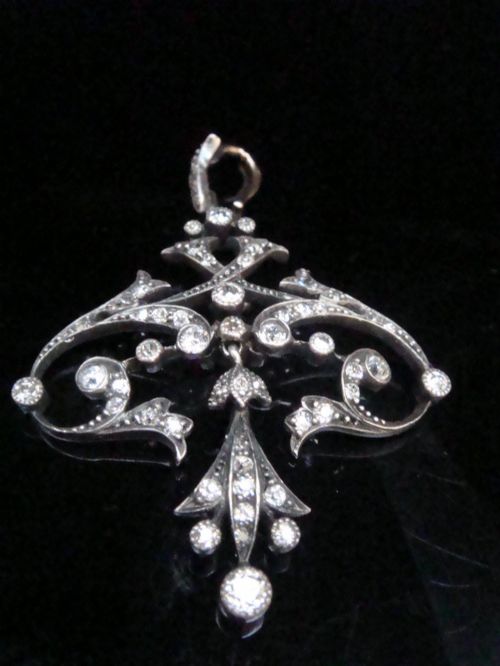
When you search for an antique filigree necklace, you encounter delicate metalwork pendants and chains spanning the Victorian, Edwardian, and Art Deco eras. These pieces integrate silver, platinum, and various gold purities, often set with stones such as turquoise, amethyst, diamond, and seed pearl.
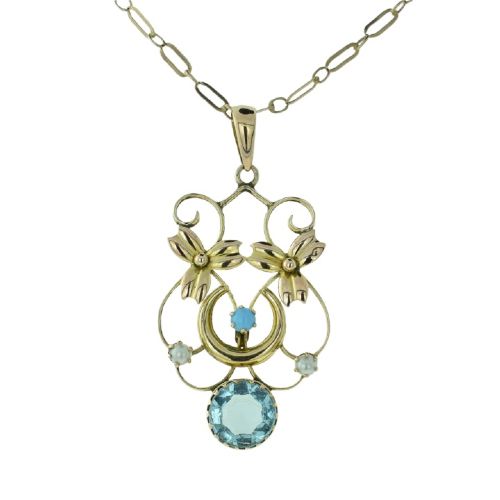
The form frequently appears as a pendant on a long chain, lavaliere, or locket. Examples range from British Edwardian designs to Continental European pieces, including Ottoman revival and Austro-Hungarian styles.
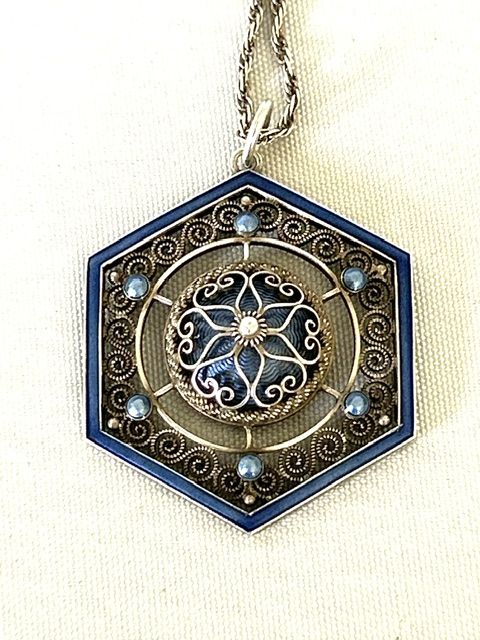
Makers utilised fine soldered wire to create lace-like patterns surrounding central gemstones. The results demonstrate the lapidary and metalworking skills of the nineteenth and twentieth centuries.
How they were made
Goldsmiths and silversmiths drew precious metals into thin wires, twisting and shaping them into openwork motifs before soldering them to a solid backing or frame. This wirework technique defined the lightweight yet intricate aesthetic of the jewellery.
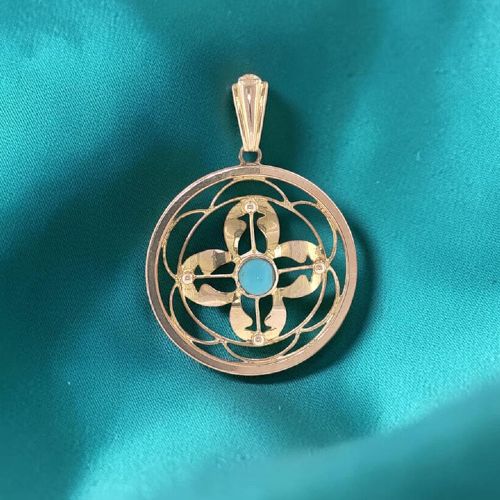
Workshops set gemstones including diamonds, amethysts, topazes, and turquoise using bezel or collet settings integrated directly into the metal framework. Pearls and cultured pearls were often threaded or pinned to accent the hanging drops.
Surface treatments such as guilloche enamel and gilding added colour and contrast to the silver and gold structures. Chains were hand-assembled to match the intricate detailing of the central pendant.
Materials recorded in current stock include turquoise, amethyst, diamond, seed pearl, onyx, and tourmaline.
What varies in quality
The fineness of the soldered wirework dictates the precision and complexity of the design. Superior pieces display even, tightly controlled scrolls without excess solder obscuring the open channels.
The selection and cut of the set stones influence the overall distinction of the item. Natural gems like high-grade amethysts, clean diamonds, and matched turquoise cabochons elevate the piece above standard factory production.
Original presentation boxes and maker signatures, such as those from Marius Hammer or Carl Bucherer, indicate higher workshop prestige. The integrity of the original chain also contributes to the completeness of the item.
Marius Hammer·Carl Bucherer
The Antique Filigree Necklace Glossary
- Filigree
- Ornamental work of fine wire formed into delicate tracery. This technique creates an open, lace-like metal structure.
- Lavaliere
- A pendant necklace featuring a central drop stone or dangling elements. Popularised during the Edwardian period.
- Guilloche
- Decorative engine-turned engraving covered with translucent enamel. This finish appears frequently on early twentieth-century silver pendants.
- Turquoise
- A hydrous phosphate of copper and aluminium valued for its blue-green hue. Jewellers used it extensively in Victorian and Edwardian silver settings.
- Cordiform
- Heart-shaped design seen in traditional pendants. This form appears in regional tribal jewellery.
Antique Filigree Necklace: Frequently Asked Questions
How do I date an antique filigree necklace?
You date an antique filigree necklace by examining the metal purity marks, stone cuts, and stylistic clues. Victorian pieces often use heavy gold or silver with large amethysts, whereas Edwardian items favour platinum and delicate seed pearls.
Design motifs also offer clear indicators. Art Deco examples display geometric symmetry, while Art Nouveau pieces show flowing organic lines and whiplash curves.
What metals were used in these necklaces?
Jewellers utilised sterling silver, 9ct gold, 14K gold, 18ct gold, and platinum across the different periods. Silver was common in Victorian and Arts and Crafts pieces.
White gold and platinum emerged strongly during the Edwardian and Art Deco eras to complement diamond settings. Yellow and rose gold predominated in nineteenth-century examples.
Are the chains usually original?
Many necklaces retain their period-appropriate chains, though replacements occurred over time due to wear or preference. Matching the metal colour and link style helps determine period consistency.
Signed pieces and those in original fitted boxes are more likely to retain their matching chains. Lengths vary significantly from short lavaliere drops to long opera chains.
How should I clean filigree jewellery?
You should clean filigree jewellery gently with a soft dry cloth to remove dust from the recessed wirework. Avoid harsh liquid dips that can damage soft stones like turquoise or pearls.
Professional ultrasonic cleaning is unsafe for glued pearls or certain treated gems. Regular careful dusting preserves both the metal integrity and the enamel surfaces.