
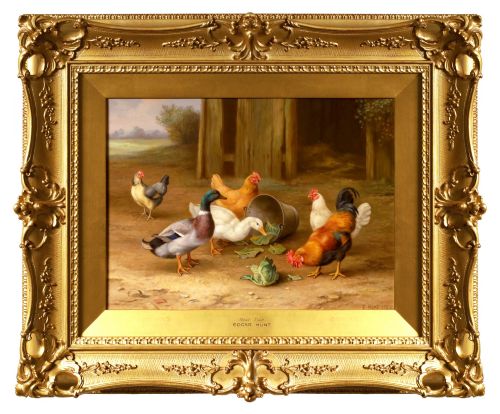
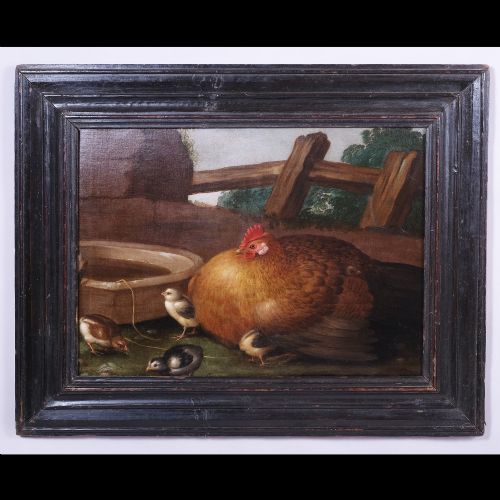

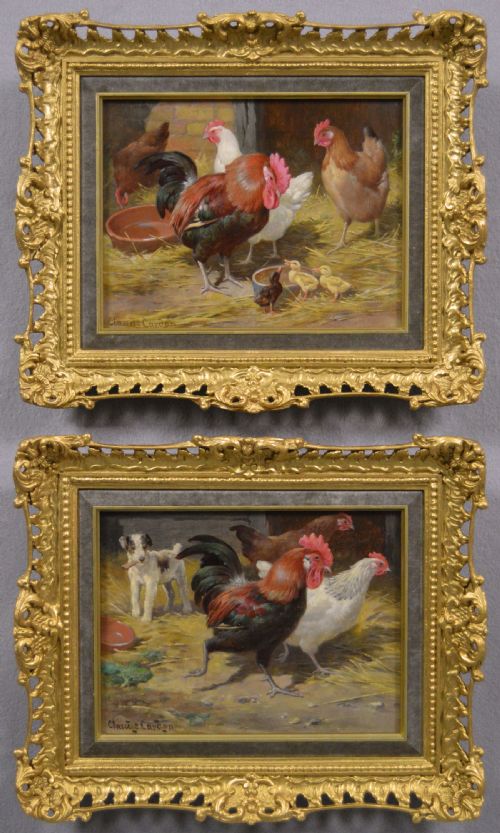


Antique Farmyard Painting
When you search for an antique farmyard painting, you encounter traditional rural scenes populated by working horses, cattle, poultry and rustic buildings from past centuries.
Antique Farmyard Painting
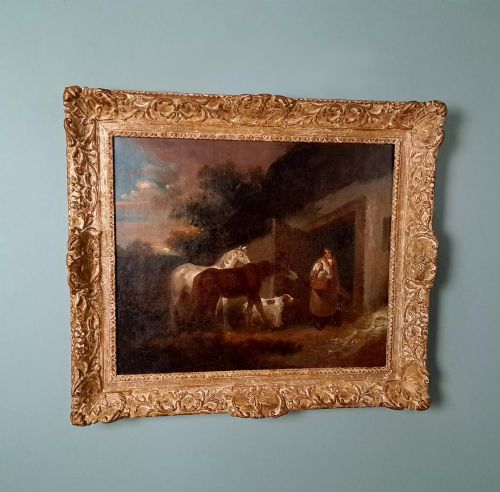
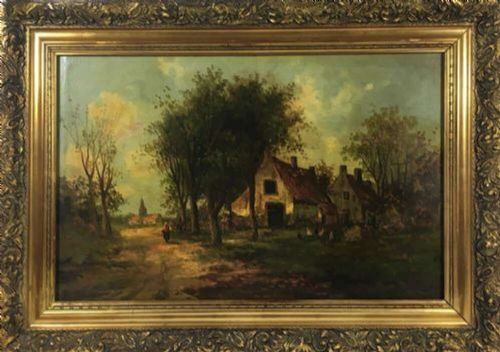
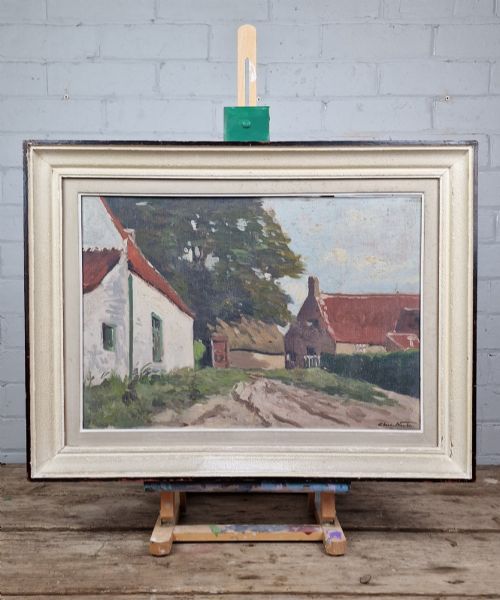
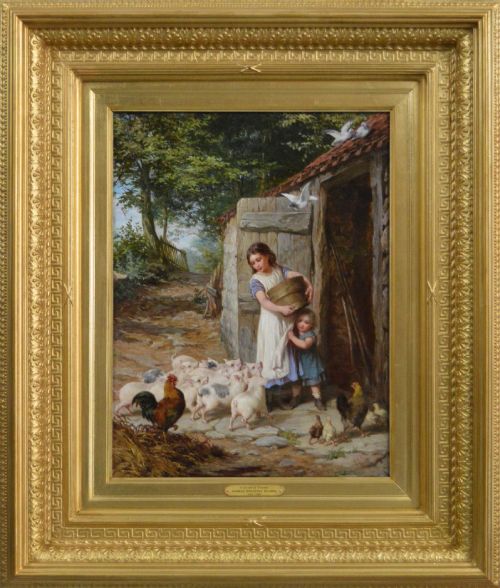
An antique farmyard painting captures the daily activity of the countryside, focusing on horses, pigs, poultry and farm workers within pastoral settings.
The most common examples on this page are nineteenth-century oil paintings on canvas or board, alongside occasional watercolours and early works from the eighteenth century.
These pieces reflect distinct periods including the Victorian era and Edwardian times, often styled through British realism, pastoral movements or impressionism.
Materials and technique
Artists predominantly applied oil paint onto stretched canvas or wooden board, creating durable surfaces that hold rich pigment over generations.
Watercolour on paper appears alongside oil works, offering lighter, more delicate depictions of farm life and animals.
Many of these historic paintings retain their original frames, often constructed from wood and finished with gilt.
Canvas and board serve as the primary supports for nineteenth-century oil paintings in this collection.
Evaluating the work
Quality rests upon the artist's ability to render animal anatomy and natural light convincingly within a balanced composition.
Finer works display confident brushwork and depth of perspective, whereas lesser examples can feel flat or formulaic in their arrangement of figures.
William Joseph Shayer Senior·Charles Houben·George Augustus Holmes·Edgar Hunt·Claude Cardon·Herbert Royle·William JB Jenkins·John Frederick Herring Jnr·John Atkinson·Frederick W. Jackson·Percival Glenfern·John Linnell·Pierre Emmanuel Dielmans·Julius Caesar Ibbetson·Arthur Charles Dodd·Robert Russell MacNee·Owen Bowen·B. Kaufmann·Joseph Kirkpatrick·John R. K. Duff·Edward Killingworth Johnson·Edmund Bristow·Isidore Verheyden·George Morland·JF Slater
The Antique Farmyard Painting Glossary
- Oil on Canvas
- Pigment mixed with drying oil applied to a woven fabric support stretched across a wooden frame. This combination allows for rich blending and textured brushstrokes.
- Oil on Board
- Paint applied directly to a rigid wooden panel or stiff board rather than fabric. It provides a stable surface often used for smaller studies and sketches.
- Watercolour
- Pigments suspended in a water-soluble vehicle applied to paper. It creates transparent washes of colour suited to delicate light effects.
- Giltwood
- Wood that has been coated with a thin layer of gold leaf or gilt paint. This traditional frame finish adds decorative warmth to the artwork.
- Pastoral
- A style or subject matter that idealises rural life and agricultural scenes. These works emphasise the peaceful harmony of the countryside.
Antique Farmyard Painting: Frequently Asked Questions
What subjects feature in these paintings?
These works typically depict horses, cattle, sheep and poultry gathered around barns, stable doors and farm gates. Human figures such as farmers, milkmaids and labourers often share the space.
Artists focused on recording authentic rural routines, capturing animals feeding, resting or working alongside people in the British and European countryside.
How do I date a farmyard painting?
Dating relies on costume details, agricultural equipment, artist signatures and framing styles. Nineteenth-century works frequently show Victorian dress and heavy working horses.
Examining the canvas texture, stretcher frames and backboards provides further clues regarding the age and origin of the piece.
Where were these rural scenes painted?
Many paintings record actual farms and rural locations across Britain and Europe, sometimes noted directly in the titles or artist records. Painters travelled to Yorkshire, Wales and continental settings to observe agricultural life firsthand.
Studio work based on earlier field sketches also accounts for a large portion of these rural compositions.
How should I display an oil painting?
Display paintings away from direct sunlight and sudden temperature shifts to protect the oil paint and canvas from cracking. Stable indoor environments preserve both the artwork and its period frame.
Ensure wall fixings match the weight of the frame securely so the piece hangs level and safe.