


Antique Fairground Figure
An antique fairground figure brings the drama and colour of the old carnival straight into a room.
Antique Fairground Figure
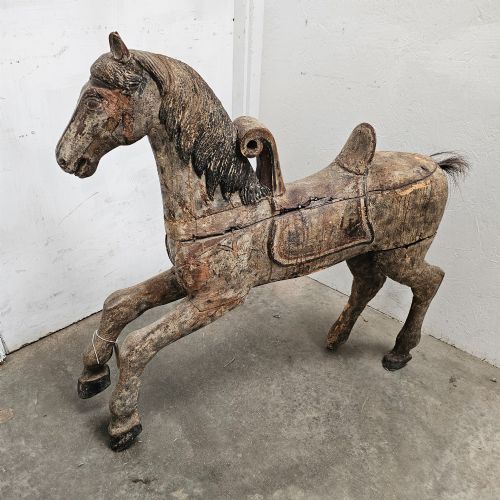
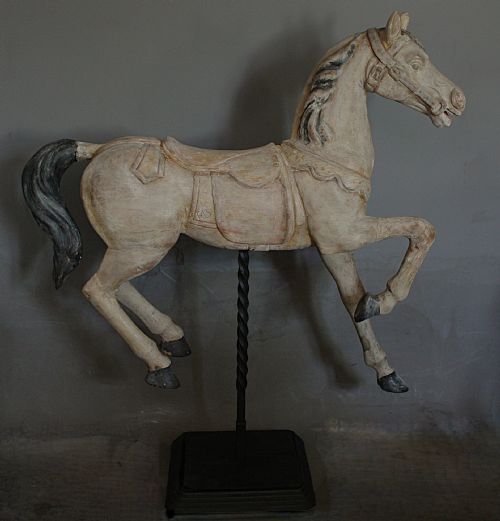
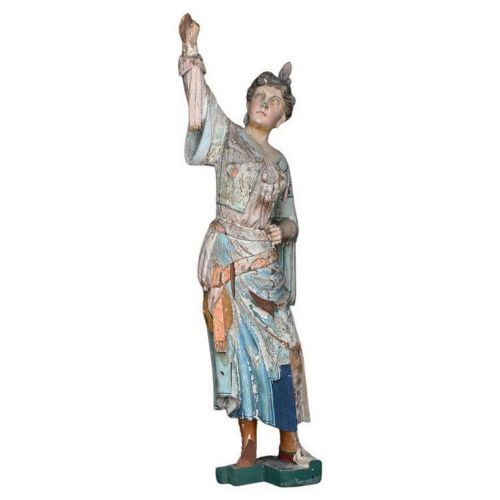
When you search for an antique fairground figure, you are looking at carved wooden survivals from nineteenth and early twentieth-century carousels, organs and rides. These pieces range from full-sized carousel horses and pigs to dragon ride fragments and an organ figure.
The versions you are most likely to meet on this page hail from nineteenth-century France or early twentieth-century continental workshops. They belong firmly to the realm of folk art and decorative sculpture, having spent decades exposed to the weather before finding their way into homes.
How they were made
Makers carved these figures predominantly from solid wood, shaping forms like horses, pigs and dragons with hand tools. Iron and metal components provided structural reinforcement, while materials such as horsehair and leather added realistic details to carousel animals.
Artisans applied polychrome paint directly to the carved wood surfaces to catch the eye of fairgoers spinning past on rides. Surviving fragments often retain layers of this original paint, showing the bright hues chosen for maximum spectacle.
Listings feature wooden sculptures, figures and objects spanning the nineteenth century up to 1920, incorporating paint, leather and horsehair.
What varies in quality
The distinction between ordinary and exceptional pieces lies in the vigour of the carving and the depth of personality given to the subject. A carousel horse or pig with expressive anatomical details and dynamic movement stands well above a stiffly rendered counterpart.
The condition and survival rate of the polychrome paint layer also dictate the standing of a piece. Original, undisturbed paint surfaces carry far more visual weight than heavily restored or later repainted examples.
The Antique Fairground Figure Glossary
- Carousel
- A revolving ride featuring seats for passengers, historically decorated with carved wooden animals. These massive machines required robust woodwork to withstand constant motion.
- Polychrome paint
- The multi-coloured decoration applied to wooden sculptures to create vibrant visual displays. This paint was formulated to endure outdoor fairground conditions.
- Folk art
- Artistic work created within a cultural tradition by self-taught or untrained artisans. Fairground figures sit within this category due to their origins in popular entertainment.
- Limonaire
- A prominent maker of mechanical street organs and fairground organs based in Paris. Their orchestrions often featured animated figures that moved as the music played.
- Gavioli
- A renowned family firm specialising in the manufacture of fairground organs and mechanical instruments. Organs by this maker incorporated carved figures designed to attract crowds.
Antique Fairground Figure: Frequently Asked Questions
Where did these figures come from?
These figures originated in French and continental European workshops during the nineteenth and early twentieth centuries. They were produced by specialised carvers supplying amusement parks and travelling showmen.
Many bear the hallmarks of regional folk art traditions distinct to France and neighbouring countries.
How were they used originally?
They were mounted on carousel platforms as riding seats or attached to mechanical organs to provide visual spectacle alongside music. Organ figures and ride fragments animated the fairground atmosphere for crowds of fairgoers.
Their bright paint and dynamic forms were engineered to draw attention from a distance.
How do I live with one?
Living with a fairground figure involves placing it as a focal sculptural element in a room, often mounted on a custom stand. Because they are heavy wooden objects, they require stable interior environments away from direct heat sources.
Their strong visual presence suits both rustic folk art displays and eclectic modern interiors.