





Antique Fabric Work Well
These antique fabric work well tables are practical nineteenth-century sewing and side pieces that bring genuine warmth and utility to any room.
Antique Fabric Work Well
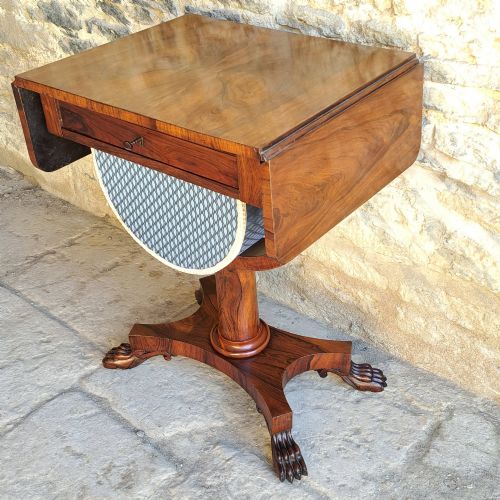
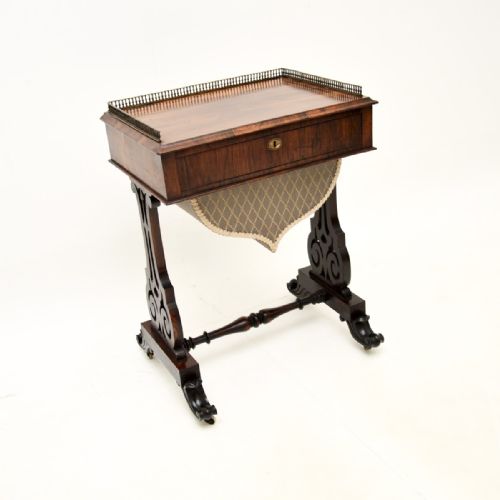
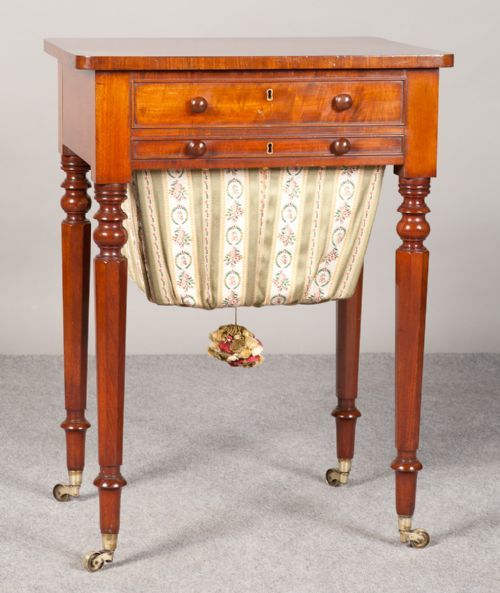
When you search for antique fabric work well, you are looking at nineteenth-century tables designed for sewing, needlework and light domestic tasks. These pieces combine a functional top surface with integrated storage compartments, often taking the form of fitted work boxes or hanging fabric bags beneath.
The origins of these tables reflect the domestic habits of the nineteenth century, where elegant furniture doubled as functional workspaces for needlecraft. Their enduring appeal lies in this clever marriage of refined aesthetics and everyday utility.
How they were made
Cabinet makers constructed these work tables using solid and veneered timbers, predominantly selecting rosewood, mahogany, walnut and burr walnut for their rich grain patterns. Pollard oak also appears on specific Regency pieces, offering a striking alternative figure.
The structural framework often incorporates brass fittings and drop-flap mechanisms to maximise versatility in smaller spaces. Interiors frequently feature partitioned compartments designed to organise threads, needles and small textile tools neatly.
Antique Fabric Work Well Retail Price Guide 2026
Typical asking prices for fabric work well among the pieces listed under this phrase on Sellingantiques today, from the lower quarter to the upper quarter. They describe what is for sale here now, not the wider market.
Listings span the nineteenth century, featuring Victorian, Regency and William IV periods across rosewood, mahogany and burr walnut.
What varies in quality
The selection of timber grain and veneer determines much of the visual hierarchy among these tables, with highly figured burr walnut and carefully matched rosewood sitting at the upper end. Plain mahogany examples tend to offer a more austere, utilitarian character.
Construction refinement separates the ordinary from the exceptional, visible in the smoothness of drawer actions, the integrity of drop-flap supports and the preservation of original internal fittings. Tables retaining their fitted compartments demonstrate superior original craftsmanship.
The Antique Fabric Work Well Glossary
- Work table
- A small domestic table designed specifically for sewing and needlework, usually featuring a drawer or suspended fabric bag.
- Burr walnut
- A highly prized timber veneer characterised by swirling knot formations and rich colour variation. It adds significant decorative movement to nineteenth-century cabinet work.
- Regency
- An architectural and decorative style spanning the early nineteenth century, noted for classical restraint and elegant proportions. Pieces from this era often display clean lines and dark exotic woods.
- Drop-flap
- A hinged leaf attached to the side of a table that can be raised to extend the surface area or lowered when space is restricted.
Antique Fabric Work Well: Frequently Asked Questions
What is an antique work table?
An antique work table is a nineteenth-century piece of furniture designed to hold sewing equipment, threads and textile projects. They typically feature a top surface above a compartment, drawer or fabric bag.
These tables were used in parlours and drawing rooms where ladies engaged in needlecraft while socialising. Today, they serve equally well as lamp tables or occasional tables in modern homes.
How do I date a sewing table?
Dating a sewing table involves examining the primary timber, construction methods and stylistic details. Regency pieces tend to feature classical influences and Pollard oak or rosewood, while Victorian examples often utilise burr walnut and heavier proportions.
Internal construction also offers clues, as machine-sawn components generally indicate a later nineteenth-century date. Comparing the leg turnings and brass fittings to known period styles helps narrow the decade of manufacture.
Are these tables sturdy enough for daily use?
These nineteenth-century tables were built by skilled cabinet makers using dense hardwoods like mahogany and rosewood. Their robust underlying frames make them well-suited for everyday placement in a modern living space.
Care should be taken with delicate drop-flap mechanisms and veneered surfaces, treating them with the same respect as any other antique wooden furniture. Placing them away from direct heat sources ensures the timbers remain stable.
What timber species are most common?
Rosewood and mahogany dominate the nineteenth-century examples on this page, prized for their deep colour and durability. Burr walnut also appears frequently, offering a highly decorative grain pattern.
Less common variations include Pollard oak, which provides a distinctive lighter tone and mottled figure on specific Regency drop-flap tables.