
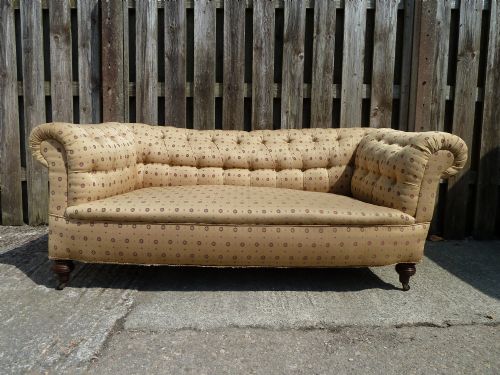
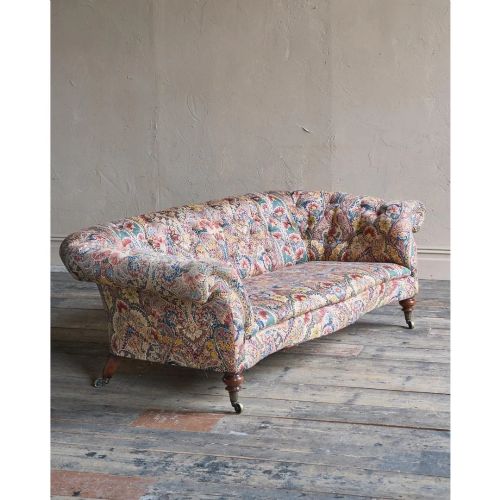
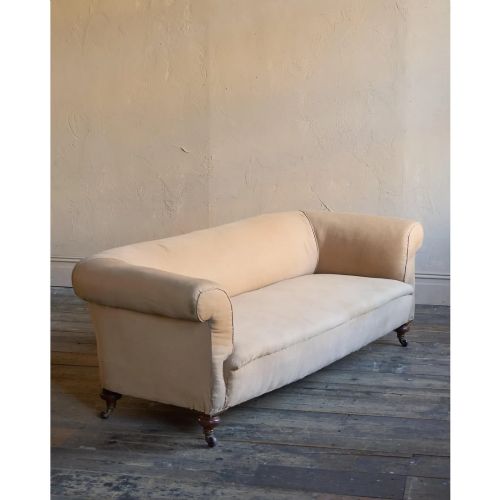
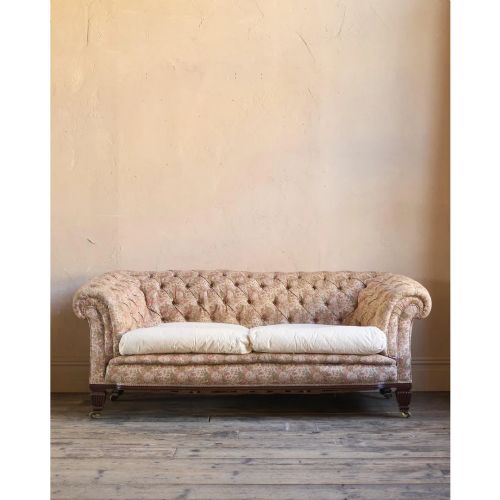


Antique Fabric Chesterfield
An antique fabric chesterfield brings deep comfort and quiet grandeur to a room, offering classic seating built to last.
Antique Fabric Chesterfield
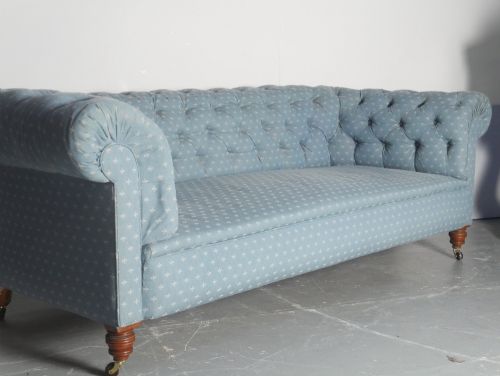
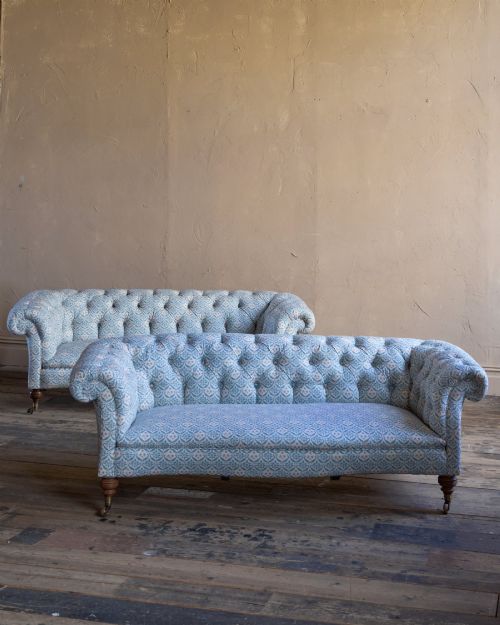
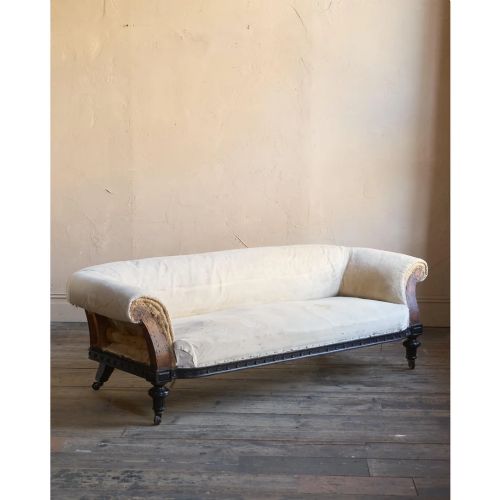
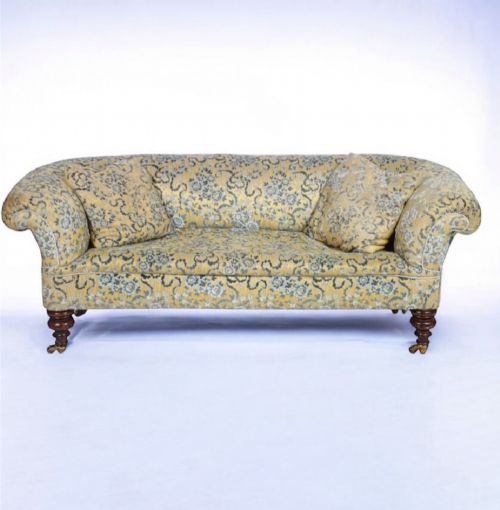
An antique fabric chesterfield provides a traditional deep-buttoned seating option, appearing chiefly in Victorian and Edwardian iterations across English Country House and Aesthetic Movement styles. Buyers seeking an antique fabric chesterfield will find substantial sofas and settees designed for generous proportions and deep comfort.
The selections span the nineteenth century, including specific dates such as eighteen-fifty and eighteen-ninety, alongside Edwardian examples. These pieces serve as focal points in reception rooms, combining classic upholstery forms with robust wooden and hardwood frames.
How they were made
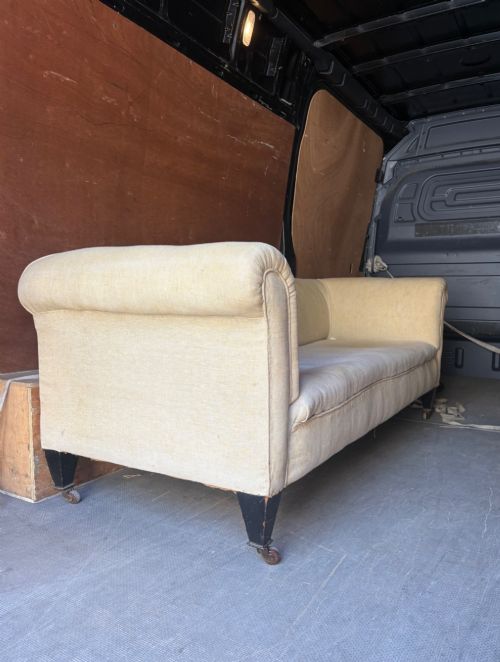
Maker construction relies upon sturdy internal frames built from hardwood and mahogany, providing the essential structural skeleton for heavy upholstery. Artisans shaped these frames to support deep springing and extensive padding.
The outer layer typically involves cotton, calico, and fabric upholstery, secured with traditional techniques. Details often incorporate exposed wood and brass elements to finish the framework.
Some nineteenth-century pieces arrive straight from Berners Street, carrying the quiet dust of centuries in their buttoned folds.
What varies in quality
Distinction across pieces rests upon the integrity of the underlying woodwork and the pedigree of the maker's workshop. Examples carrying attribution to notable makers command greater interest due to superior framing and upholstery standards.
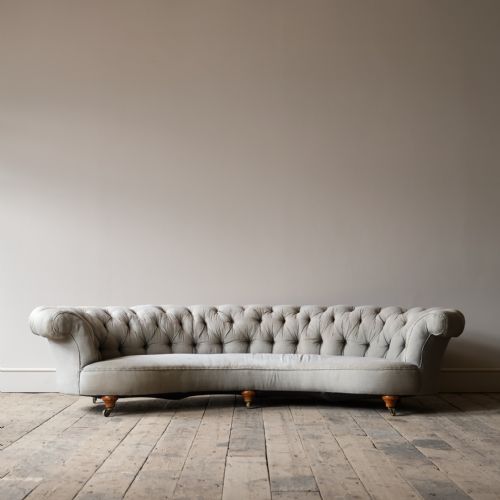
The subtlety of the serpentine or crescent silhouette also dictates distinction, alongside the preservation of the original structural timbers. Subtle differences in proportions and the execution of the curves separate standard examples from finer outputs.
Howard and Sons·Hampton and Sons
The Antique Fabric Chesterfield Glossary
- Chesterfield
- A large upholstered sofa traditionally featuring deep buttoning and rolled arms of equal height. It remains a staple of traditional interior decoration.
- Calico
- A plain-woven cotton fabric often used as an initial upholstery layer beneath the top cover. It provides a sturdy foundation for traditional padding.
- Serpentine
- A furniture outline characterised by a wavy or gently undulating line. This contour is frequently observed along the back or base of refined seating.
- Aesthetic Movement
- A late nineteenth-century design current emphasising visual beauty over narrative or moral function. Pieces from this movement display distinctive artistic sensibility.
Antique Fabric Chesterfield: Frequently Asked Questions
How do I identify a Howard and Sons chesterfield?
Examination of the internal webbing, castor stamps, and paper labels usually confirms the origin of these specific pieces. Signature maker details remain tucked beneath the upholstery or stamped directly into the wooden framework.
Studying the distinct contour, such as crescent or serpentine shapes, also helps distinguish their workshop output from generic nineteenth-century alternatives.
Are these sofas suitable for daily use?
These pieces were built with robust hardwood frames designed for enduring domestic service. Their substantial construction handles regular seating well.
Appropriate care for the fabric and periodic checks of the internal springs ensure the sofa remains functional in a modern household.
What is the difference between Victorian and Edwardian examples?
Victorian pieces tend to feature heavier proportions, deep buttoning, and darker mahogany or hardwood frames. They reflect the ornate sensibilities of the nineteenth century.
Edwardian items often present a slightly lighter stance while maintaining the core comfort and deep seating associated with the form.
Why buy one for reupholstering?
Purchasing an antique frame for reupholstering allows the buyer to select modern textiles while retaining superior period craftsmanship. It ensures the finished sofa matches specific interior colour schemes.
The underlying build quality of nineteenth-century frames makes them worthy candidates for renewed fabric covers.