


Curved Button Back Settee
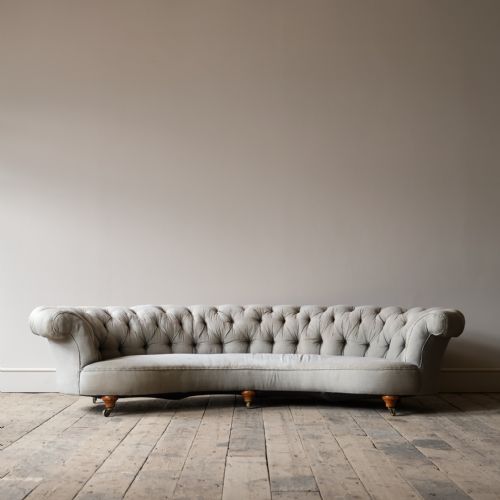
A curved button back settee brings deep nineteenth-century comfort and serpentine lines into a room, offering a sculptural silhouette built for formal reception spaces.
Curved Button Back Settee
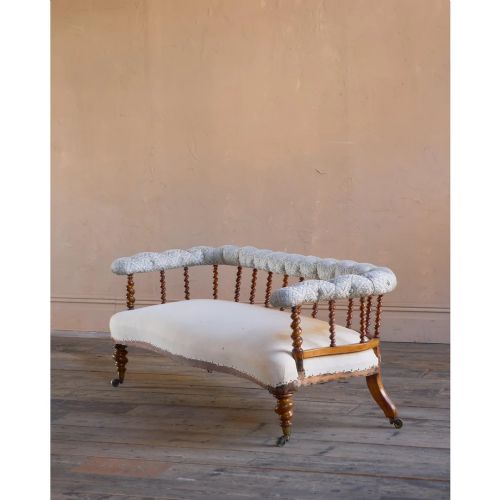
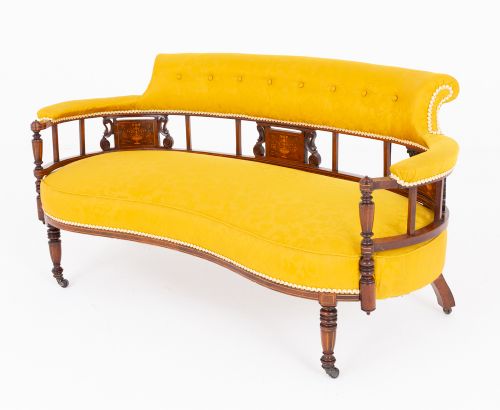
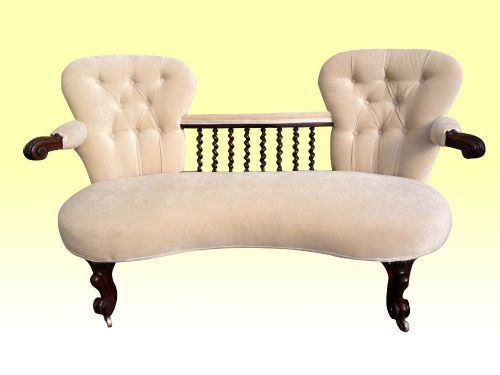
A curved button back settee is a nineteenth-century seating form defined by its serpentine front and deeply recessed upholstery. You are most likely to meet Victorian examples on this page, spanning the decades from eighteen-fifty to nineteen-hundred.
The evidence shows these pieces appearing as salon sofas, corner sofas, canapes, and chesterfields. Makers such as Howard and Sons and C. Hindley and Sons shaped these forms using rosewood, mahogany, and hardwood.
Originating largely in the Victorian period, these settees combine upholstered frames with polished show-wood elements. Their varied silhouettes range from French provincial influences to traditional English chesterfield designs.
How they were made
Makers constructed the primary frames from dense timbers including mahogany, rosewood, and general hardwood. These structural woods provided the stable skeleton required to support tightly tensioned upholstery and deep springing.
Craftsmen applied traditional upholstery techniques, securing fabric or leather with brass fixings and pulling the material into structured buttoned patterns. Exposed wooden elements received hand-polished finishes to highlight the grain of the rosewood or mahogany.
Deep buttoning was originally designed to stop internal horsehair stuffing from migrating when people sat down.
What varies in quality
Quality rests in the precision of the frame's serpentine curve and the integrity of the show-wood timber. Rosewood and mahogany structures demonstrate superior cabinet-making compared to simpler hardwood frames.
The execution of the buttoning and the choice of surface material dictate the refinement of the piece. Fine examples feature meticulously aligned upholstery tension that maintains the crisp geometry of the curves.
Howard and Sons·C. Hindley and Sons
The Curved Button Back Settee Glossary
- Button back
- A method of upholstery where tufting buttons are pulled deep into the padding to create a geometric pattern of dimples. This technique secures the internal stuffing while adding decorative depth to the backrest.
- Serpentine front
- A furniture front that curves inward in the centre and outward at the ends, forming an undulating line. It requires skilled carpentry to shape the wooden rails to this flowing contour.
- Canape
- A decorative French-style settee with an exposed wooden frame and upholstered back and seat. These pieces often feature carved show-wood and cabriole legs.
- Chesterfield
- A traditional sofa style characterised by arms and back of the same height and deep button-upholstered padding. It remains a staple of nineteenth-century seating design.
Curved Button Back Settee: Frequently Asked Questions
What is a curved button back settee?
A curved button back settee is a nineteenth-century upholstered seating form featuring an undulating or rounded backrest. These pieces combine deep tufting with exposed wooden frames.
They appear across Victorian styles, ranging from compact salon seats to large chesterfields.
How were these settees used originally?
These pieces served as formal seating in nineteenth-century drawing rooms and reception spaces. Their curved designs allowed them to fit into specific architectural layouts or conversational groupings.
They provided both comfortable lounging and a display of domestic status through fine upholstery and timber.
How do I style a curved button back settee?
Place the settee where its serpentine front and shaped back can be viewed from multiple angles. It works well as a central focal point in a living room or a formal seating area.
Pair it with period or transitional furniture to let the nineteenth-century woodwork complement modern interiors.
How do I tell Victorian periods apart?
Victorian pieces often display denser rosewood or mahogany timbers alongside heavier buttoned upholstery. Earlier examples lean towards classic salon forms while mid-to-late century pieces introduce chesterfield proportions.
Construction details and secondary woods help confirm whether a piece originates from the mid-nineteenth century or the later Victorian decades.