

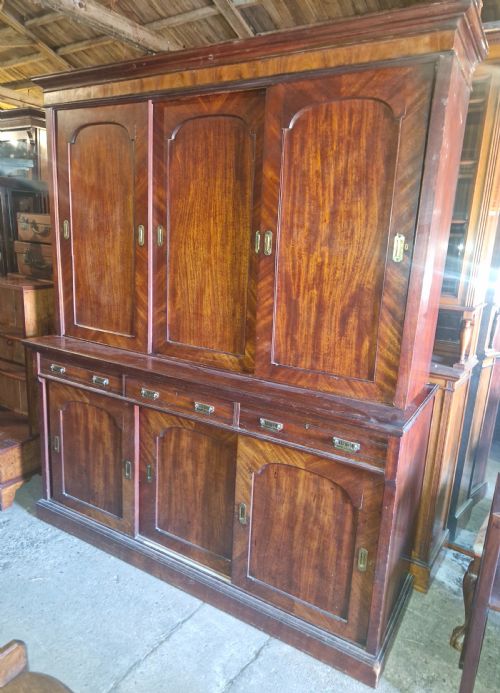
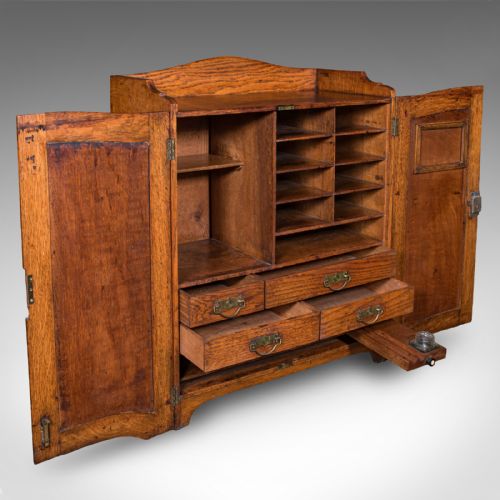


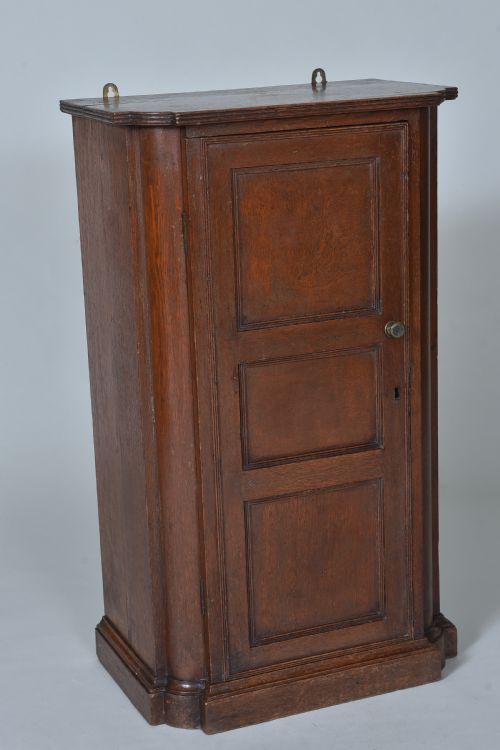


Antique Estate Cupboard
These heavy timbers and fitted interiors define an antique estate cupboard, built to organise and secure the papers and provisions of a great house.
Antique Estate Cupboard
An antique estate cupboard is a robust storage piece created for the administrative and domestic needs of large households and country properties. These pieces range from Georgian press cupboards and housekeeper units to Victorian office cabinets and clerk workstations.
The pieces appearing on this page emerge predominantly from the eighteenth and nineteenth centuries, spanning Georgian, William IV, and Victorian periods. Oak and mahogany form the core of the selection, reflecting the utilitarian elegance demanded by stewards and estate managers.
Buyers will encounter regional variations including Scottish oak clerk cupboards and English mahogany presses fitted with interior drawers. They serve as substantial focal points in modern interiors while maintaining their original function of deep storage.
How they were made
Cabinet makers built these pieces using solid oak and mahogany, frequently applying flame mahogany veneer or pollard oak to primary display surfaces. The timber selection balanced structural durability with the understated formality required in estate offices and halls.
Internal construction involved pegged joinery, dovetailed drawer boxes, and fitted shelving designed to house ledgers, linen, and game. Brass hardware such as drop handles and escutcheons secured heavy panelled doors and internal compartments.
Antique Estate Cupboard Retail Price Guide 2026
Typical asking prices for estate cupboard among the pieces listed under this phrase on Sellingantiques today, from the lower quarter to the upper quarter. They describe what is for sale here now, not the wider market.
Listings feature oak and mahogany predominantly, alongside flame mahogany veneer, walnut, and pollard oak.
What varies in quality
The division between standard storage pieces and superior examples lies in the sophistication of the interior configuration and timber selection. Cabinets featuring original fitted letter sections, specialised pigeonholes, and figured veneers command greater interest than plain utility versions.
Mastery of construction shows in the alignment of panelled doors, the retention of original brass fittings, and the seamless application of veneers such as flame mahogany or pollard oak. Maker attribution, such as documented Gillows pieces, elevates the standing of an individual cabinet.
Gillows
The Antique Estate Cupboard Glossary
- Press cupboard
- A large storage piece featuring upper doors enclosing shelves or hanging space above a base of drawers. They were traditionally utilised for linen and household textiles.
- Flame mahogany
- A veneer cut from the fork of the mahogany tree where the branches join the trunk. It creates a distinctive, fiery ripple pattern across the grain.
- Pollard oak
- Timber taken from trees that have been pollarded, resulting in dense, clustered knot formations. Cabinet makers valued this wood for its rich, mottled texture.
- Housekeeper cupboard
- A tall functional storage unit designed for domestic management. These pieces typically combine cupboard storage with internal shelving and drawers for provisions.
- Secretaire cabinet
- A piece incorporating a pull-down writing drawer that conceals a fitted interior of small drawers and pigeonholes. It merges desk functionality with enclosed storage.
Antique Estate Cupboard: Frequently Asked Questions
What is an estate cupboard?
An estate cupboard is a heavy-duty storage piece originally built for country houses, estate offices, and administrative rooms. They were designed to hold ledgers, game, linen, and domestic provisions.
These pieces typically feature panelled wooden doors and fitted internal compartments. Their robust construction reflects their utilitarian origins in large domestic households.
How do I date an antique cabinet?
Dating relies on timber choices, construction methods, and hardware styles. Eighteenth-century pieces often use solid oak or early mahogany with hand-cut dovetails, while Victorian examples introduce varied veneers and machine-assisted elements.
Secondary woods, backboards, and internal drawer construction also offer clues to the period. Examining the original locks and hinges helps confirm the age of the piece.
Where should I place one?
These large pieces suit hallways, dining rooms, and studies where their substantial presence can anchor the room. Their deep internal shelving and drawers provide practical storage for modern living.
Ensure adequate wall space and clearance for heavy panelled doors to swing open fully. Placing them away from direct heat sources protects the aged timber and veneers.
Are these pieces English or Scottish?
The selection includes both English and Scottish examples, reflecting regional timber preferences and cabinet-making traditions. Scottish pieces often utilise dense local oak with straightforward, sturdy proportions.
English variants frequently incorporate mahogany and more decorative veneers like flame mahogany. Regional details appear in the internal drawer layouts and cornice mouldings.