
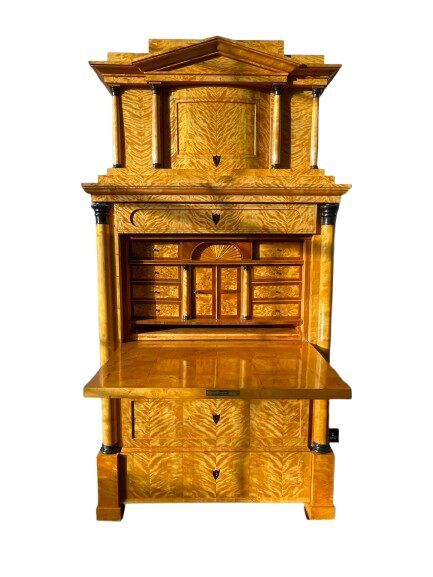


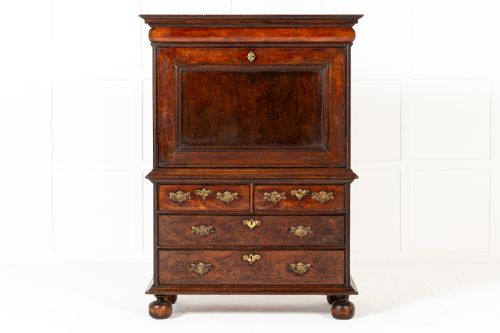


Antique Escritoire Chest
An antique escritoire chest combines a chest of drawers with a drop-down writing surface, offering both concealed storage and an elegant workspace.
Antique Escritoire Chest
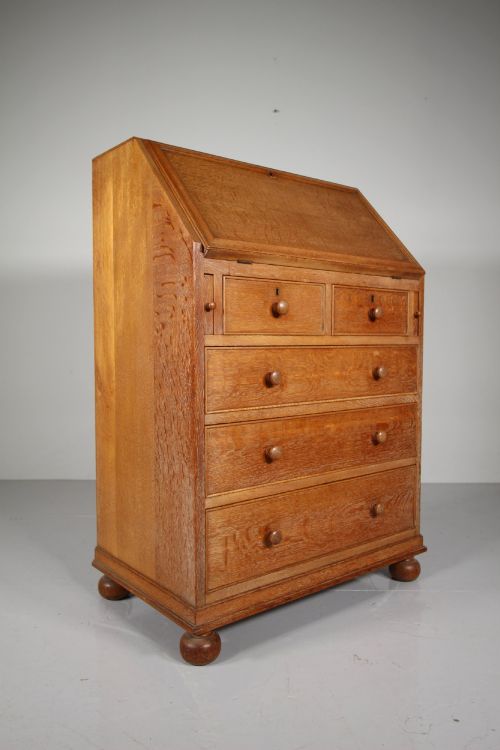
An antique escritoire chest provides a dedicated writing surface combined with drawer storage, appearing primarily in walnut across the seventeenth and eighteenth centuries.
The most common examples on this page date from the Georgian and William and Mary periods, constructed with drop-front writing compartments above sets of drawers.
Additional variations span Biedermeier mahogany models, French Empire pieces, and nineteenth-century Victorian burr walnut desks.
Materials and Construction
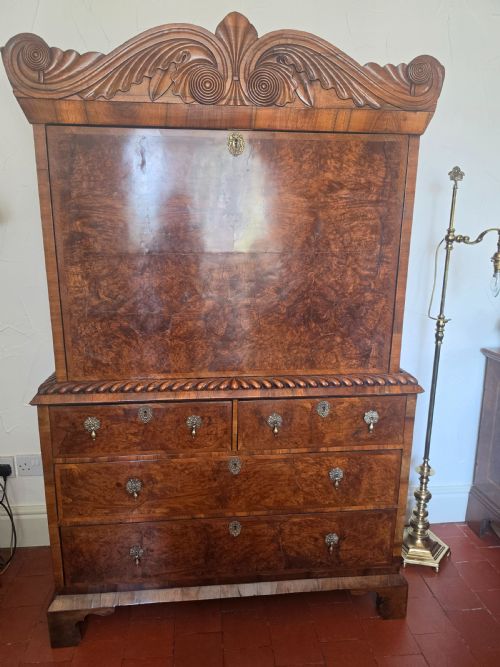
Cabinet makers utilised dense timbers such as walnut, oak, and mahogany, frequently applying burr walnut or figured walnut veneers to primary surfaces.
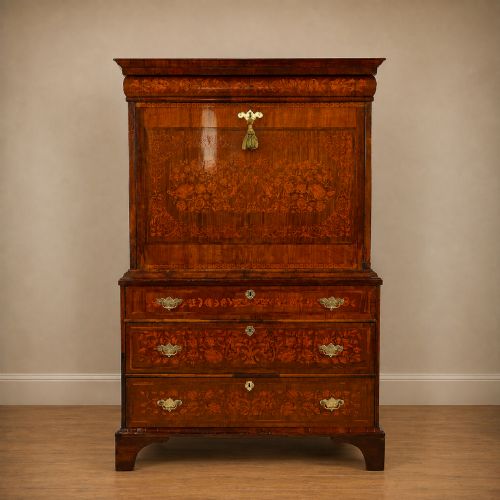
Decorative detailing incorporates brass hardware, leather writing inserts, and intricate marquetry inlay executed in floral motifs.
Listings feature walnut, mahogany, oak, and pine constructed across the 17th, 18th, and 19th centuries in English, French, Swedish, and Biedermeier styles.
Judging Quality
The sophistication of the timber figure and the precision of the marquetry inlay distinguish finer pieces from simpler utility cabinets.
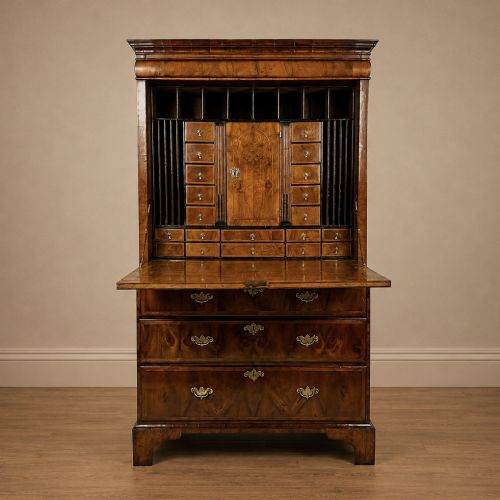
Internal configuration quality shows in the arrangement of small drawers and pigeonholes within the fall-front writing compartment.
Gregory and Co. of London
The Antique Escritoire Chest Glossary
- Escritoire
- A writing cabinet featuring a fall-front flap that lowers to reveal a desk surface and internal pigeonholes. This form bridges the chest of drawers and the standalone desk.
- Secretaire
- An alternative term for a writing chest or desk with a concealed writing compartment. It often describes continental or nineteenth-century variations.
- Marquetry
- Decorative inlay work using various wood veneers to create geometric or floral patterns on cabinet fronts. Craftsmen cut contrasting timbers to fit tightly into prepared recesses.
- Burr Walnut
- Timber taken from the warted growths of walnut trees, yielding complex, swirling grain patterns. Cabinet makers prized this wood for high-status furniture facades.
Antique Escritoire Chest: Frequently Asked Questions
What is an escritoire chest?
An escritoire chest is a tall cabinet that combines a chest of drawers with a fall-front writing compartment. When lowered, the front panel forms a desk surface for correspondence.
Inside, these pieces typically contain numerous small drawers and pigeonholes for stationery and documents. The lower section provides standard drawer storage for household items.
How do I date an antique escritoire?
Dating relies heavily on timber selection, construction methods, and hardware styles. Seventeenth and early eighteenth-century examples predominantly feature walnut and intricate marquetry.
Later nineteenth-century versions often utilise mahogany, burr walnut, or painted pine in Biedermeier, Victorian, or Empire styles. Examining internal drawer joints and secondary woods also helps confirm the period.
Where should I place an escritoire?
These tall cabinets suit studies, living rooms, or bedrooms where vertical storage is beneficial. They occupy less floor surface than traditional twin-pedestal desks while offering comparable utility.
Ensure placement avoids direct sunlight to protect sensitive walnut and mahogany veneers from fading. Maintaining stable room humidity preserves the integrity of the solid timber and veneer.
How do I maintain the wood surface?
Keep the timber clean using a soft, dry cloth to remove dust accumulation. Apply traditional beeswax periodically to nourish the surface and maintain a soft lustre.
Avoid liquid cleaning products and silicone sprays, which can penetrate damaged areas of old polish. Leather writing inserts benefit from occasional specialised conditioning to prevent cracking.