
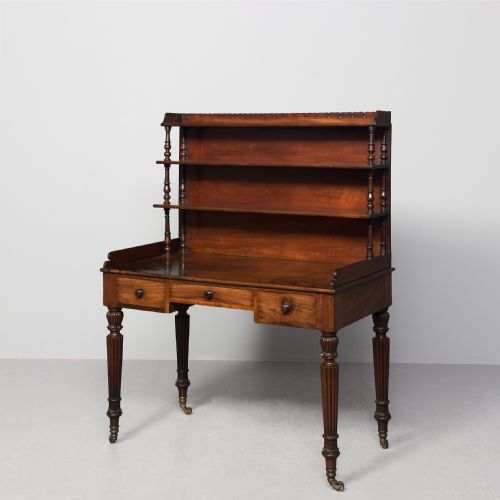
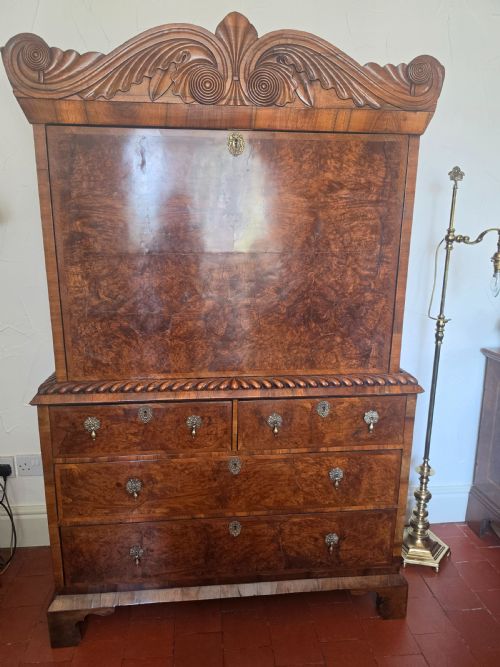
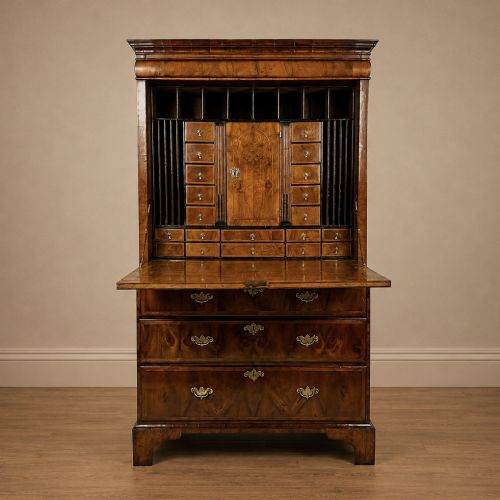
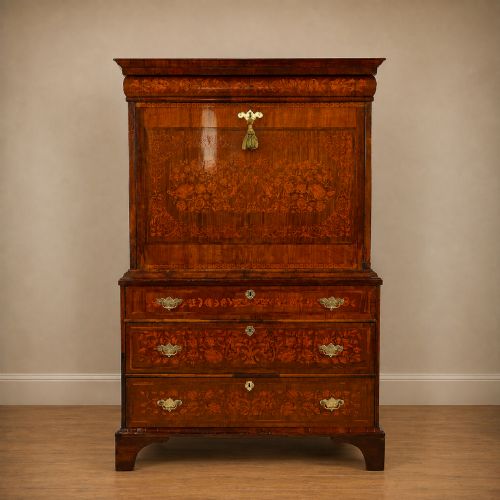
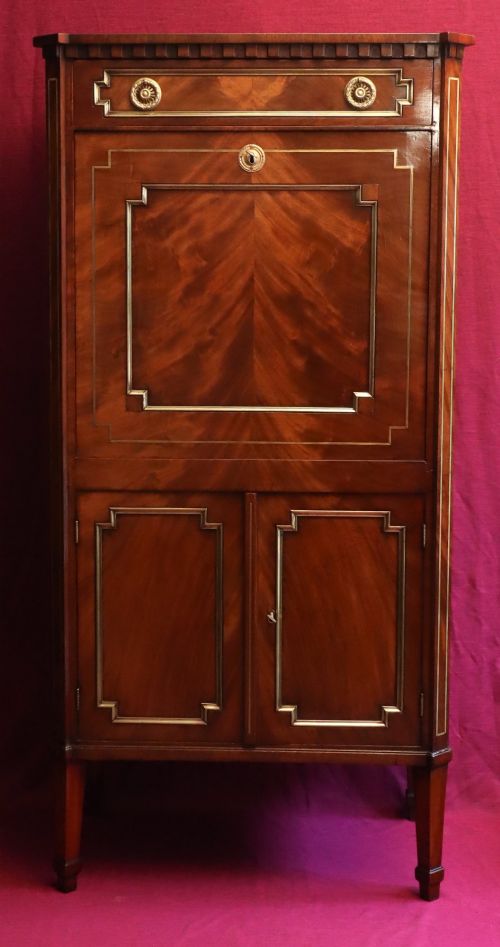


Georgian Escritoire Bureau
A georgian escritoire bureau is a sophisticated writing cabinet built for private correspondence, offering concealed drawers and a drop-front surface that transforms a formal room into a study.
Georgian Escritoire Bureau
When you search for a georgian escritoire bureau, you encounter tall writing cabinets and fall-front desks designed for domestic correspondence and the storage of papers. These pieces span the eighteenth century, including specific periods such as Queen Anne, George II, and the Regency era.
The versions most frequently met on this page are constructed from rich figured walnut, mahogany, and rosewood, often taking the form of tall cabinets with fitted interiors of small drawers and pigeonholes. Forms range from compact writing desks to grand bureau bookcases and secretaire chests.
Originating largely from English workshops, these pieces combine architectural presence with functional workspace. Buyers encounter everything from simple mahogany writing desks to ornate floral marquetry and brass-inlaid rosewood cabinets.
Factors of quality
The upper tier of these pieces displays superior timber selection, where burr walnut or figured mahogany veneers align harmoniously across the entire fall-front and drawer facade. Lesser examples show mismatched grain patterns or simpler secondary timbers.
Internal complexity dictates distinction within the range, separating standard drop-front desks from elaborate bureau bookcases with fitted pigeonholes, secret compartments, and finely dovetailed drawer construction. Original brasswork and intact leather writing surfaces further elevate a piece.
Listings feature eighteenth and nineteenth century desks and writing cabinets constructed from walnut, mahogany, and rosewood.
James Mein of Kelso
The Georgian Escritoire Bureau Glossary
- Escritoire
- A writing cabinet featuring a fall-front writing surface that conceals an arrangement of small drawers and pigeonholes. It stands as a primary form of domestic writing furniture.
- Marquetry
- The art of applying decorative veneer pieces of various woods to a structure to form intricate floral or geometric patterns. This technique enhances the visual depth of walnut surfaces.
- Secretaire
- A piece of furniture containing a drawer or compartment configured for writing, often incorporating a drop-front panel. It serves a similar function to the bureau.
- Satinwood
- A lustrous, yellowish timber native to India and the West Indies, utilised for contrasting stringing and inlay work. It brings bright detail to darker mahogany and rosewood bodies.
- Cylinder desk
- A writing desk featuring a quarter-cylinder rolling shutter that encloses the writing surface and internal pigeonholes. This form provides a smooth mechanical closure for the workspace.
Georgian Escritoire Bureau: Frequently Asked Questions
What is an escritoire bureau?
An escritoire bureau is a tall writing cabinet equipped with a drop-front flap that opens to reveal a fitted interior of small drawers and compartments.
These pieces combine enclosed storage with a dedicated writing surface, designed primarily for private correspondence and document organisation.
How do I identify a walnut piece?
Walnut pieces display rich brown tones with distinctive figuring, often utilising burr walnut veneers across the main facades and fall-fronts.
Cabinetmakers of the early eighteenth century favoured this timber for its warmth and grain pattern before mahogany gained widespread popularity.
Where were these desks used?
These writing cabinets were housed in private studies, libraries, and withdrawing rooms of grand houses for managing personal letters and financial records.
The tall design allowed owners to conceal confidential documents behind locked fall-fronts and cabinet doors when not in use.
What distinguishes a bureau bookcase?
A bureau bookcase incorporates an upper section of glazed or panelled shelving designed for book storage above the writing desk base.
This combination provides both a working surface and a library unit within a single tall architectural piece.