
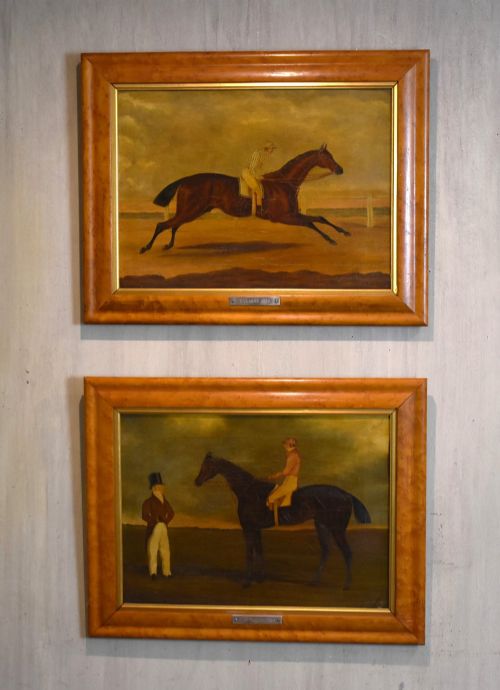
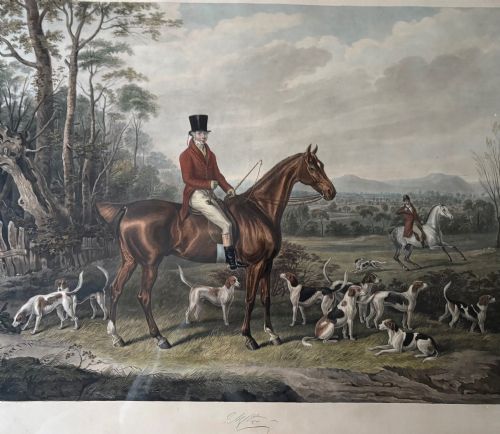


Antique Equestrian Sporting Print
An antique equestrian sporting print captures the speed of the turf and the tradition of the field, framed for study on the wall.
Antique Equestrian Sporting Print
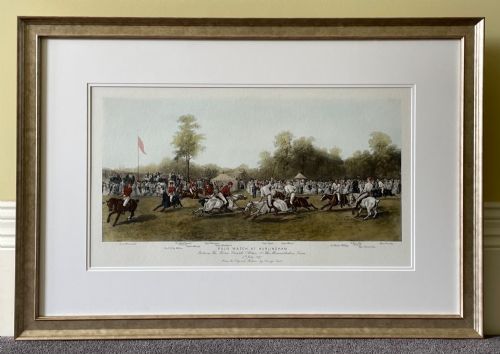
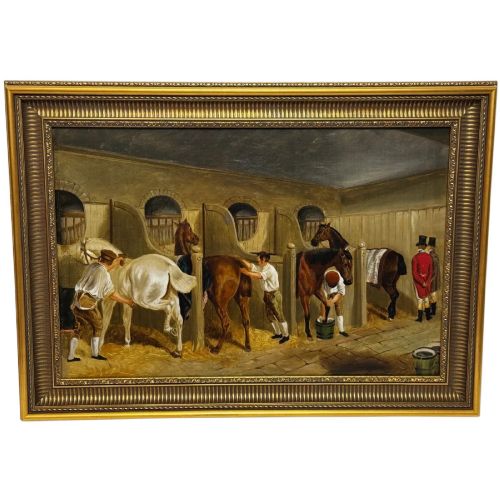
An antique equestrian sporting print brings the atmosphere of the racecourse, hunt, and polo match directly into the room through period graphic works. These pieces document historical horses, riders, and field sports across various centuries.
The selection on this page ranges from nineteenth-century lithographs and aquatints to hand-coloured engravings and early twentieth-century prints. Buyers most frequently encounter framed prints depicting horse racing, fox hunting, and polo.
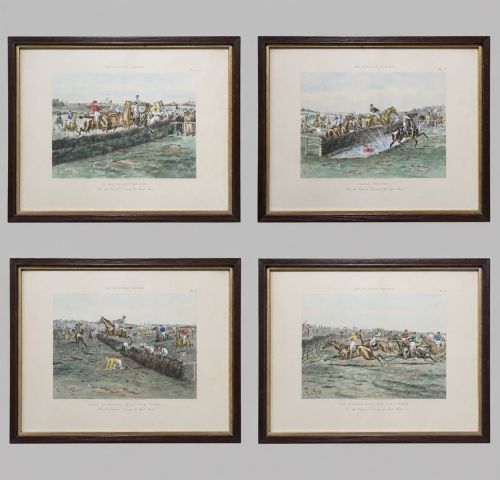
Represented origins span Victorian and Edwardian periods alongside earlier Georgian and Regency examples. Works appear in diverse formats including individual sheets, sets of four, and double-page Vanity Fair spreads.
How They Were Made
Makers utilised paper sheets as the primary surface for printing techniques such as lithography, aquatint, and engraving, often employing ink alongside applied watercolour pigments for colour. Some works combine printed outlines with subsequent hand-colouring.
Framing materials recorded in the evidence include wood, gilt wood, giltwood, and glass, protecting the paper works within traditional surrounds. Certain items incorporate eglomise glass panels or original oak frames.
Listings span periods from the Georgian era through Victorian, Edwardian, and the early twentieth century up to the 1950s.
What Varies in Quality
The quality of an antique equestrian sporting print depends upon the clarity of the impression from the plate or stone and the precision of any applied hand-colouring. Sharp lines and well-preserved ink tones distinguish superior impressions from faded or blurred examples.
The condition and period appropriateness of the framing materials, such as original gilt wood or oak surrounds, contribute to the integrity of the piece. Complete sets of four matching plates hold greater historical cohesion than isolated individual prints.
George Finch Mason·C. H. Weigall·Snaffles·Aiken·John Frederick Herring Snr·Anne Goldthwaite·Abraham Cooper·Alken·Charles Faulkner·Alfred Wheeler·John Atkinson·Tom Carr·Isaac Cullin·Charles Johnson Payne
The Antique Equestrian Sporting Print Glossary
- Lithograph
- A print produced by drawing on limestone or a metal plate with a greasy medium, allowing ink to adhere only to the drawn areas. This technique achieved wide popularity for reproducing detailed sporting scenes during the nineteenth century.
- Aquatint
- A printmaking method that uses acid etching to produce tonal areas resembling watercolours, frequently employed for British sporting art. It allowed publishers to capture soft atmospheric effects in hunting and racing plates.
- Engraving
- A technique where an artist cuts lines directly into a metal plate with a burin to hold ink for printing. These works offer sharp linear precision and durability across multiple impressions.
- Chromolithograph
- A colour lithographic print produced using multiple stones, one for each colour applied. This process enabled vibrant multi-coloured reproductions of sporting events and caricatures.
- Eglomise
- A process of applying gold or silver leaf to the rear face of glass combined with painted decoration. It appears on specialised decorative pieces protecting historical subjects.
Antique Equestrian Sporting Print: Frequently Asked Questions
What subjects do these prints show?
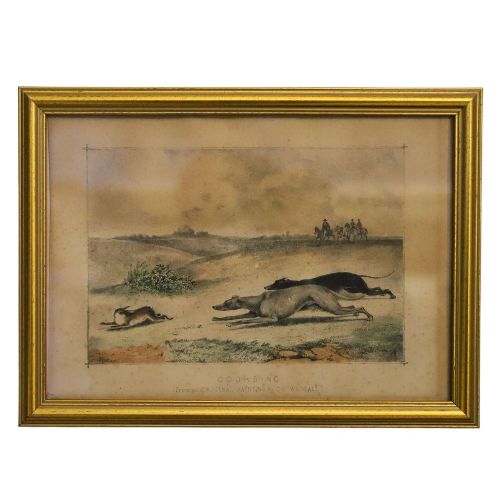
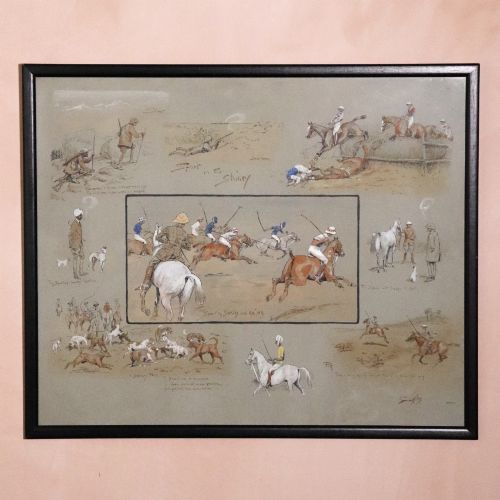
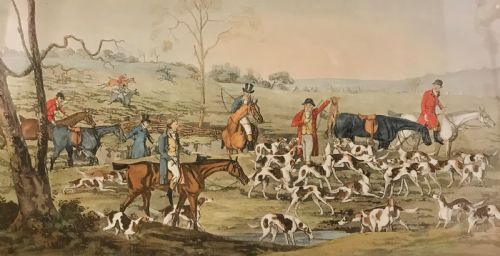
These works depict horse racing, fox hunting, polo matches, hare coursing, and individual portraits of notable racehorses with jockeys.
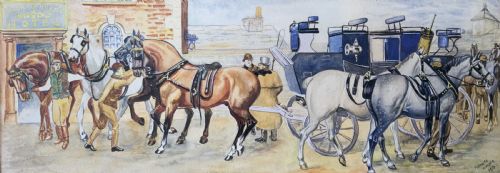
Scenes range from competitive racing finishes and hounds in combat to relaxed coaching meets and regimental sporting life.
Are these prints usually sold in sets?
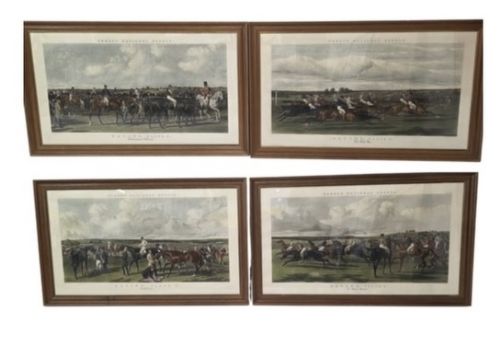
Many listings feature complete sets of four plates, particularly for hunting sequences, steeplechases, and racing scenes.
Individual prints and double-page Vanity Fair spreads also appear frequently as standalone wall art.
How are the prints framed?
Surviving pieces often retain period surrounds made from wood, oak, or gilt wood, frequently protected behind glass.
Original frames provide context, though framing styles span the nineteenth and twentieth centuries regardless of the print date.
How do I distinguish between an engraving and a lithograph?
Engravings show fine, incised lines pressed into the paper with a distinct plate mark around the image area.
Lithographs rely on chemical adherence from a flat surface, producing smoother tonal transitions without deep plate indentation.
Who are the notable artists associated with these works?
Signatures and attributions include prominent sporting artists such as Snaffles, Alken, John Frederick Herring Snr, and George Finch Mason.
Works also encompass contemporary illustrations published in periodicals like Vanity Fair.