

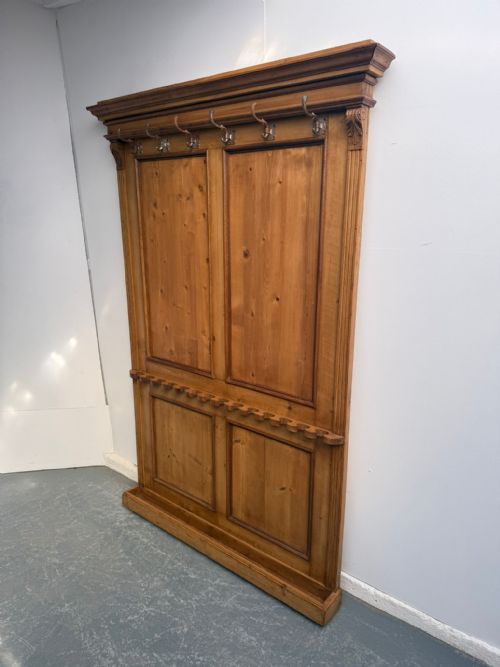


Antique Entry Coat Rack
An antique entry coat rack is a practical hallway centrepiece for hanging garments and storing umbrellas, chosen for period craftsmanship.
Antique Entry Coat Rack
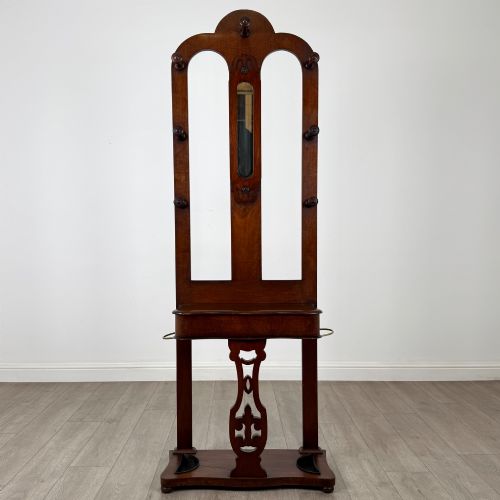
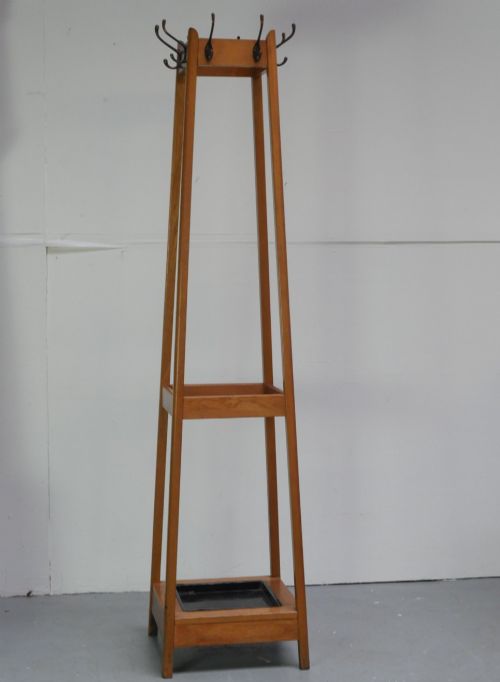
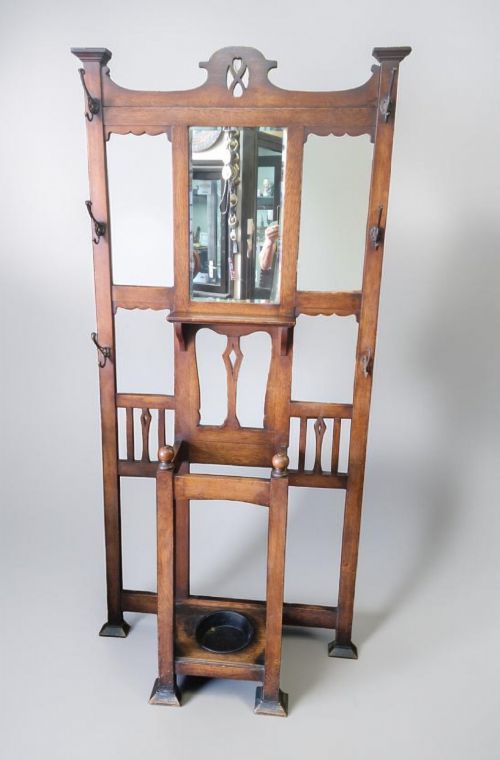
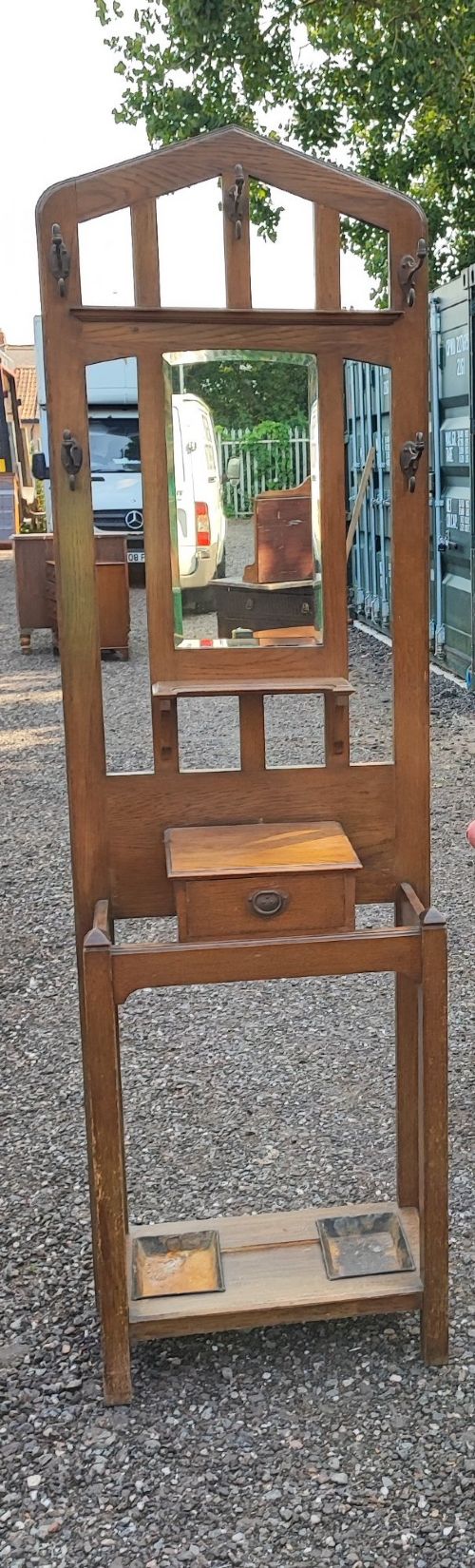
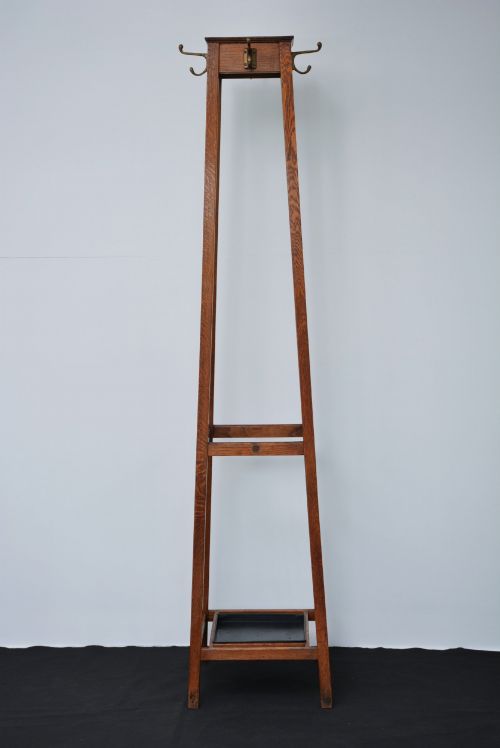
When you search for an antique entry coat rack, you encounter functional hall furniture designed for hallways and vestibules. These pieces combine hooks for hats and coats with umbrella stands and frequently incorporate mirrors or marble inserts.
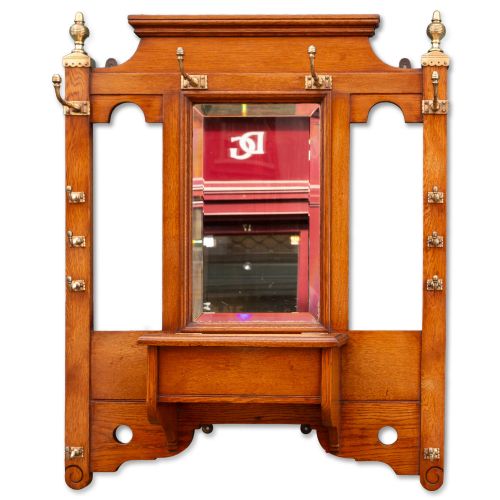
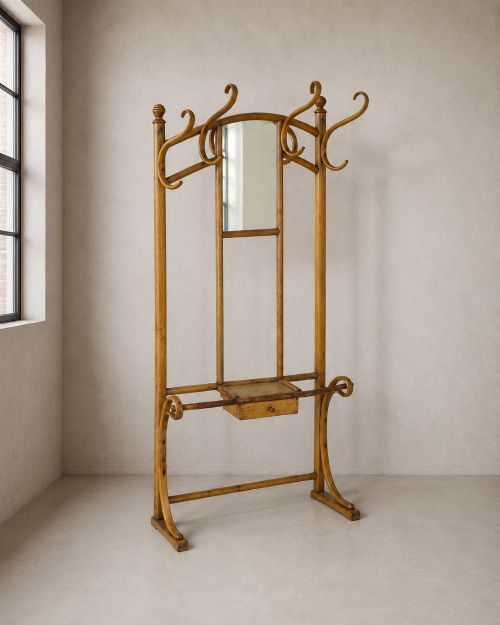
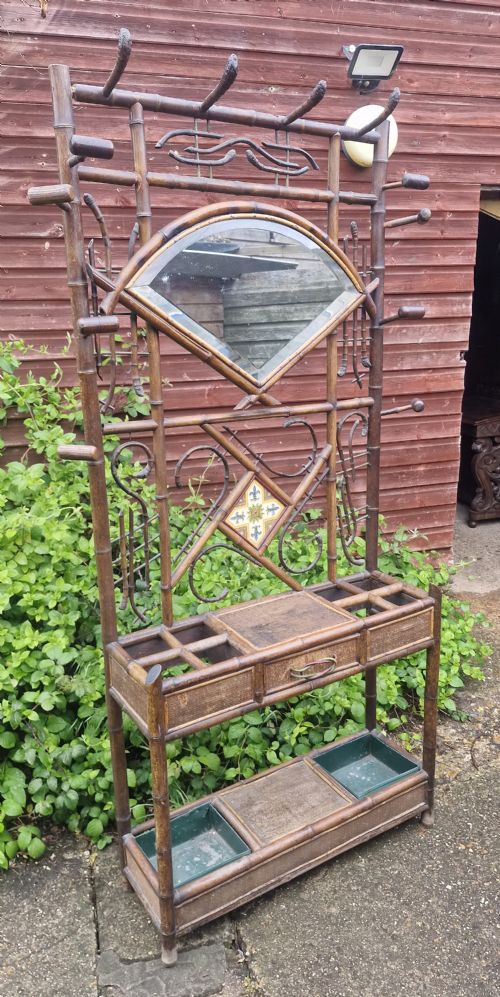
Beyond standard oak designs, the selection includes bentwood frames, bamboo structures, and wall-mounted brass or mahogany racks. Styles range from plain utilitarian items to elaborate Arts and Crafts and Gothic Revival pieces.
How They Were Made
Cabinet makers utilised solid woods like oak, mahogany, walnut, and pine, often enhancing the structure with carved decorations and applied mouldings. Bentwood examples demonstrate the steam-bending techniques popularised in the late nineteenth century.
Functional hardware plays a primary role, featuring cast iron, brass, and metal hooks fixed securely to the timber or mounted on wall panels. Many standing variants incorporate cast iron drip trays at the base to catch water from wet umbrellas.
Mirrors with original bevelled glass plates appear frequently, secured into carved wooden frames, while some designs integrate marble shelves or panels. Bamboo and cane constructions rely on specialised bending and binding methods to achieve stable frames.
Design styles transition from Victorian Gothic and Aesthetic Movement to Arts and Crafts and Art Deco.
What Varies in Quality
The degree of hand-carving and sculptural detail distinguishes standard hall furniture from exceptional examples. Elaborate ornamentation, such as Greenman masks or deeply incised foliage, indicates a higher tier of workshop production.
Materials and structural complexity set the hierarchy among pieces. Golden oak, figured mahogany, and heavy cast iron components signify superior construction compared to simpler utilitarian alternatives.
Coalbrookdale·Thonet
The Antique Entry Coat Rack Glossary
- Hall stand
- A freestanding item of hallway furniture combining coat hooks, umbrella storage, and often a mirror. These units formed the primary greeting point in period entrance halls.
- Bentwood
- Wood softened by steam and bent into curved shapes. This technique created lightweight yet durable frames.
- Portmanteau
- A large hall stand incorporating storage compartments, mirror plates, and coat hooks. The term derives from luggage furniture adapted for stationary hallway use.
- Arts and Crafts
- A design movement valuing traditional craftsmanship and honest construction over mass production. Pieces from this style often feature plain oak surfaces and minimal applied ornament.
- Greenman
- A sculptural architectural motif representing a face made from or entwined with leaves and vines. Carved examples appear frequently on nineteenth-century oak furniture.
Antique Entry Coat Rack: Frequently Asked Questions
What is a hall stand?
A hall stand is a tall piece of furniture designed for entranceways to hold coats, hats, and umbrellas.
Most versions include multiple metal hooks, a central mirror, and drip trays at the base for wet walking sticks.
How do I date an oak hall stand?
Dating relies on stylistic clues and construction methods observed across the woodwork and hardware.
Victorian pieces often display heavy carving and Gothic influences, whereas early twentieth-century examples lean towards simpler Arts and Crafts or bentwood forms.
Where were these pieces used?
These items stood in the entrance halls and vestibules of Victorian and Edwardian homes.
They provided arriving guests with a convenient spot to deposit outerwear before entering the main rooms.
What materials are used in hall stands?
Constructors built these pieces primarily from solid hardwoods such as oak and mahogany, supplemented by pine and walnut.
Metal components like cast iron and brass appear in the hooks and drip trays, alongside glass mirrors and occasional marble panels.