
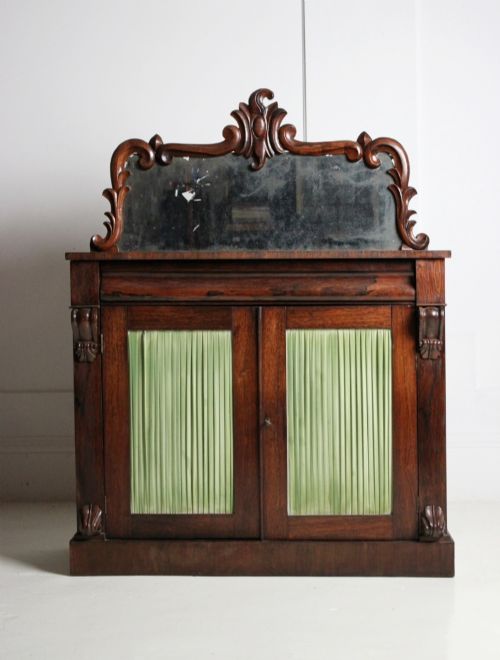


Antique English Rosewood Cabinet
These antique English rosewood cabinet examples combine dense tropical timber with refined brass or boxwood detail, offering practical storage alongside profound period elegance.
Antique English Rosewood Cabinet
Buyers seeking an antique English rosewood cabinet typically encounter pieces originating from the Regency and Victorian eras, alongside later revival examples. The selection spans distinct forms, including low side cabinets, glazed bookcases, chiffoniers, and music cabinets designed for domestic refinement.
Regency and George IV examples dominate the available selection, often demonstrating architectural proportions and rich grain patterns. Pieces range from dwarf bookcases and breakfront sideboards to secretaire cabinets and smaller tabletop stationery boxes.
Materials and construction methods
Cabinet makers utilised dense, richly figured rosewood veneers applied to stable secondary timbers, often accentuating the dark grain with contrasting boxwood stringing or intricate brass inlay. Many pieces incorporate specialised elements such as pleated silk door panels, mirrored glass backs, and bronze grillwork.
Joinery methods reflect the high standards of nineteenth-century workshops, where structural carcases received careful hand-finishing and polish to highlight the natural oil content and varied colouration of the rosewood.
The inventory records pieces spanning the Regency, Victorian, and Edwardian eras, executed in solid and veneered rosewood with brass, glass, and silk.
Distinctions in craftsmanship
Quality in these cabinets rests upon the selection of timber figures and the precision of decorative inlays executed in boxwood and brass. Superior examples display seamless continuity of grain across doors and drawers, alongside robust internal construction that preserves structural integrity over centuries.
The refinement of ancillary mounts, such as cast brass grilles and original glass panels, distinguishes exceptional cabinet work from standard production. Artisanal attention to small details, including finished drawer linings and well-fitted locking mechanisms, marks the upper tier of the maker's art.
John McLean
The Antique English Rosewood Cabinet Glossary
- Chiffonier
- A low sideboard or cabinet featuring enclosed shelving below, frequently topped with a raised shelf or mirror back supported by columns.
- Breakfront
- A cabinet design where the central section projects forward from the flanking outer cupboards or bookcases, creating architectural depth.
- Boxwood inlay
- Delicate contrasting light wood lines or motifs set flush into the darker rosewood surface to delineate panels and drawers.
- Secretaire
- A cabinet incorporating a fitted writing drawer with a drop-front fall, concealing small pigeonholes and compartments.
- Whatnot
- An open-shelved display cabinet or stand designed for holding ornaments and books, often constructed with multiple tiers.
Antique English Rosewood Cabinet: Frequently Asked Questions
What distinguishes a chiffonier from a standard side cabinet?
A chiffonier typically includes a raised superstructure with small shelves or a mirror supported at the back. It serves as a multifunctional piece designed for storage and display in the nineteenth-century parlour.
Standard side cabinets lack this raised back tier, offering a flat top surface instead. Both forms utilise rich rosewood timbers, but the chiffonier layout leans toward ornamental display.
How do I care for antique rosewood furniture?
Keep rosewood pieces away from direct sunlight and steady heat sources to prevent the timber from drying and the veneer from lifting. Maintaining stable indoor humidity preserves both the wood and any delicate boxwood inlays.
Dust the surface regularly with a soft, dry cloth rather than applying silicone polishes. Occasional application of appropriate wax feeding helps maintain the deep lustre of the historical finish.
Where were these cabinets placed in a period home?
Music cabinets and stationery boxes found their natural home in drawing rooms and libraries for organising sheet music and correspondence. Larger sideboards and breakfront bookcases stood in dining rooms to house porcelain and silver.
Smaller corner cabinets and dwarf bookcases utilised awkward angles and transitional hallways in townhouses. Their varied scales allowed them to function across multiple domestic zones.
How can I tell a Regency cabinet from a later revival piece?
Regency pieces date from the early nineteenth century and feature clean classical proportions, often enhanced by precise brass inlay or ebony stringing. The construction methods show hand-cut dovetails and solid secondary timbers appropriate to the period.
Later Victorian and Edwardian revivals tend to employ machine-assisted techniques and sometimes combine disparate revival styles. Examining the secondary wood behind drawers and interior carcases helps confirm the true manufacturing era.