


Antique English Earthenware Dogs
Antique English earthenware dogs are charming ceramic figures designed to sit upon mantelpieces, bringing domestic animal forms into Victorian and Georgian parlours.
Antique English Earthenware Dogs
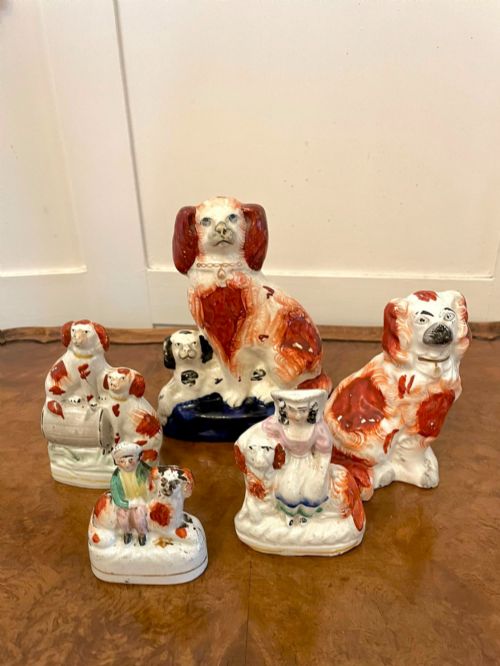
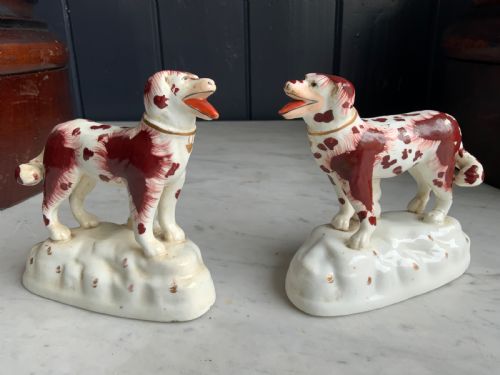
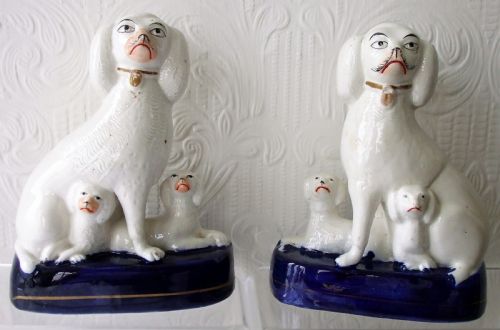
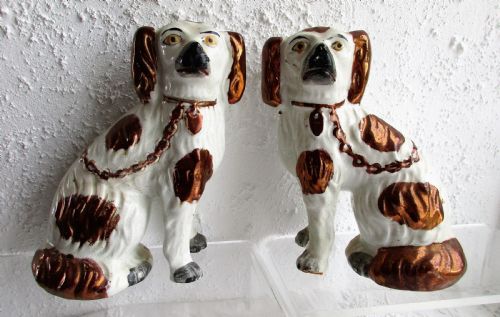
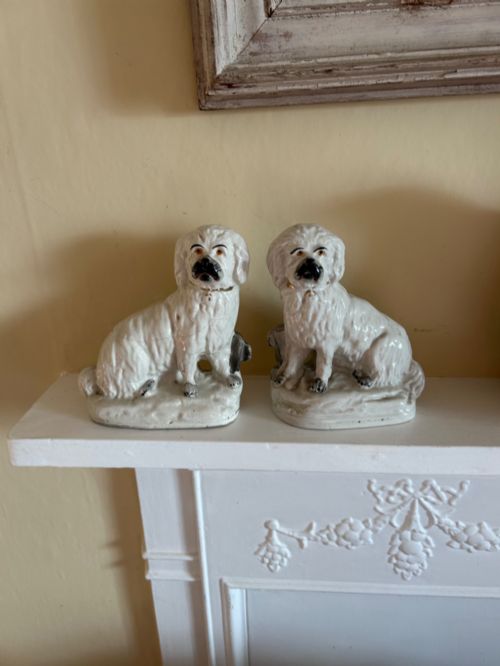
When you search for antique English earthenware dogs, you encounter a specialised world of decorative ceramic figures, primarily originating from the nineteenth century and the Victorian era. These objects include spaniels, greyhounds, poodles, pugs, dalmatians, maltese terriers, and setters, often modelled as pairs or complete figure groups.
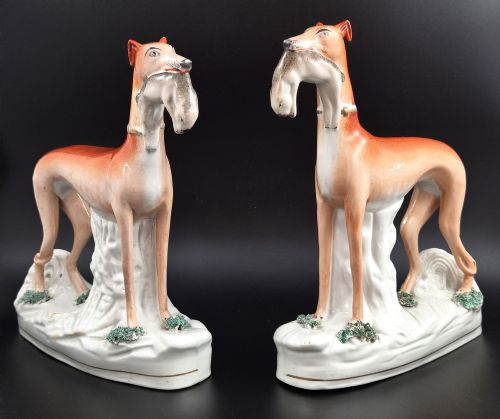
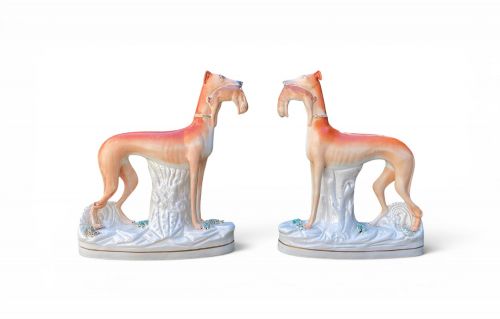
The version you are most likely to meet on this page is the Victorian Staffordshire pottery dog, frequently configured as a fireside companion or comforter spaniel. These pieces span various forms, from miniature poodles to large greyhounds with hares, reflecting the diverse domestic animal subjects modelled by period potters.
How they were made
Makers added finishing touches such as gold leaf, gilding, and occasionally glass eyes to enhance the decorative appeal of the figures. These materials combined to create durable yet expressive ornaments suited for nineteenth-century interiors.
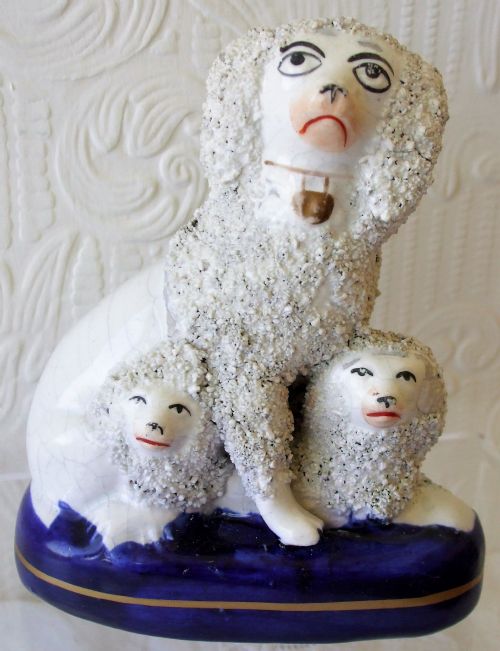
Some poodles wear coats rendered in tiny clay curls, while others gaze out with surprisingly earnest glass eyes.
What varies in quality
The refinement of the modelling separates standard examples from superior pieces, particularly in the rendering of facial expressions, fur texture, and anatomical detail. Finer pieces demonstrate careful hand-painting in the enamel and precise application of gold leaf or gilding.
Scale and complexity also influence the standing of a piece within the range. Large pairs, intricate figure groups involving puppies or children, and specialised forms like greyhound quill holders represent higher degrees of workshop ambition.
James Dudson
The Antique English Earthenware Dogs Glossary
- Earthenware
- A porous ceramic body fired at relatively low temperatures. It requires a glaze to render it impermeable to liquids and serves as the foundation for these decorative figures.
- Lead glaze
- A glossy coating containing lead oxide applied to pottery before firing. It produces a smooth, shiny surface finish characteristic of traditional British ceramics.
- Enamel
- Opaque vitreous paint applied over the glaze and fired at a lower temperature. It provides the vibrant surface colours seen on the coats and collars of the dogs.
- Comforter spaniels
- Staffordshire spaniels traditionally displayed on either side of a fireplace. They represent the quintessential Victorian hearthside ornament.
- Figure group
- A ceramic composition featuring multiple subjects interacting, such as a mother poodle with pups or children riding upon setters.
Antique English Earthenware Dogs: Frequently Asked Questions
What are antique English earthenware dogs?
They are decorative ceramic figures, predominantly produced in Staffordshire during the nineteenth century, modelled as various dog breeds for domestic display.
These objects capture popular animals like spaniels, poodles, and greyhounds, serving as decorative ornaments for mantels and hearths.
How were these dogs displayed?
Victorian households typically placed them on mantelpieces in matching pairs facing inwards toward the centre of the fireplace.
Larger specimens anchored the ends of shelves, while miniature versions found space in cabinets or smaller domestic settings.
How do I identify a Victorian Staffordshire dog?
Look for characteristic earthenware bodies covered in lead glaze, often hand-painted with enamel colours and accented with gold leaf details.
Subject matter usually focuses on popular nineteenth-century pets, particularly seated spaniels and poodles with textured clay fur.
Did these figures have a practical use?
While primarily decorative, certain specialised forms like greyhound figures functioned additionally as quill holders for writing desks.
Most pieces, however, were created purely as ornamental comforters to bring warmth and character to Victorian rooms.