


Antique English Dog Ornaments
Antique english dog ornaments bring warmth to a room through ceramic spaniels, poodles, and hounds modelled across the nineteenth century.
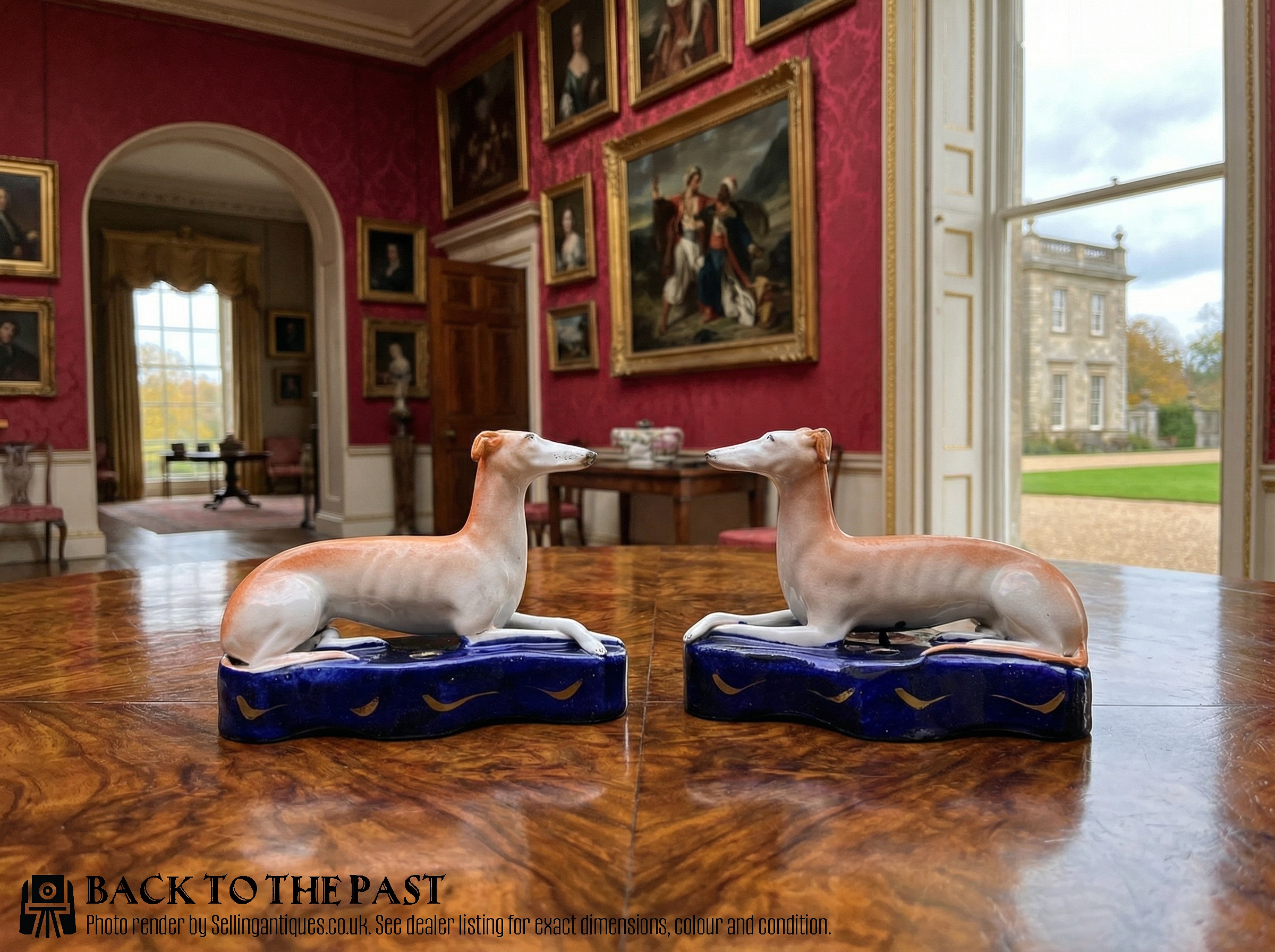
Antique English Dog Ornaments
When you search for antique english dog ornaments, you encounter ceramic figures, pottery groups, and bronze sculptures representing various canine breeds. These pieces range from decorative mantel figures to functional quill holders and doorstops originating across the nineteenth century.
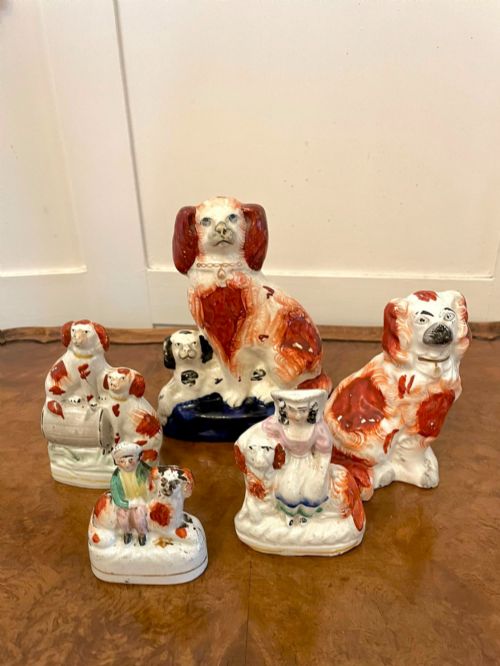
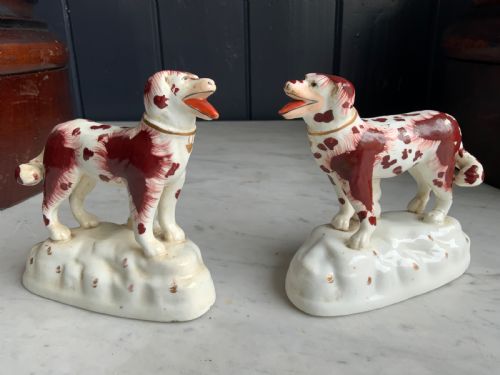
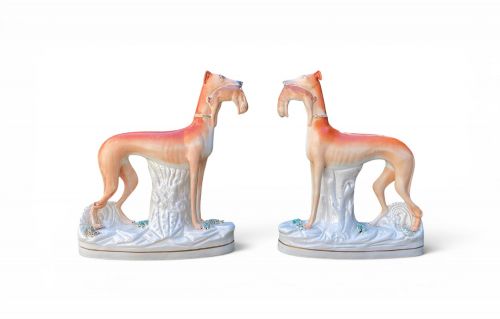
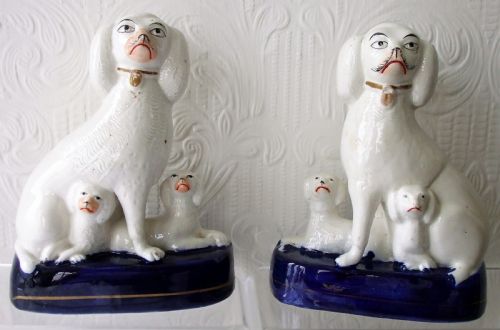
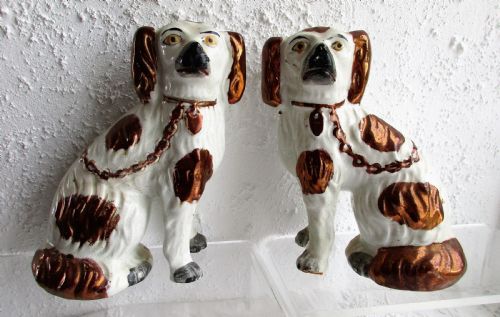
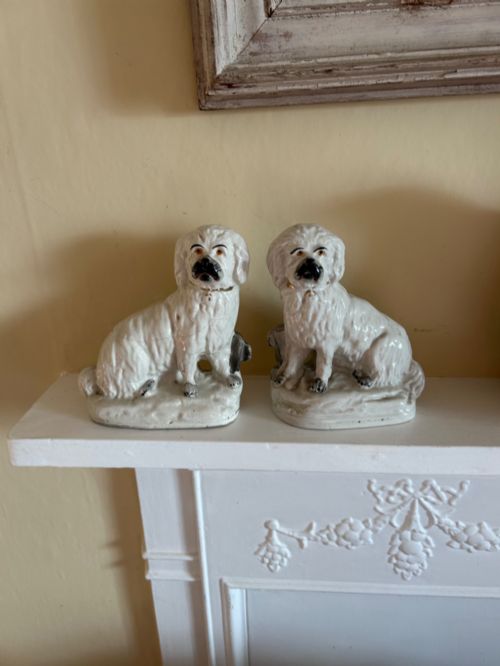
The most common version met on this page is the pair of Staffordshire pottery spaniels or poodles, typically modelled as seated companion animals. These earthenware figures often appear in matched pairs intended for display on fireplace mantels.
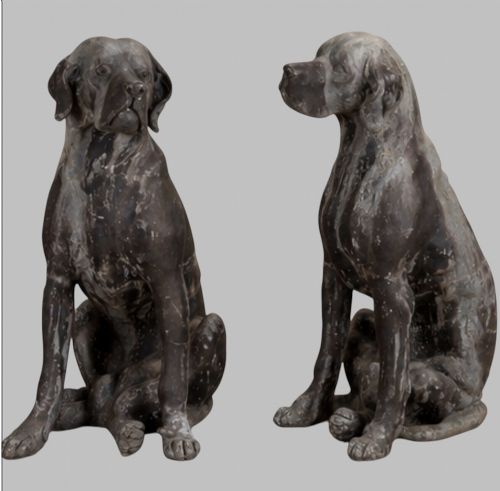
Beyond earthenware pottery, the selection includes bronze sculptures, cast lead hounds, cast iron doorstops, and porcelain figures from periods spanning the Georgian era to the Edwardian period. Forms vary from miniature poodles to life-size garden statues.
How they were made
Metal ornaments utilise bronze, cast iron, or cast lead, often produced through foundry casting. Bronze works receive patination and chasing, while iron and lead doorstops are cast for weight and durability.
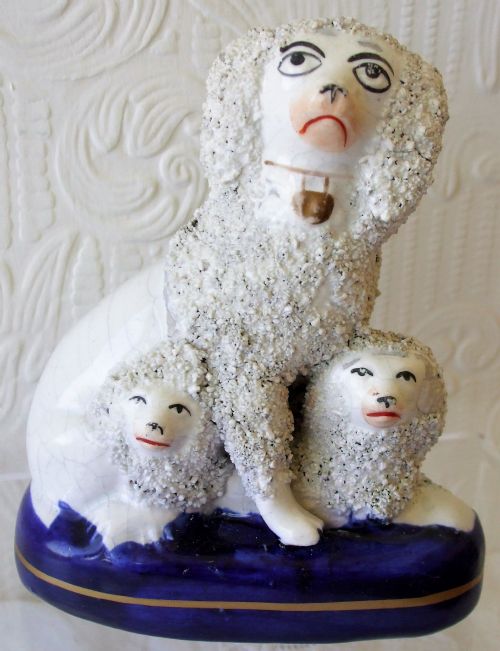
Some Staffordshire poodles wear coats made of tiny ceramic clay curls applied individually by hand.
What varies in quality
Production method and material choice also set examples apart, from finely potted porcelain and detailed bronze animalier sculptures to standard moulded earthenware figures. Matched pairs with original enamelling command greater interest than mismatched or heavily restored pieces.
Franze Bergman·Royal Dux
The Antique English Dog Ornaments Glossary
- Earthenware
- Porous pottery fired at lower temperatures, commonly used for nineteenth-century Staffordshire figures. It requires a glaze to become impermeable to liquids.
- Lead glaze
- A glossy coating containing lead oxide applied to pottery before firing. It produces a smooth, shiny surface finish on ceramic ornaments.
- Animalier
- A nineteenth-century artistic style focusing on realistic depictions of animals. Sculptures in this genre capture creatures in natural poses.
- Comforter spaniels
- Staffordshire ceramic spaniels traditionally placed on either side of a fireplace. They represent popular lap dogs of the Victorian era.
- Enamel
- Opaque vitreous material fused to pottery or metal surfaces through firing. It provides the bright surface colours seen on many ceramic dog figures.
Antique English Dog Ornaments: Frequently Asked Questions
What are Staffordshire comforter spaniels?
Staffordshire comforter spaniels are ceramic dog figures modelled after King Charles spaniels. Victorian households placed pairs of these ornaments on mantelpieces to guard the hearth.
They typically face one another and feature hand-painted markings in copper lustre, black, or red. These figures served as domestic ornaments rather than toys.
How do I identify nineteenth-century pottery dogs?
Nineteenth-century pottery dogs usually show earthenware bodies beneath craquelure lead glazes. Mould seams often run along the sides, and details are hand-painted over the glaze.
Earlier Georgian pieces tend to use finer porcelain or stoneware, while Victorian Staffordshire production favoured heavier earthenware shaped in two-part moulds.
Were these dog ornaments used as doorstops?
Heavier metal examples cast in iron or lead functioned as doorstops to hold interior doors open. These utilitarian objects depicted retrievers, hounds, or bulldogs.
Ceramic and plaster figures served purely decorative purposes on mantel shelves or side tables. Doorstops required solid metal construction to withstand daily household use.
What is an animalier bronze dog sculpture?
An animalier bronze is a nineteenth-century sculpture capturing realistic anatomical details of animals. These bronzes were cast using the lost-wax method and finished with patination.
Renowned sculptors produced dynamic models of setters, greyhounds, and hunting dogs in active poses. These pieces reflect the period interest in natural history and field sports.