


Antique English Decanters
These antique English decanters range from heavy lead crystal ship's vessels to coloured overlay glass, bringing historic dining room elegance to modern sideboards.

Antique English Decanters
When searching for antique English decanters, buyers encounter glassware spanning the Georgian, Victorian and Edwardian eras. The selection commonly includes lead crystal spirit bottles, mallet shapes, and heavy ship's decanters designed to remain stable at sea.
Materials and construction
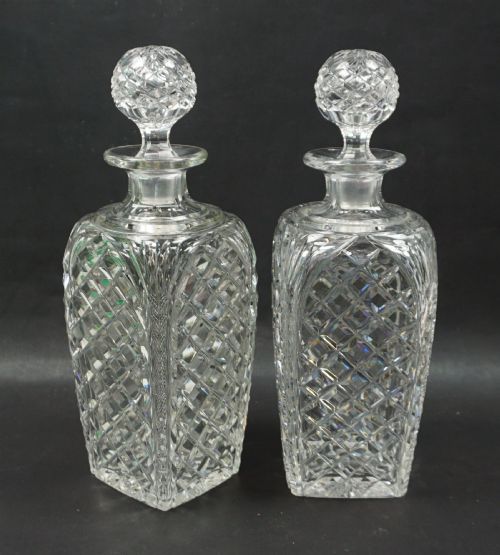
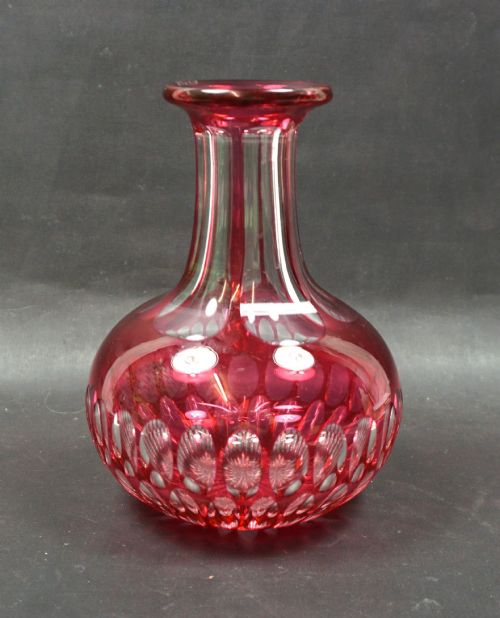
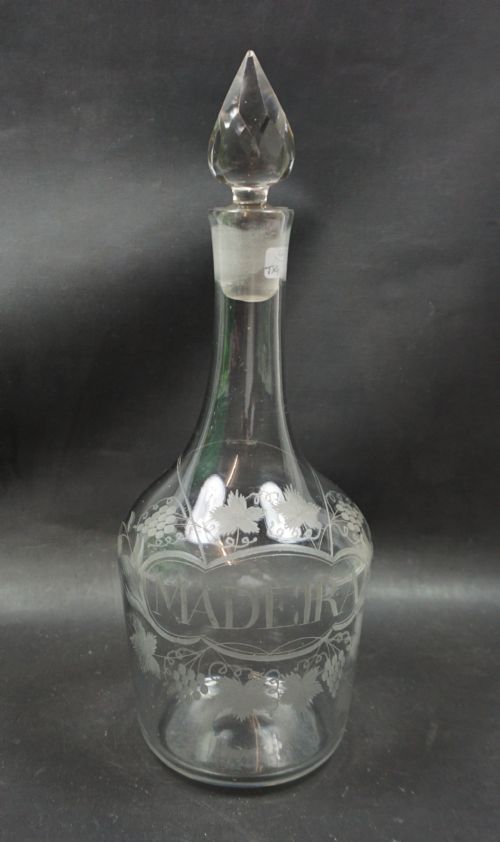
The primary material is heavy lead crystal or glass, often shaped through pillar cutting, flute cutting, or overlay techniques involving layers of cranberry, ruby, or green glass over clear crystal. Artisans engraved surfaces with floral motifs, birds, and vintage labels denoting contents like Madeira or Sherry.
Metal components utilise sterling silver, Old Sheffield plate, or silver plate for bottle collars, stoppers, and stands. Pewter also appears in Arts and Crafts designs, while cabinet makers used walnut, mahogany, and oak for tantalus frames and fitted decanter boxes.
Distinctions in quality
Quality rests upon the clarity and weight of the glass, the precision of hand-cut facets, and the presence of matching original stoppers. Superior examples display crisp wheel engraving and substantial lead content that catches the light cleanly.
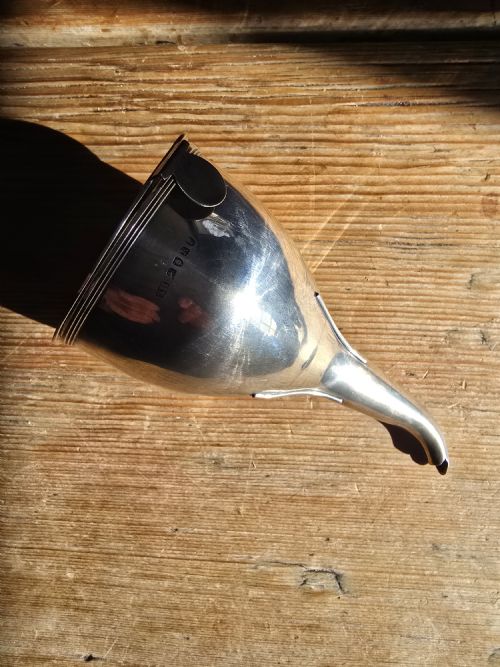
The standard of metalwork distinguishes notable pieces, particularly hallmarked sterling silver collars, wine funnels, and maker-attributed silver-plated tantalus mechanisms. Complete fitted sets with intact dividers and matching bottles achieve higher recognition than assembled groups.
Solomon Hougham·Archibald Knox for Liberty Co·Elizabeth Morley·Richardsons·Barnsley and Co
The Antique English Decanters Glossary
- Ship's decanter
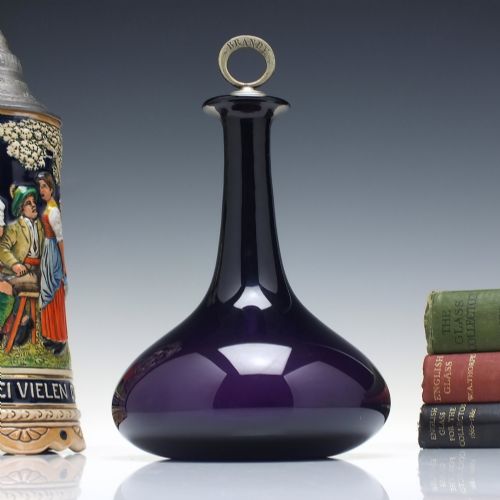
- A wine bottle with a broad, flat base and conical body designed to prevent tipping on rolling vessel tables. These stable vessels became popular during the Georgian and Regency periods.
- Tantalus
- A locking wooden or metal stand that holds decanters securely while displaying the bottles behind bars. The mechanism prevents guests from pouring spirits without a key.
- Noggin
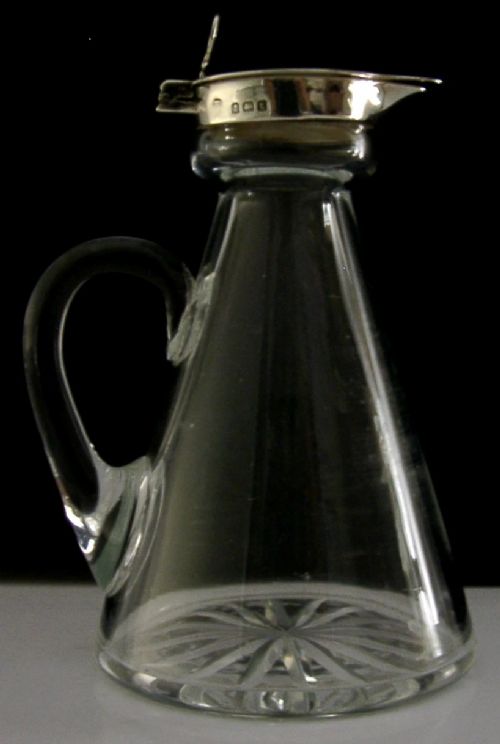
- A small vessel used for serving a single measure of spirits, typically whisky. These miniature decanters often feature sterling silver collars and hinged tops.
- Overlay glass
- A technique where a layer of coloured glass is fused over a clear crystal body before being cut away to expose the underlying contrast. Cranberry and green overlay pieces frequently employ this method.
- Wine coaster
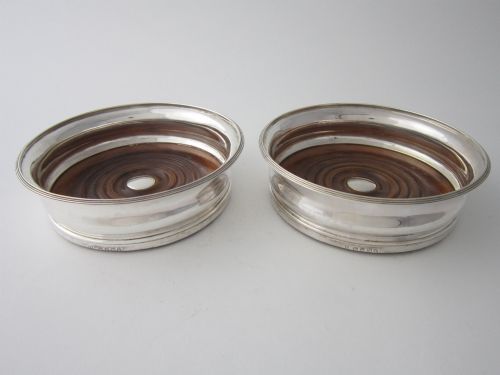
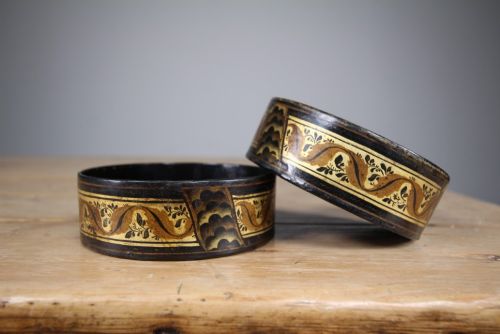
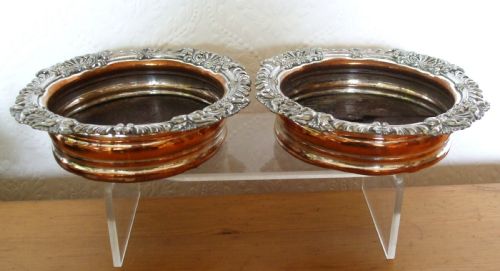
- A small tray or stand with a wooden, silver-plated, or sterling silver gallery used to protect dining tables from bottle moisture. They often feature baize-lined bases.
Antique English Decanters: Frequently Asked Questions
How do I date an antique decanter?
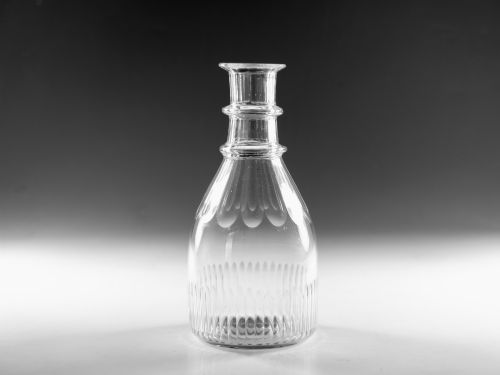
Dating relies on shape, pontil marks, and stopper style. Georgian pieces often show rough pontil scars and three-ring necks, while Victorian examples introduce heavier pillar cutting and coloured overlay glass.
Silver collars and stoppers bearing London or Birmingham hallmarks provide precise manufacturing years through standard date letters and monarch duty marks.
How were tantalus sets used?
A tantalus held spirits under a locking metal bar that gripped the stoppers so the bottles could not be removed or opened. Wealthy homeowners utilised them in studies and dining rooms to restrict access by household staff.
Master craftsmen housed these frames in walnut, oak, and mahogany cases, often incorporating games compendiums alongside the crystal decanters.
Are original stoppers important?
Original stoppers that match the cut, glass colour, and age of the decanter add significant value and visual harmony. Replacements are common due to breakage over centuries of domestic use.
Collectors inspect the ground glass fit and matching number marks where present to confirm the stopper belongs to the specific bottle.