



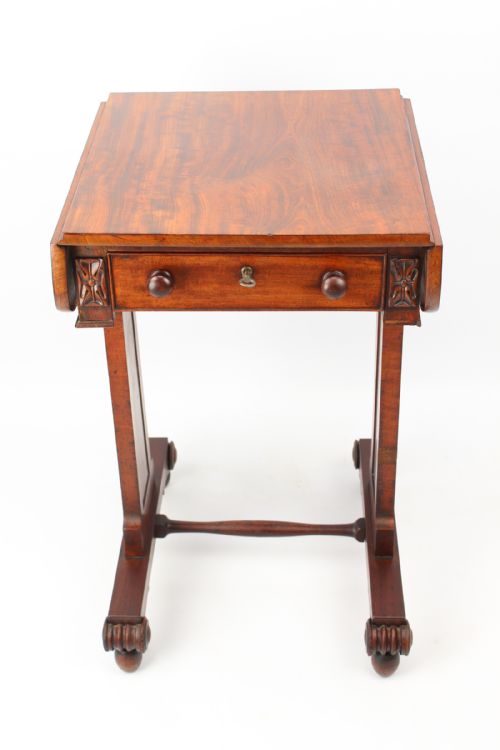


Antique End Table Flaps
These antique end table flaps bring together the clever engineering of drop leaves and Pembroke tables from Georgian, Regency and Victorian hands.
Antique End Table Flaps
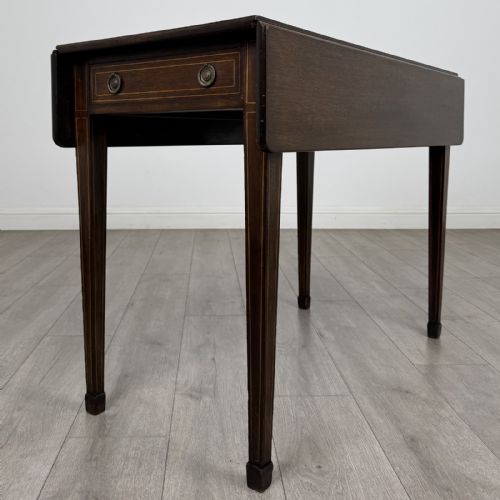
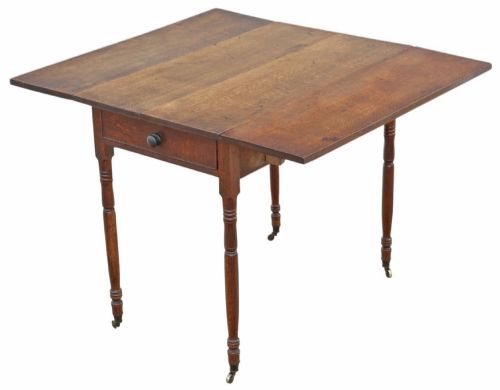
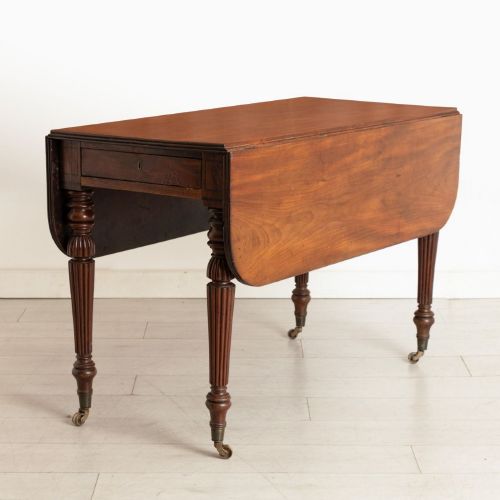
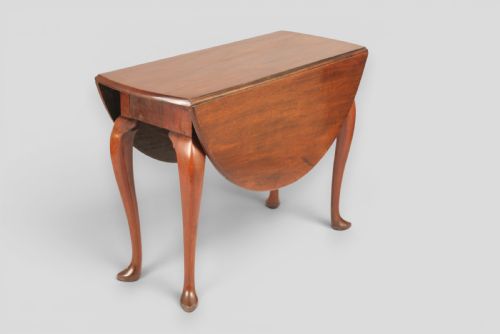
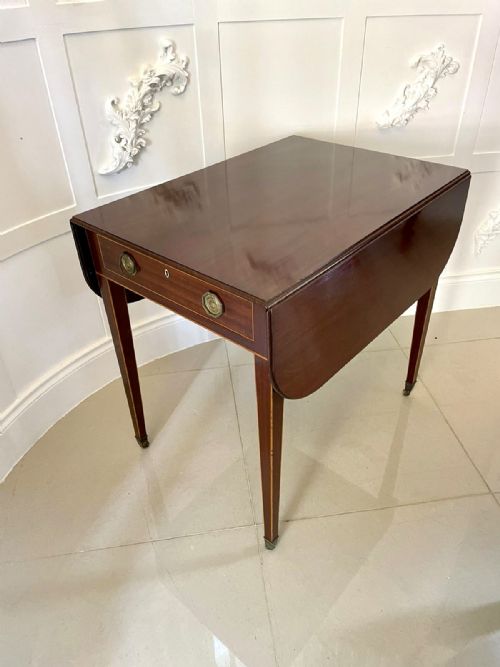
These pieces are primarily Pembroke tables, drop-leaf tables, sofa tables, and occasional tables featuring hinged flaps that extend the surface area when needed. You encounter various forms here, ranging from small lamp tables and games tables to dining tables and work tables.
The selection spans from the 18th century through the Georgian, Regency, Victorian, and Edwardian periods. Mahogany forms the backbone of these listings, accompanied by walnut, oak, and rosewood examples.
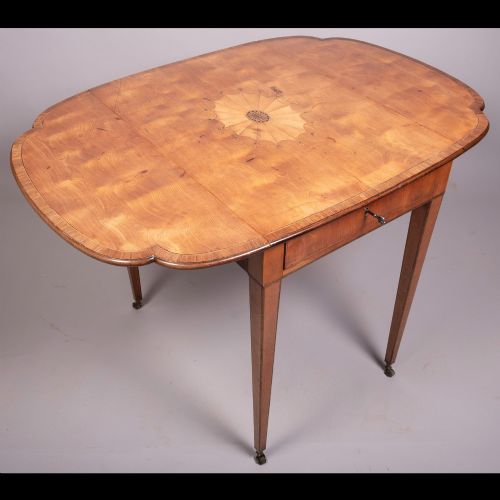
Makers often shaped these tables with oval or butterfly tops supported by turned legs or spider legs. A buyer seeks them for compact spaces where folding flaps provide versatile utility.
How they were made
Cabinetmakers utilised solid timbers and veneers such as mahogany, walnut, rosewood, and oak for the primary structures and drop flaps. Brass hardware frequently secured the hinges and supported the folding leaves.
Craftsmen applied satinwood inlay, wood inlay, and marquetry to ornament the surfaces of Georgian and Sheraton period pieces. Finely turned legs and ebonised details completed the construction of these drop-flap tables.
Antique End Table Flaps Retail Price Guide 2026
Typical asking prices for end table flaps among the pieces listed under this phrase on Sellingantiques today, from the lower quarter to the upper quarter. They describe what is for sale here now, not the wider market.
Listings feature mahogany predominantly, alongside walnut, rosewood, and oak across Georgian, Regency, and Victorian periods.
What varies in quality
Quality rests in the precision of the joinery where the drop flaps meet the fixed top and the stability of the leg supports. Finer examples display meticulous wood inlay, marquetry, and satinwood detailing rather than plain surfaces.
The choice of timber creates a distinct separation, with burr oak, figured mahogany, and rosewood elevating the visual weight of an occasional or sofa table. Maker attribution, such as Gillow, also marks the upper tier of these pieces.
Gillow
The Antique End Table Flaps Glossary
- Pembroke table
- A small drop-leaf table with hinged flaps on either side, often fitted with a drawer. This form dominates the earlier Georgian listings.
- Sutherland table
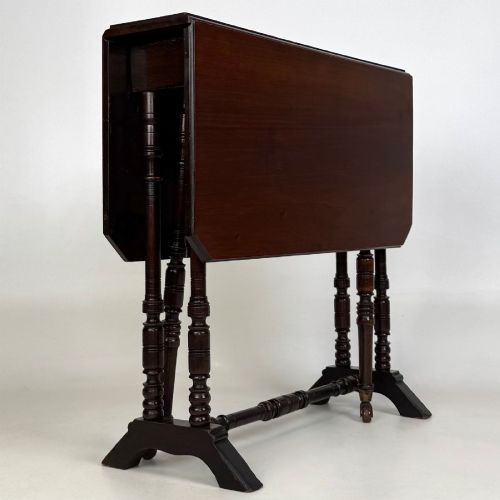
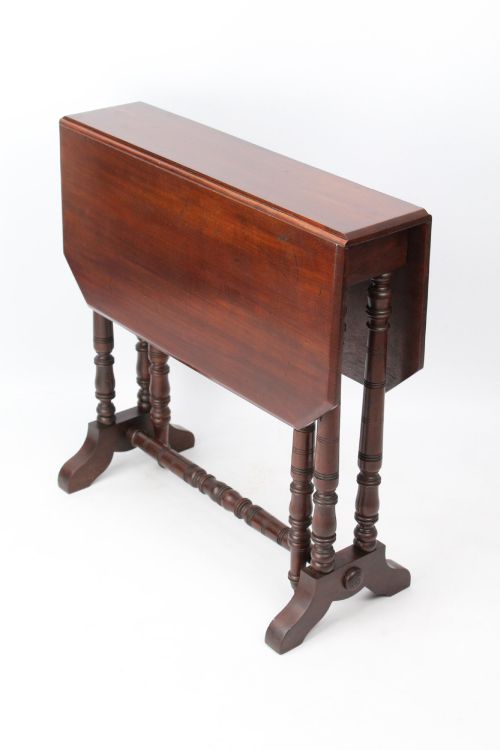
- A narrow table with exceptionally wide drop flaps that fold down almost vertically. They save floor space effectively.
- Sofa table
- A rectangular occasional table traditionally placed in front of a sofa, equipped with drop flaps at the ends. They frequently feature trestle or pillar supports.
- Marquetry
- Decorative patterns formed by inserting pieces of wood into a veneer. It appears on select Georgian and Victorian tables.
- Drop flap
- A hinged leaf attached to the main top of a table to alter its footprint. They define the utility of these side and lamp tables.
Antique End Table Flaps: Frequently Asked Questions
What is a pembroke table?
A pembroke table is a small occasional table equipped with hinged drop flaps on two opposing sides. They often include a single drawer and slender legs.
Cabinetmakers designed them in the Georgian and Regency periods to serve multiple domestic functions in smaller rooms.
How do drop flap tables work?
Drop flap tables utilise hinged leaves that drop down at the sides or ends of the main surface. Wooden brackets or pivoting legs swing out to support the leaves when raised.
This mechanism allows the table to occupy minimal space against a wall until expanded for use.
Where do you put a sutherland table?
A sutherland table fits well beside a sofa or in a corner because its leaves fold down almost flat. Their narrow profile when closed makes them practical for tight spaces.
When opened fully, they provide a stable surface for lamps or books.
How do you date a mahogany drop leaf table?
Dating relies on observing the leg turnings, timber selection, and decorative elements like satinwood inlay or marquetry. Georgian and Regency pieces show different proportions compared to later Victorian and Edwardian examples.
Construction details such as drawer linings and hinge types also assist in placing the table in its period.