


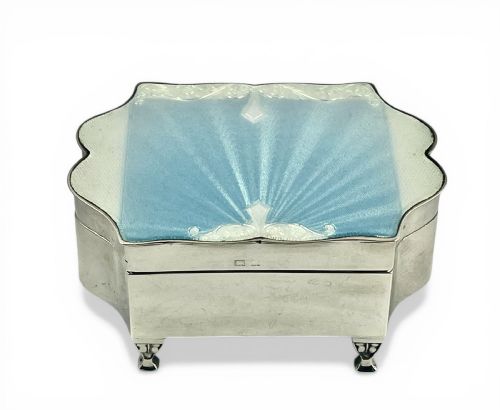

Antique Enamel Vanity Box
An antique enamel vanity box brings colour and tactile elegance to a dressing table, housing powders, trinkets and pills within decorated metal and glass vessels.
Antique Enamel Vanity Box
When you search for an antique enamel vanity box, you encounter a diverse array of small containers created for personal grooming and dressing table use. These pieces span from eighteenth-century English patch boxes to twentieth-century powder compacts and pill boxes.
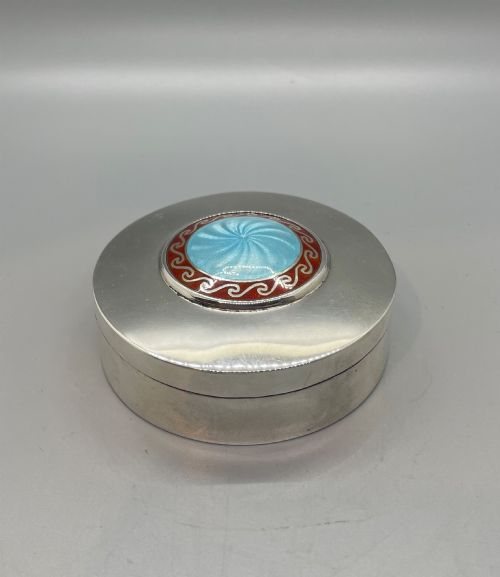
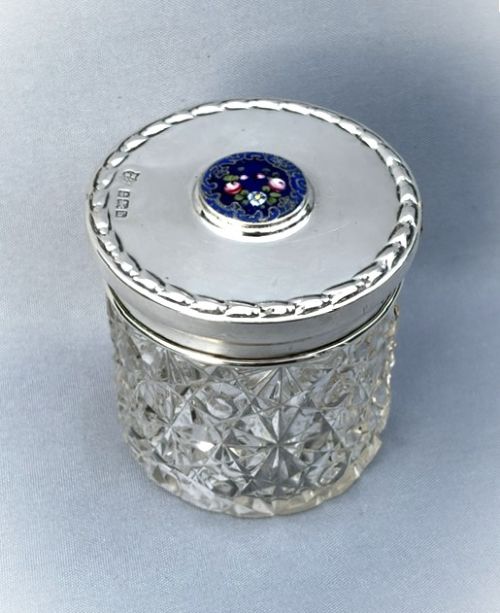
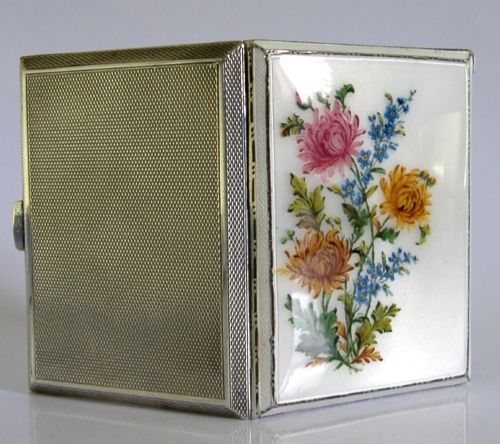
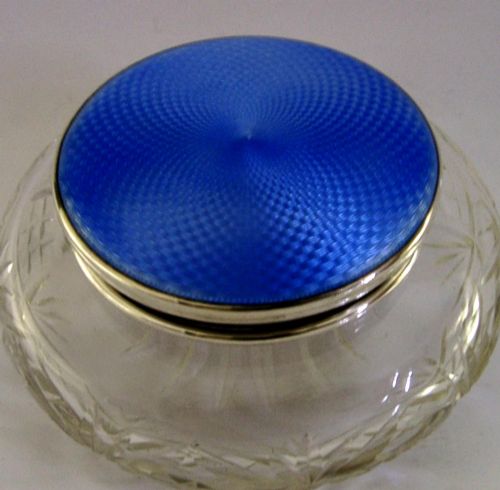
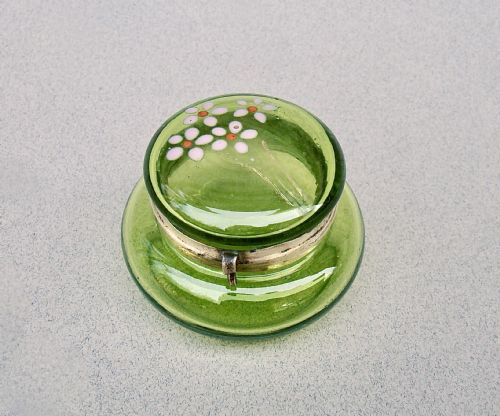
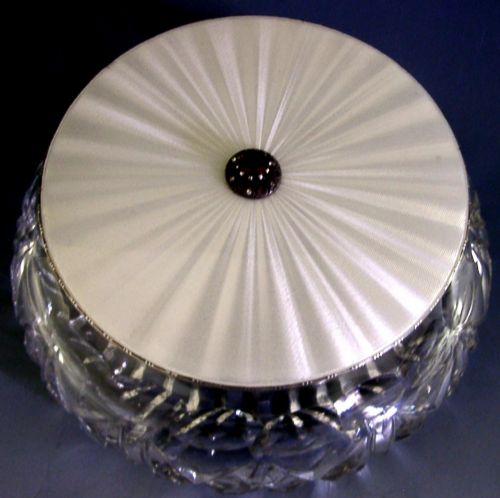
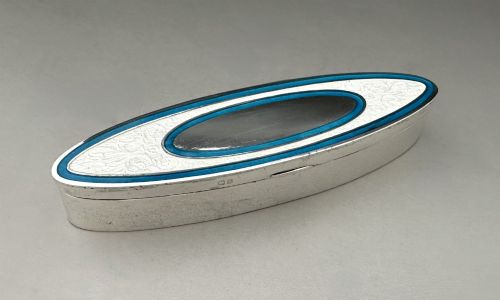
The selection here draws heavily from the early twentieth century, featuring sterling silver and guilloche enamel dressing table jars, cigarette cases and compacts from the Art Deco and Edwardian eras. Alongside these, nineteenth-century glass and porcelain vessels appear with enamelled detailing and hinged metal lids.
Buyers look for these items to add decorative refinement and historical charm to modern interiors while serving a practical purpose for small storage. The variety encompasses items originating from English, French, Austrian and Italian workshops.
Materials and construction
Makers constructed these vessels by combining precious and base metals with vitreous enamel, glass and porcelain. Sterling silver, brass and chrome form the structural bodies and bezels, often paired with cut or coloured glass jars.
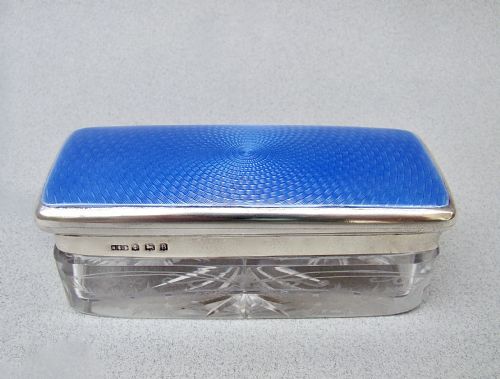
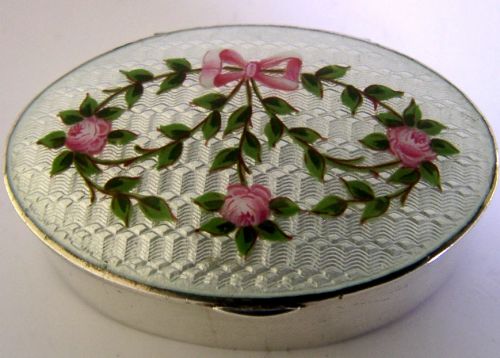
Guild artisans applied liquid enamel or powder to metal surfaces, firing the pieces at high temperatures to fuse the glassy substance to the metal base. Many items incorporate guilloche technique, where mechanical lathes cut intricate geometric patterns beneath translucent enamel layers.
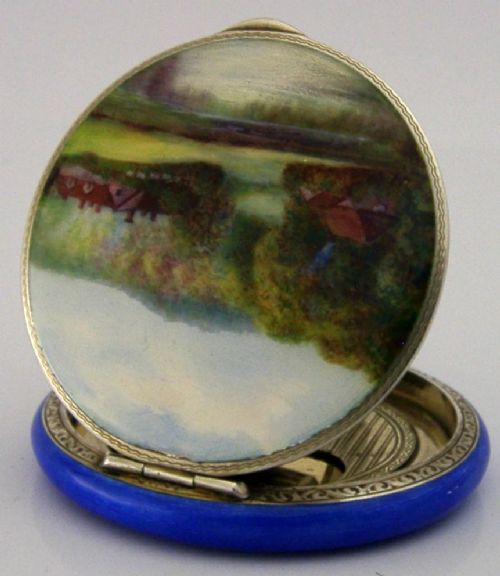
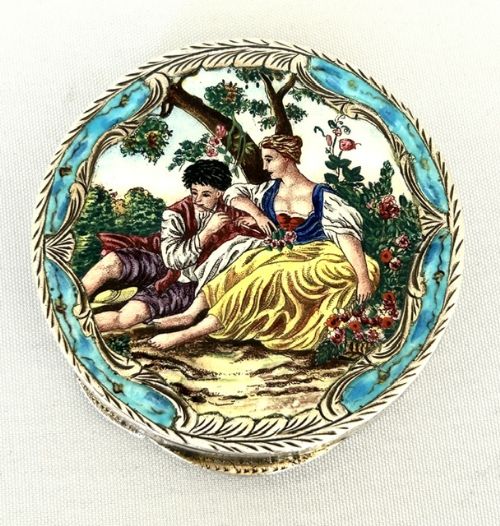
Surface ornamentation frequently includes hand-painted floral motifs, scenic views or gilt detailing upon porcelain and enamel lids. Hinges, clasps and internal mirrors demonstrate precise metalworking suited to daily vanity use.
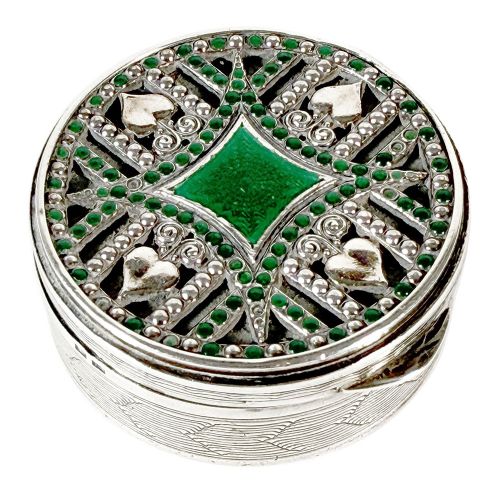
Materials documented across the pieces include sterling silver, cut glass, porcelain, chromium and various forms of translucent and opaque enamel.
Markers of quality
The standard of a piece rests upon the crispness of its guilloche engraving and the evenness of the vitreous enamel coating. Superior examples display smooth surfaces free from chipping or restoration, with translucent enamel allowing the engine-turned metal pattern to catch the light.
Maker marks and assay office hallmarks stamped into the silver or metal mounts indicate origin and standard of silver content, contributing to historical attribution. The precision of the hinge mechanism and the tightness of the lid closure also distinguish finer production.
Hand-painted details exhibit varying degrees of artistic skill, with superior items showing fine brushwork and detailed pictorial composition rather than mechanical transfer printing.
Henry Clifford Davis·George Adam Scheid·Henry Matthews·Goldsmith's and Silversmith's Co.·Richard Hudnut
The Antique Enamel Vanity Box Glossary
- Guilloche
- An ornamental technique where a mechanical lathe engraves precise geometric patterns into a metal surface. Translucent enamel is then applied over the top to reveal the pattern underneath.
- Patch box
- A small container used in the eighteenth and nineteenth centuries to hold cosmetic patches made of silk or velvet. These pieces often feature hinged lids with mirrors inside and enamel portraits or inscriptions.
- Sterling silver
- An alloy of silver containing ninety-two point five percent silver and seven point five percent other metals, usually copper. It provides the durable structure for many Edwardian and Art Deco vanity items.
- Powder compact
- A small handheld case containing a mirror and a powder sifter or puff. They became prominent accessories during the Art Deco period, frequently decorated with enamel and chrome.
- Vitreous enamel
- A material made by fusing powdered glass to a substrate by firing, usually between seven hundred and eighty-five hundred degrees Celsius. The resulting compound is smooth, durable and chemically resistant.
Antique Enamel Vanity Box: Frequently Asked Questions
How do I date an enamel vanity box?
Hallmarks stamped on silver mounts provide exact assay years and maker marks for pieces originating in Britain. Stylistic indicators, such as geometric Art Deco patterns or floral Edwardian motifs, help narrow down pieces lacking formal marks.
Material composition and manufacturing techniques also offer chronological clues. Earlier eighteenth-century pieces often feature copper bases with opaque white enamel, while twentieth-century examples frequently utilise sterling silver paired with engine-turned guilloche enamel.
What were vanity jars used for?
Dressing table jars and vanity pots held creams, powders, pins and rouge used in daily grooming routines. They sat upon dressing trays as both decorative objects and functional storage.
Smaller pill boxes and patch cases were designed for pocket or handbag transport. Compacts specifically accommodated face powder and included mirrors for touch-ups away from home.
Are these boxes suitable for daily use?
Many sturdy compacts and trinket boxes remain robust enough for holding small items or dry cosmetics today. However, antique hinges and glass liners benefit from careful handling rather than heavy daily wear.
Fragile enamel pieces and hand-painted porcelain lids are best treated as display items to preserve their historic surfaces. Storing them away from direct sunlight prevents fading in coloured pigments.