



Antique Enamel Barware
These antique enamel barware pieces bring vibrant colour and spirited drinking customs to your table.
Antique Enamel Barware
When you search for antique enamel barware, you encounter items designed for serving and mixing drinks that incorporate vitreous enamel decoration. These objects span the Victorian period through to the mid-century, including the 1920s and 1930s.
Originating from makers across Britain, France, Norway, and Bohemia, these pieces reflect the shifting social habits of their respective decades. They bridge the gap between functional drinking vessels and decorative table art.
How they were made
Makers fused vitreous enamel onto surfaces such as sterling silver, chrome-plated metal, and clear glass through high-temperature firing. This technique created durable, glossy decorations resistant to wear and tarnishing.
Glass bodies were blown or moulded, often utilising lead crystal in Bohemian production before being hand-enamelled with geometric or figurative motifs. Metal components involved casting solid sterling silver or working with chrome and wood elements.
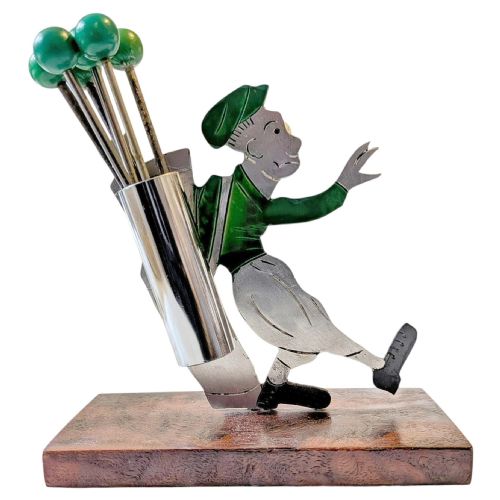
A comical golfer with a caddy once watched over many a pre-war cocktail hour from the end of a silver stick.
What varies in quality
The distinction between standard and superior pieces rests on the precision of the enamel work and the quality of the base material. Intricate hand-enamelled guilloche patterns on solid sterling silver represent a higher standard than simpler applications on base metals.
Completeness also dictates standing, particularly in decanter sets where matching glasses and original trays must survive together. The reputation of the workshop or designer adds another layer of distinction to the finished object.
Sudre·Karl Palda·David Andersen·Mosey
The Antique Enamel Barware Glossary
- Enamel
- A glass-like substance fused to metal or glass surfaces through heat. It provides vibrant colour and a smooth, protective finish.
- Guilloche
- An intricate decorative technique where a precise pattern is mechanically engraved into metal beneath a translucent enamel layer. This creates deep, shimmering visual effects.
- Decanter
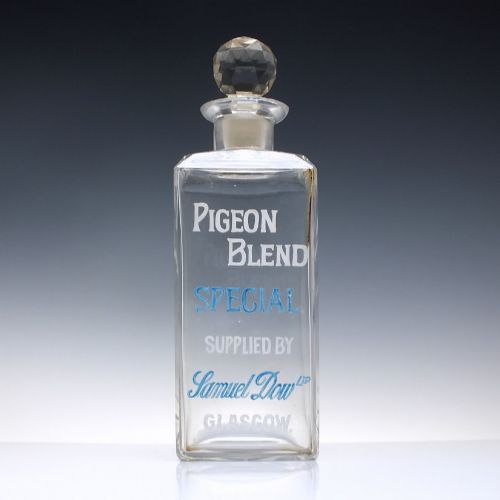
- A vessel used for holding and serving alcoholic beverages. Antique versions often feature cut glass and enamel labels.
- Cocktail Shaker
- A container used to mix ingredients by shaking them with ice. Art Deco examples frequently incorporate painted or enamelled animal motifs.
Antique Enamel Barware: Frequently Asked Questions
What is antique enamel barware?
Antique enamel barware encompasses drinking accessories and serving vessels decorated with fused glass enamel, dating from the Victorian era to the mid-twentieth century.
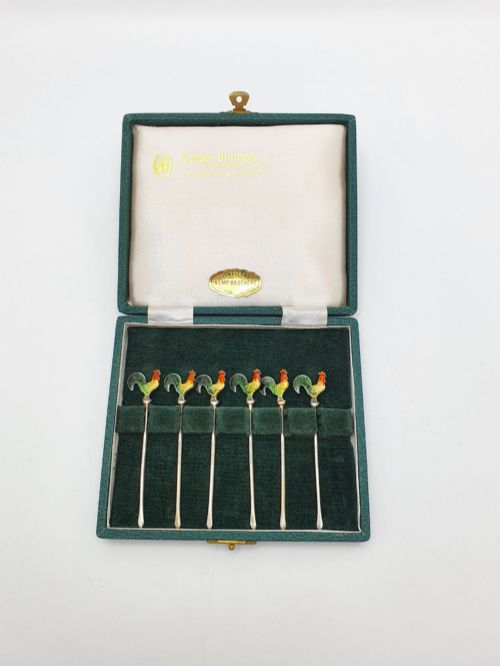
The category includes items like cocktail shakers, decanter labels, cocktail sticks, and complete decanter sets with matching glasses.
How do I date these pieces?
Dating relies on stylistic markers such as Victorian script or Art Deco geometry, alongside material types like chrome or lead crystal.
Assay marks and maker signatures stamped on silver mounts provide exact manufacturing years and locations.
Are these pieces safe for use?
Most antique barware functions well for display and gentle serving purposes, though older enamels require careful handling during washing.
Harsh detergents and abrasive scrubbers should be avoided to protect the integrity of the fired glass decoration.
Where were these items made?
Production centres spanned across Europe, with notable workshops operating in Britain, France, Norway, and Bohemia.
Each region imparted distinct aesthetic traits, from Scottish whisky decanters to Norwegian guilloche silver.