


Antique Empire Round Table
An antique empire round table brings architectural symmetry and classical proportions to a room, serving as a commanding centrepiece for any interior.
Antique Empire Round Table
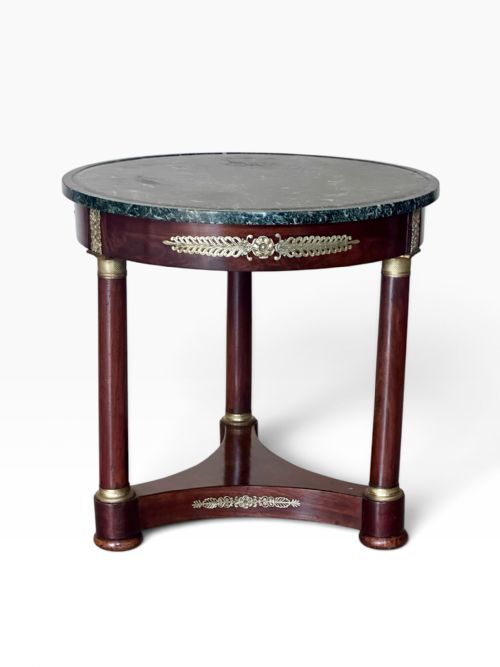
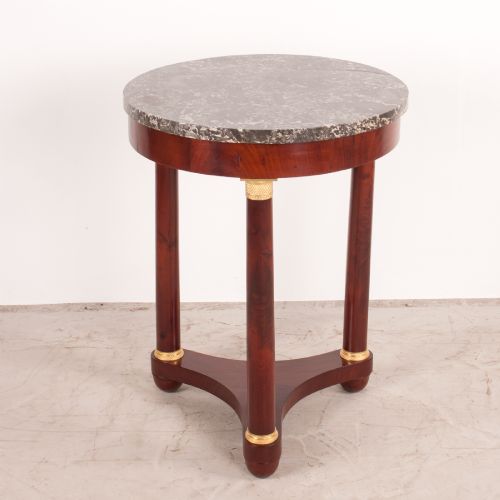
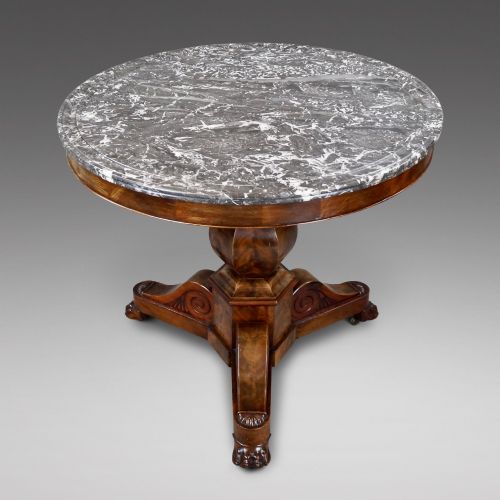
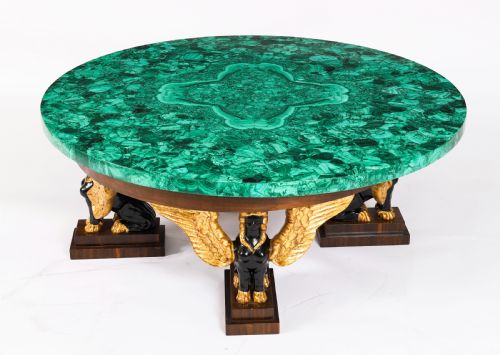
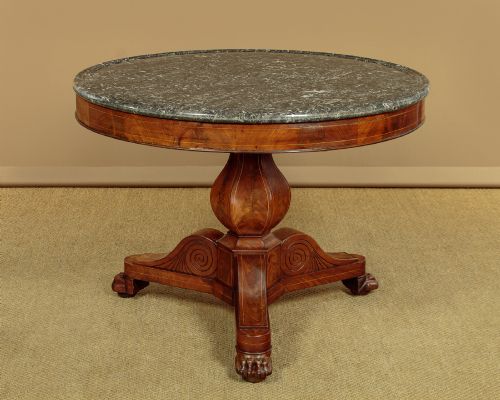
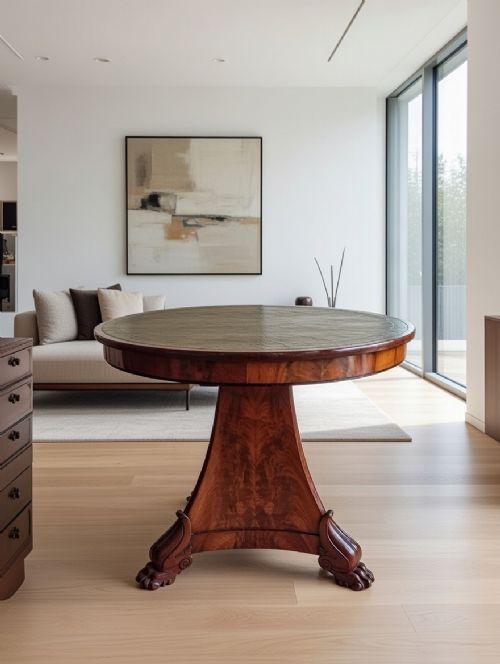
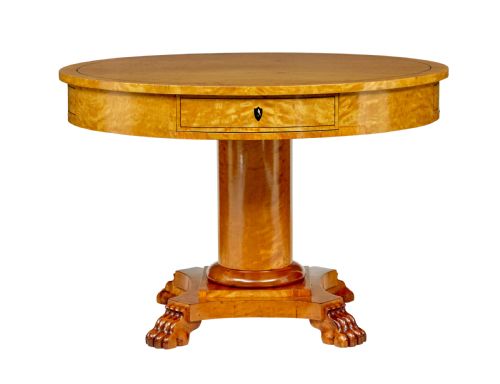
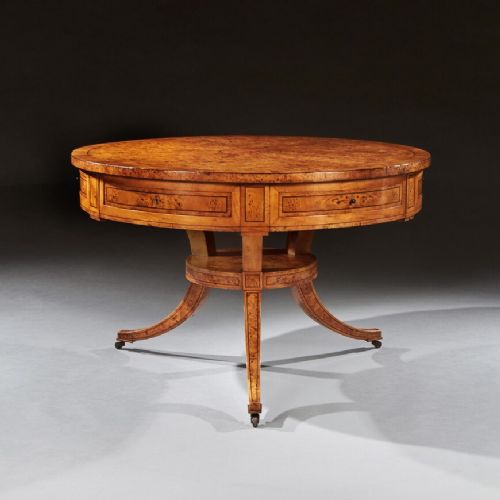
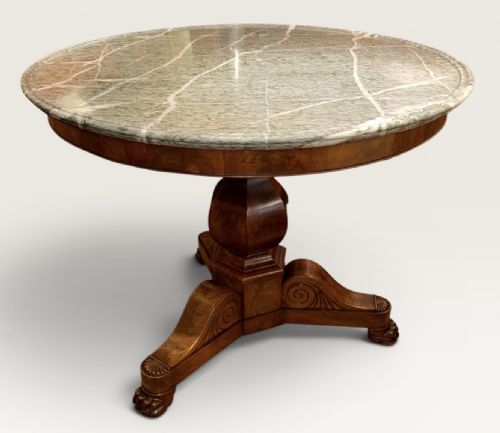
An antique empire round table is primarily represented here by circular pedestal forms known as gueridons, alongside occasional and centre tables originating from the nineteenth century. These pieces draw upon French Empire, Swedish Empire, and Biedermeier design vocabularies, often featuring a prominent central pillar supported by a circular or triangular plinth base.
The format typically functions as a freestanding centre table or an occasional piece placed in a hallway or drawing room. Most examples date from the 1800s through to the early decades of the twentieth century, reflecting stylistic revivals across France and Scandinavia.
Materials and construction
Cabinetmakers utilised dense timbers such as mahogany, walnut, burr elm, and birch, frequently selecting flame or burr veneers to create striking symmetrical grain patterns across the circular tops. Structural stability relied on robust internal framing beneath the veneer, paired with heavy timber shafts.
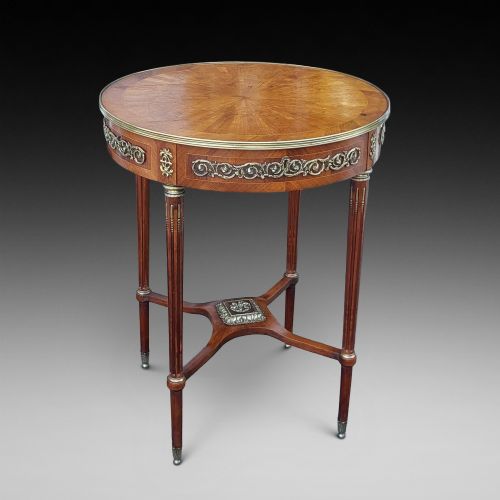
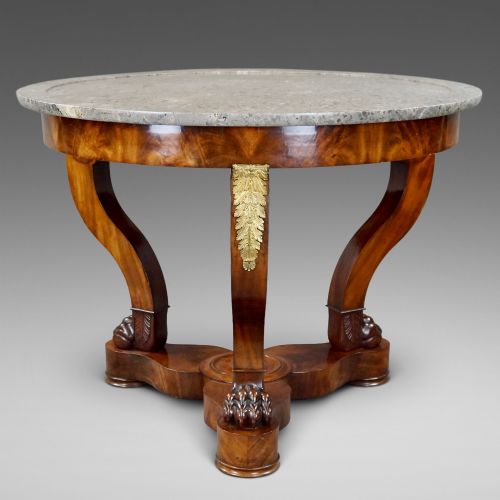
Surface decoration incorporated contrasting elements such as white or black marble slabs fitted directly into the wooden top, alongside cast or chased ormolu, brass mounts, and giltwood detailing. Certain models integrated specialised treatments including ebonised surfaces, leather inserts, and hand-painted motifs.
Materials recur across multiple periods, pairing heavy white or black marble tops with flame mahogany, birch, and cast ormolu mounts.
Assessing quality
Quality reveals itself in the selection of timber veneers and the crispness of applied bronze or brass mounts. Superior pieces display harmonious grain matching across the circular top and finely detailed cast ornament rather than mass-produced metalwork.
The integrity of the central column and the stability of the base construction determine the durability of the piece. Better examples maintain tight joinery at the pillar and plinth junction, ensuring the heavy marble or timber top rests securely without movement.
The Antique Empire Round Table Glossary
- Gueridon
- A small circular table supported by a single central pillar or pedestal. The form originated in seventeenth-century France before evolving into the classic nineteenth-century centre table.
- Ormolu
- Gilt bronze mounted or applied to furniture for decorative effect. The technique involves treating metal with a mercury and gold amalgam to achieve a durable golden finish.
- Biedermeier
- A central European style of furniture design dating from the early nineteenth century. It emphasises utilitarian comfort and clean lines through native timbers rather than lavish ornamentation.
- Plinth
- The heavy flat base or block supporting the central column of a table. It frequently rests upon shaped feet, sometimes carved with animal motifs or claws.
- Ebonised
- Wood treated with a dark stain or finish to imitate ebony. This technique was popular in nineteenth-century revival styles to create stark contrast against gilt metal mounts.
Antique Empire Round Table: Frequently Asked Questions
Where should I place an antique empire round table?
These tables work best as freestanding centrepieces in entrance halls or principal reception rooms where their circular symmetry can be appreciated from all sides. They also serve effectively as display surfaces for lamps, sculpture, or floral arrangements.
Because of their pedestal construction, chairs can be arranged around them without obstruction from corner legs. Ensure the diameter of the table matches the scale of the room to maintain proper circulation space.
How do I care for a marble top table?
Marble surfaces require prompt wiping of spilled liquids, particularly acids like wine or citrus, which can etch the polished stone. Use coasters and protective mats to prevent scratching from heavy decorative objects.
Clean the stone periodically with a damp cloth and mild, neutral soap, avoiding harsh chemical cleaners or abrasive scouring pads. Occasional waxing can help maintain the sheen of the surrounding wooden frieze.
Are these tables sturdy enough for daily use?
Nineteenth-century construction methods utilise solid timbers and robust central pillars designed to support heavy marble slabs and everyday items. The weight of the stone top actually helps anchor the pedestal firmly to the floor.
However, care should be taken not to lean excessive body weight on the outer edges of the circular top, as this can strain the central column joint. Regular checks of the base assembly will ensure long-term stability.