


Antique Electric Wall Lights
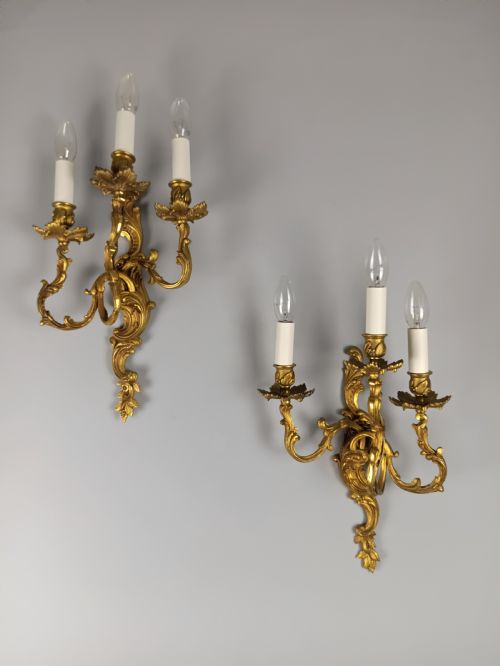
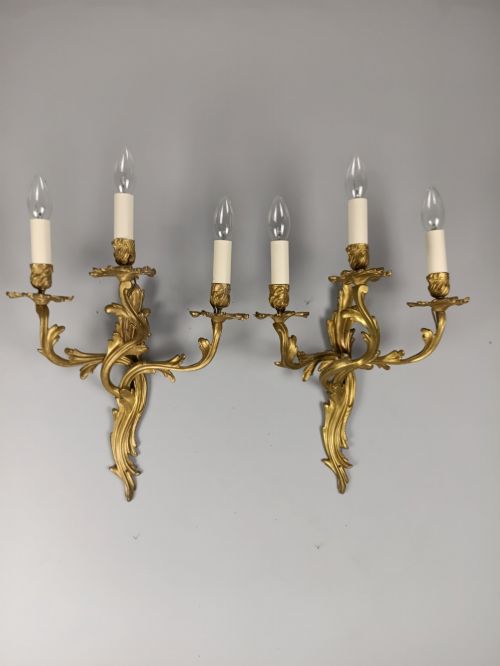
Antique electric wall lights bring period illumination to a room, ranging from ornate French ormolu sconces to carved Florentine giltwood.
Antique Electric Wall Lights
Antique electric wall lights illuminate interiors using fixtures mounted directly to wall surfaces, designed to hold electric lamps while displaying historical decorative styles. These pieces function both as practical sources of light and as sculptural elements within a room.
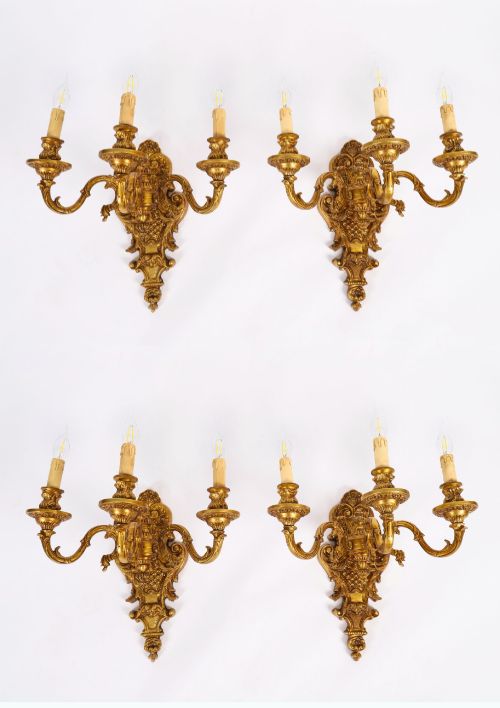
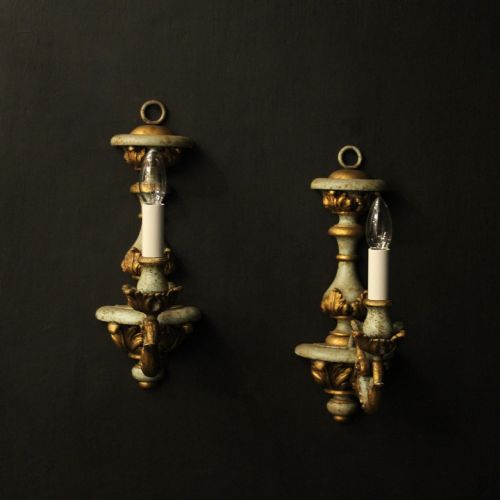
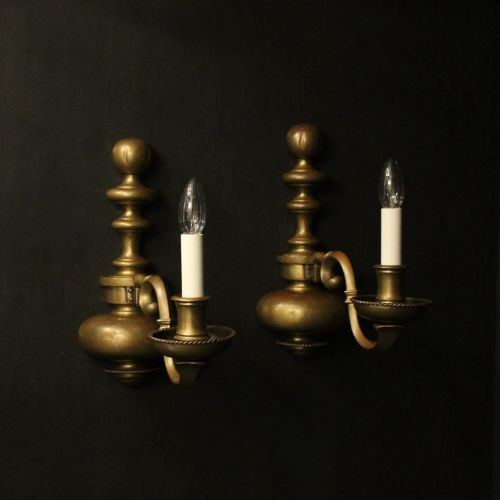
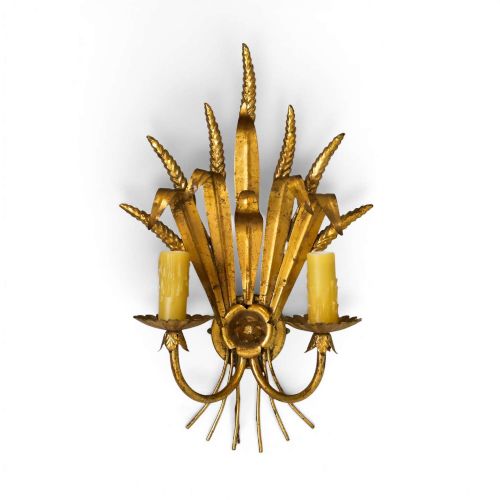
Buyers encountering antique electric wall lights on this page will frequently discover pairs or sets originating from the nineteenth and early twentieth centuries. Common forms include French rococo appliques, Italian giltwood multi-arm sconces, and English traditional brass brackets.
How antique electric wall lights were made
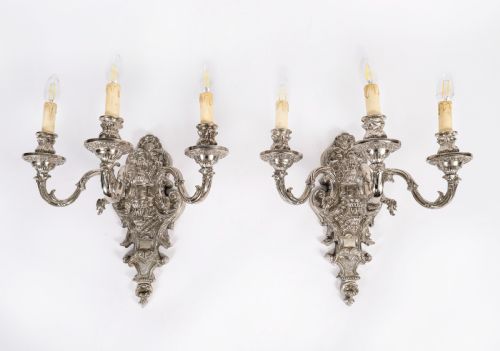
Metal components such as brass, bronze, ormolu, and silver plating were cast, chased, and gilded to create intricate wall fixtures. Wooden elements relied on carved wood, giltwood, and silver giltwood finished with applied metallic leaf.
Many fixtures began life burning oil or gas before undergoing conversion to electricity during later rewiring projects. Artisans shaped these materials into single, twin, triple, or four-arm configurations suited for domestic spaces.
Listings feature items spanning the 1880s to 1930, utilising brass, giltwood, bronze, ormolu, and silver leaf.
What varies in quality in antique electric wall lights
The refinement of the casting and the crispness of the chasing separate standard brackets from exceptional examples. Finer bronze and ormolu pieces display deep relief and sharp detail in their scrollwork and foliage.
Surface finishes also distinguish the range, as genuine fire gilding or heavy silver plating wears differently than modern coatings. The depth and execution of hand-carving on giltwood Florentine frames dictate the visual impact on the wall.
The Antique Electric Wall Lights Glossary
- Applique
- A wall-mounted light fixture or sconce designed to hold candles or electric lamps. These pieces sit flat against the wall surface.
- Ormolu
- Finely chased bronze coated with a mercury and gold amalgam to produce a rich metallic lustre. This technique typifies high-status French decorative arts.
- Giltwood
- Wood that has been coated with a thin layer of gold leaf or powder. It appears frequently in Italian Florentine wall lights.
- Sconce
- A wall light attached by a bracket, historically holding candles or torches but now wired for electricity. They project illumination outward into the room.
Antique Electric Wall Lights: Frequently Asked Questions
How do I install antique wall lights?
Professional installation is recommended because older wiring configurations require adaptation to modern electrical standards. An electrician ensures the wall bracket secures safely to standard junction boxes.
Many antique fixtures arrive already rewired for contemporary mains supply. This permits straightforward mounting by a qualified trade person.
What periods do these wall lights cover?
The available selection spans from the nineteenth century through the Edwardian era up to the 1930s. Victorian and nineteenth-century pieces often show heavier bronze casting or converted oil mechanisms.
Later Edwardian and early twentieth-century examples frequently adopt neoclassical or French revival aesthetics in brass and gilt metal. Florentine giltwood pieces mostly date from the 1920s and 1930s.
Are these lights supplied in pairs?
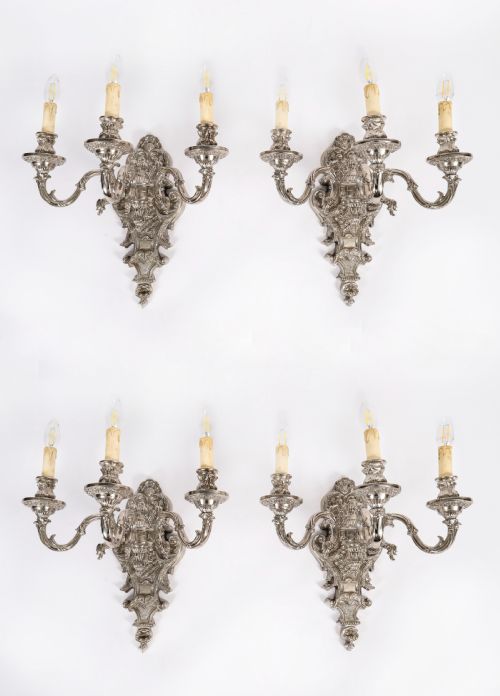
Many listings comprise matched pairs, which suits symmetrical placement flanking a mirror, fireplace, or doorway. Larger salons occasionally utilise sets of three or four matching fixtures.
Single lights also appear alongside pairs and larger sets. Buyers should check the specific branch count and quantity in each listing description.
Did these lights always use electricity?
Original function varied, as some Victorian wall mounted oil lamps underwent conversion to electricity later in their lifespan. Purpose-built electric sconces emerged in greater numbers during the early twentieth century.
Rewired examples blend historical metalwork and carved wood with safe modern internal cabling. This preserves the decorative exterior while meeting contemporary utility needs.