




Antique Ecclesiastical Furniture
Antique ecclesiastical furniture comprises fitted and freestanding pieces designed for religious worship, offering robust construction and historical character for modern interiors.
Antique Ecclesiastical Furniture
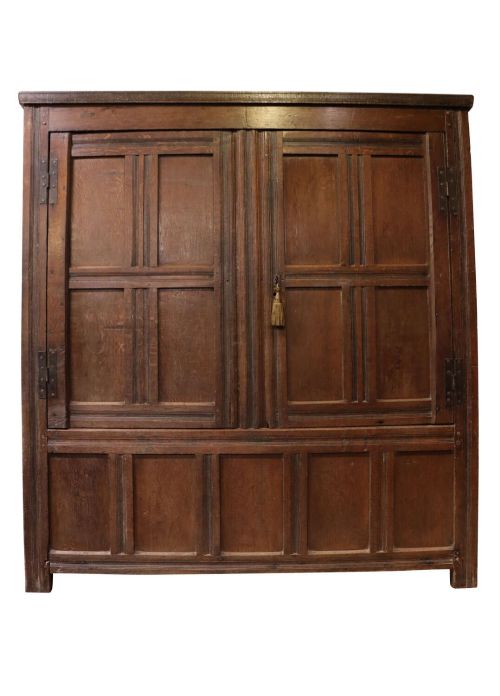
Antique ecclesiastical furniture encompasses seating, desks, and altars originating from places of worship and private devotional spaces. When searching for antique ecclesiastical furniture, buyers encounter forms ranging from simple pine pews to elaborate carved oak pulpits and prayer desks.
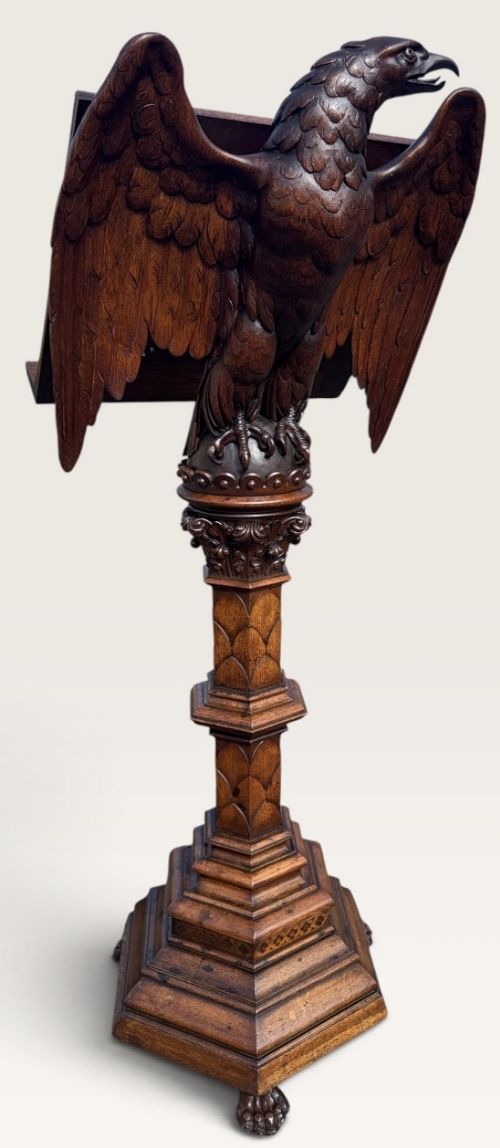
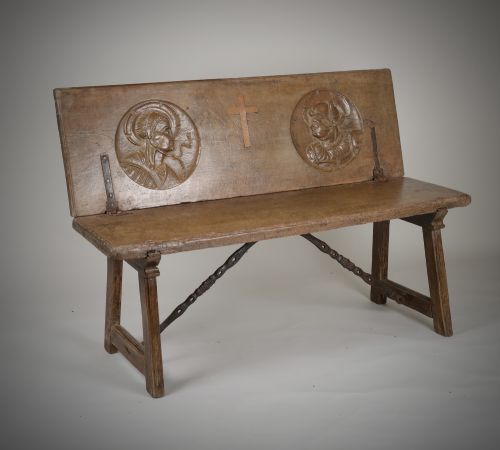
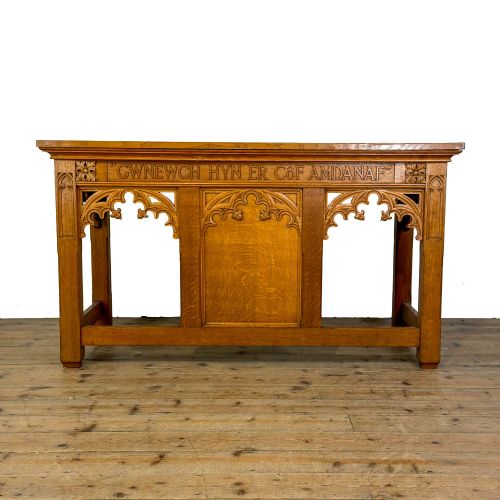
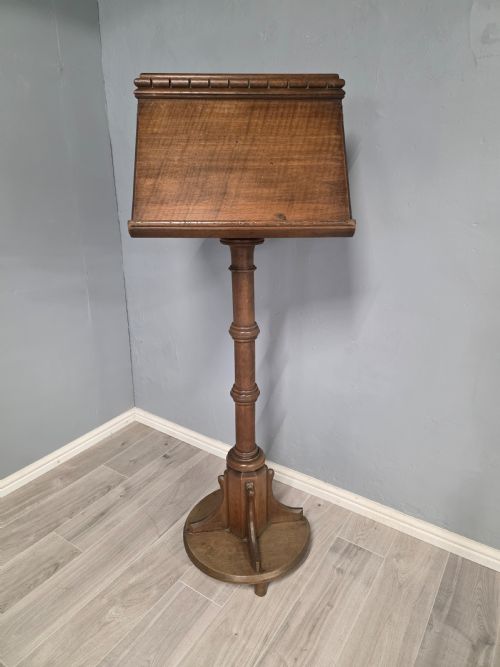
The selection on this page draws heavily from Victorian and nineteenth-century Gothic Revival pieces alongside earlier sixteenth-century examples. Common formats include benches, armchairs, altar tables, and lecterns constructed primarily for liturgical use.
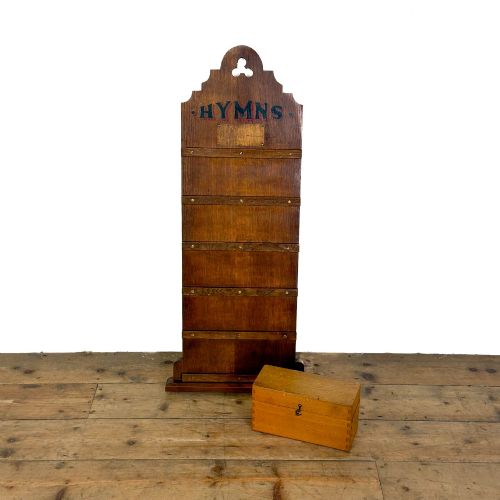
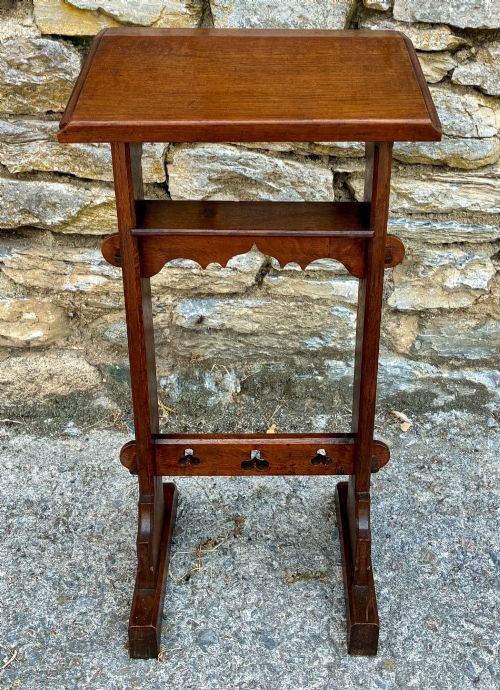
Domestic adaptation is frequent, with pieces like prayer desks and hymn boards finding new purposes in contemporary hallways and studies. The surviving items reflect both humble parish craftsmanship and grander architectural ambition.
Materials and construction
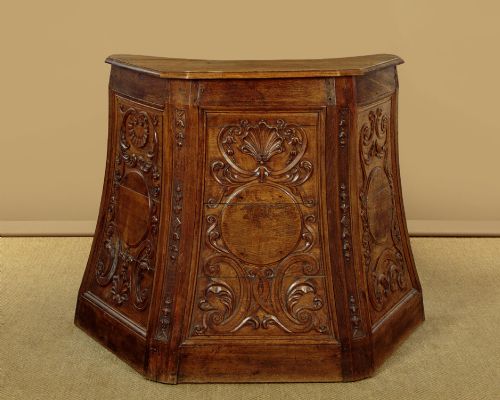
Makers relied predominantly on robust timbers such as oak, pitch pine, and standard pine to withstand heavy daily use within ecclesiastical settings. These woods were frequently joined using traditional methods and detailed with hand-carved religious motifs.
Metal elements including brass and wrought iron appear in structural brackets, pew end rails, and decorative fastenings. Occasional applications of gold leaf highlight specific carved details and inscriptions on panels and pulpits.
Keep an eye out for hymn boards that still display their original moveable numbers for Sunday service.
Variations in quality
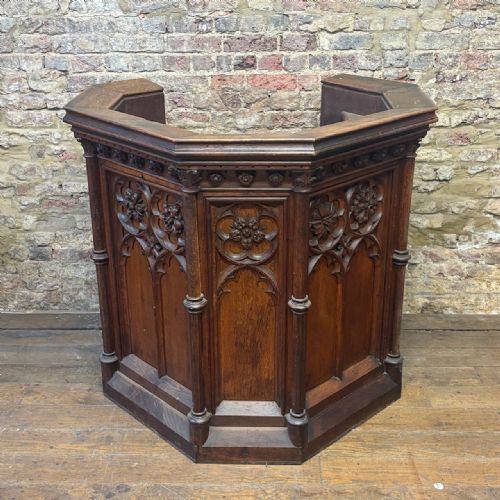
Quality within this category depends upon the depth of hand-carving and the architectural ambition of the design, distinguishing standard institutional furniture from bespoke commissions. Pieces displaying sophisticated Gothic Revival tracery or Renaissance motifs demonstrate superior craftsmanship.
The choice of primary timber also dictates the character of the piece, with dense English oak generally commanding higher regard than utility pine. Furthermore, the integrity of surviving original surface finishes influences the overall stature of an item.
The Antique Ecclesiastical Furniture Glossary
- Gothic Revival
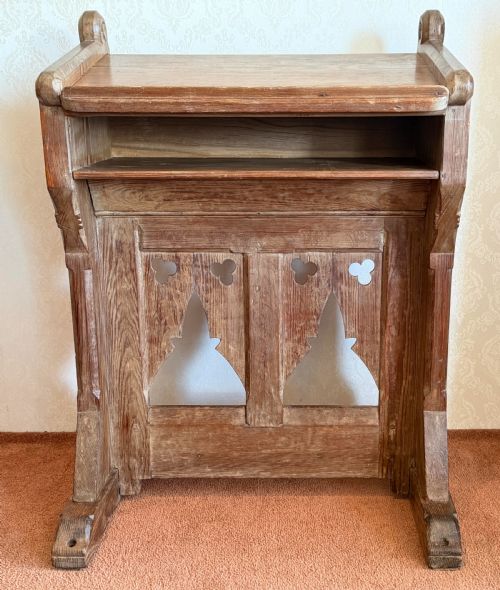
- An architectural and decorative style popular during the nineteenth century that revived medieval forms. It is characterised by pointed arches, trefoils, and heavy carved tracery.
- Prie-Dieu
- A devotional desk designed for kneeling while praying, typically featuring a sloping shelf for books. These pieces are often compactly proportioned.
- Glastonbury Chair
- A specific nineteenth-century armchair design inspired by medieval relics, featuring a panel back and X-frame folding legs. They are frequently constructed from oak.
- Pew
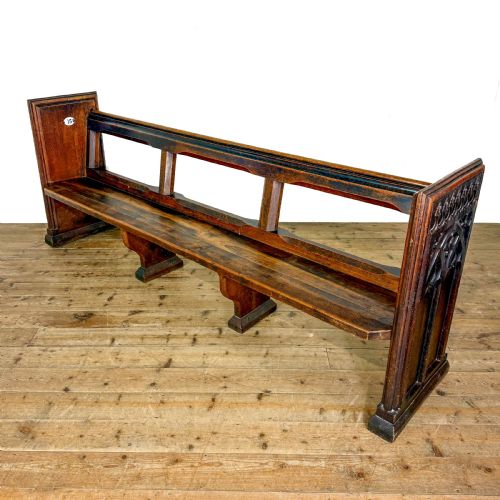
- A long wooden bench designed for congregational seating in churches. They range from plain utilitarian pine to panelled oak with carved ends.
Antique Ecclesiastical Furniture: Frequently Asked Questions
Where did these pieces originate?
Most items originate from churches, chapels, and monastic foundations across Britain and Europe. They were commissioned specifically for liturgical ceremonies and private devotions.
Over time, many surplus items left ecclesiastical settings to enter the wider antique market and private homes.
How do I use church pews at home?
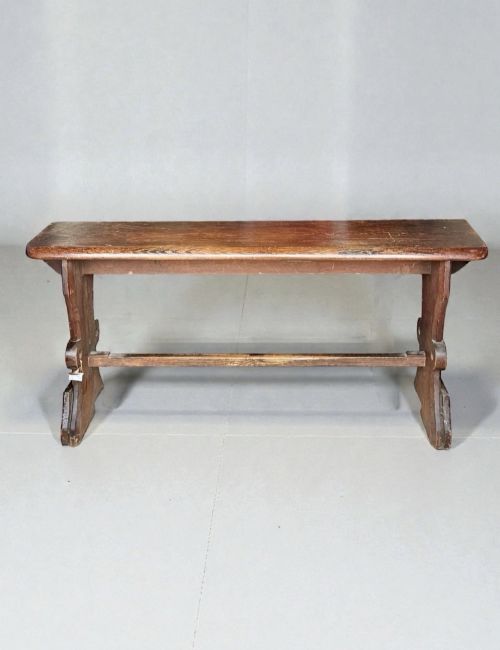
Church pews and benches serve well in hallways, dining areas, and kitchens as alternative seating. Their narrow depth allows them to fit into tight spaces where standard furniture fails.
Shorter pews and organist benches work effectively alongside dining tables or against long walls.
What is a prayer desk?
A prayer desk, or prie-dieu, is a specialised devotional seat featuring a lower kneeling platform and an upper sloping shelf for holding prayer books.
They were built for private contemplation and typically occupy a compact footprint in a room.
What does Gothic Revival mean?
Gothic Revival describes nineteenth-century items designed in imitation of medieval architecture and furniture. This aesthetic draws on pointed arches, quatrefoils, and ecclesiastical symbolism.
Many Victorian church furnishings follow this historicist design language.