
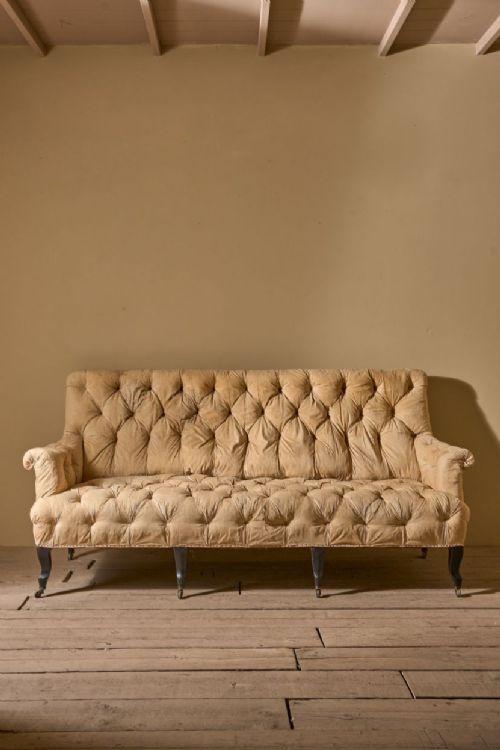
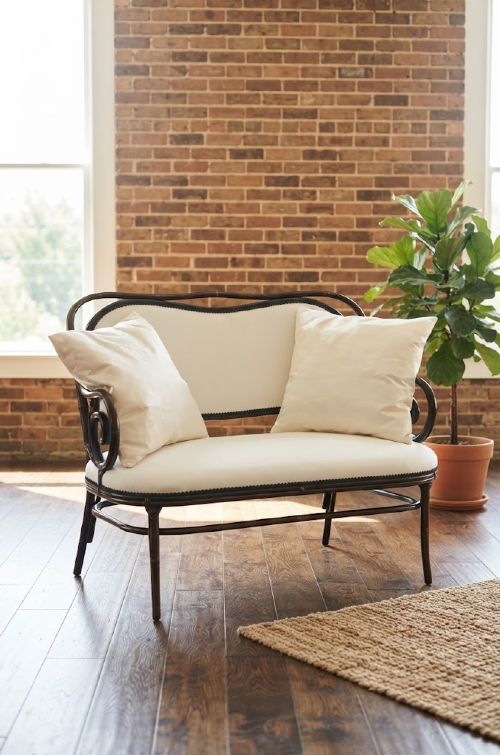
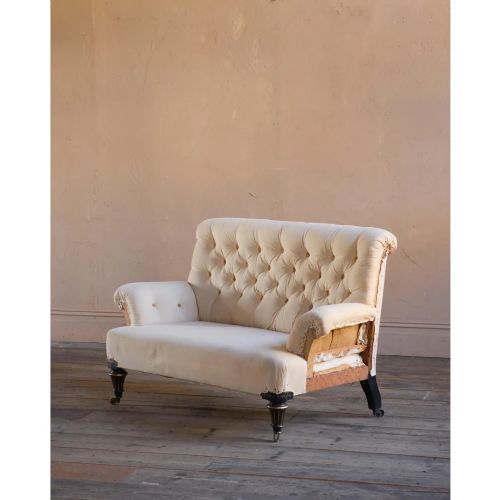
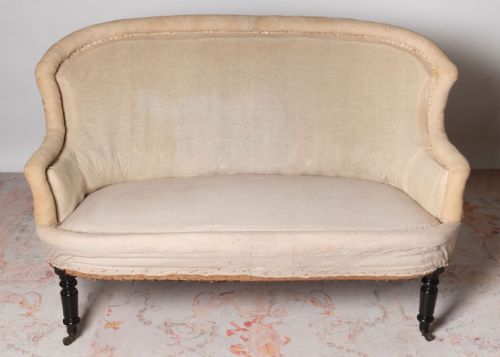


Antique Ebonised Settee
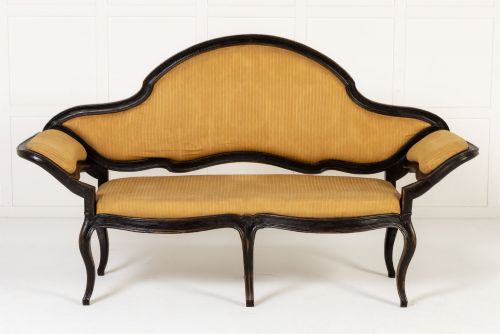
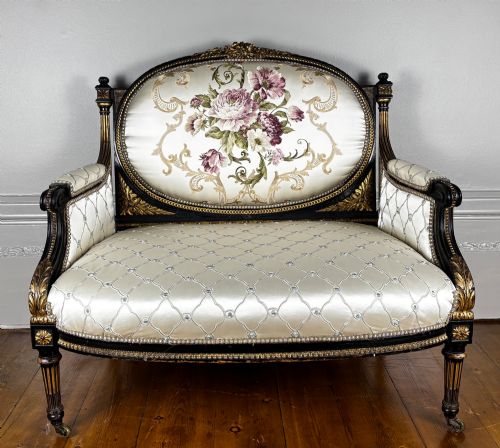
These antique ebonised settee examples combine dark timber frames with period upholstery, offering substantial seating rooted in the nineteenth and eighteenth centuries.
Antique Ebonised Settee
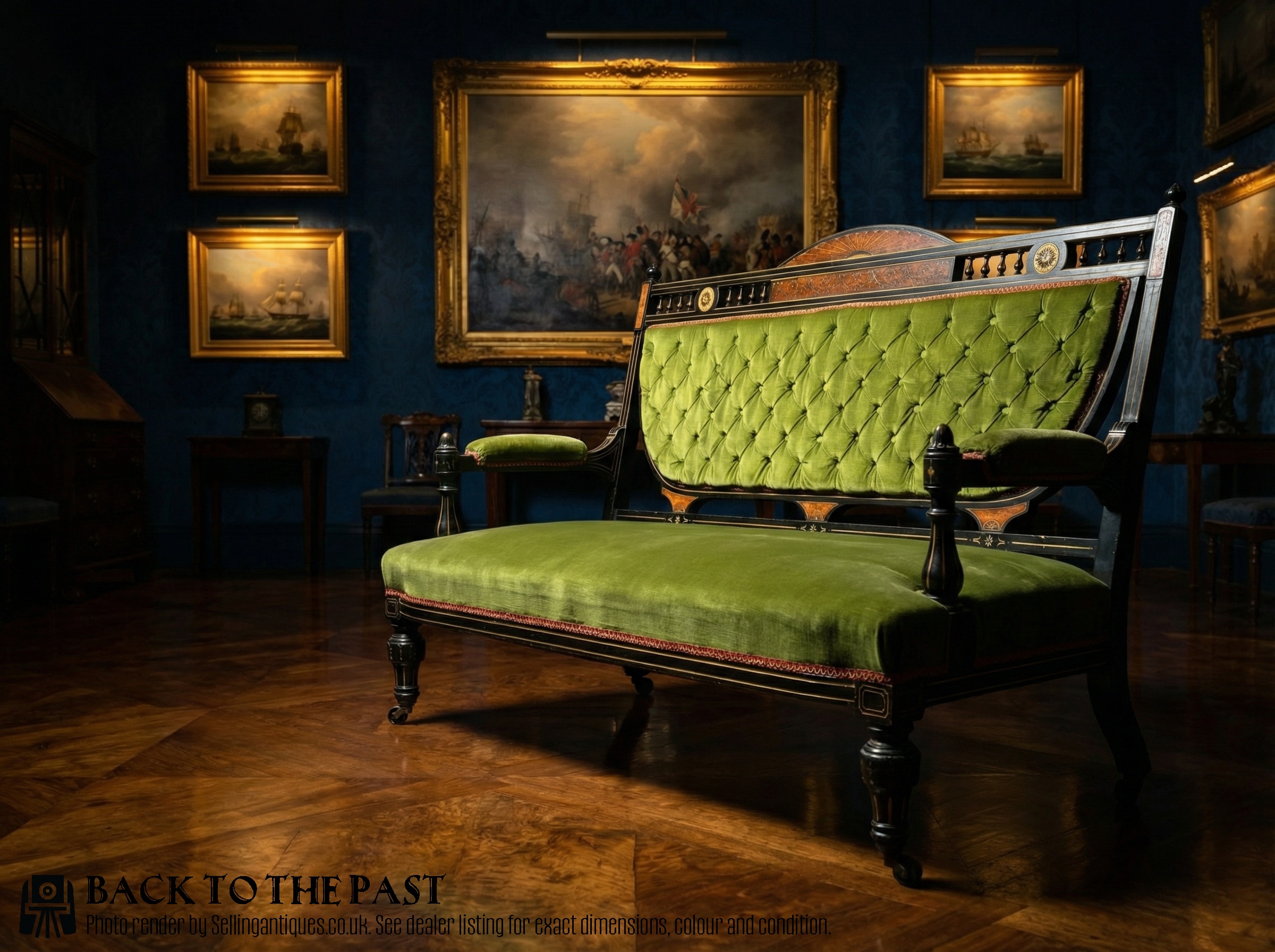
An antique ebonised settee takes many forms across this selection, ranging from French salon pieces and Napoleon III buttoned designs to Aesthetic Movement and Regency variations. Buyers seeking an antique ebonised settee will encounter nineteenth-century productions most frequently, alongside earlier eighteenth-century Italian examples and occasional Edwardian pieces.
The assortment spans formal two-seater sofas, expansive three-seat canapes, chaise longues, and window seats, often reflecting diverse regional styles from French gilt-accented frames to Victorian Chinoiserie and Louis XVI influences.
How they were made
Frames utilise timber treated with ebonising techniques to imitate costly ebony, occasionally paired with parcel gilt details, brass elements, or bentwood construction as seen in Thonet designs.
Upholstery relies on traditional textiles recorded in the archive, including velvet, fabric, calico, and linen, often supporting buttoned backs, scroll ends, and intricate carved elements such as claw and ball feet.
Some nineteenth-century makers hid their workshop stamps deep beneath the upholstery webbing, leaving a secret signature for future restorers.
What varies in quality
Distinction across the range lies in the precision of the ebonised finish, the integrity of the underlying timber structure, and the sophistication of decorative carving or gilding.
Superior examples demonstrate refined stylistic unity - such as cohesive Aesthetic Movement or Regency design principles - alongside well-preserved original frames and specialist upholstery work.
Thonet·A Jackson and Graham·Jas James Shoolbred·Howard and Sons
The Antique Ebonised Settee Glossary
- Ebonised wood
- Timber stained or painted black to simulate genuine ebony. This finish gained popularity during the nineteenth century for furniture mimicking more expensive exotic materials.
- Canapé
- A decorative settee or sofa originating in France. These pieces typically feature exposed wooden frames and upholstered backs and seats.
- Aesthetic Movement
- A late nineteenth-century design style emphasising visual beauty over narrative subject matter. Pieces from this movement often incorporate ebonised surfaces and stylised ornamentation.
- Parcel gilt
- A decorative technique where specific carved details or highlights on a wooden frame receive a partial application of gold leaf. This method contrasts brightly against dark ebonised timber.
- Scroll end
- A sweeping, curved arm or terminal shaped like a rolled scroll. This architectural feature appears frequently on nineteenth-century seating.
Antique Ebonised Settee: Frequently Asked Questions
What is an ebonised settee?
An ebonised settee is a seating piece built from wood finished in a dark, black stain or lacquer to imitate ebony. These pieces date primarily from the nineteenth century across various European styles.
Makers applied this finish to create a striking contrast against patterned or textured upholstery fabrics like velvet and damask.
How do I identify an Aesthetic Movement settee?
Aesthetic Movement settees typically feature clean architectural lines, ebonised timber frames, and sometimes Japanese-inspired Chinoiserie motifs. They reflect a deliberate shift toward artistic refinement during the late nineteenth century.
These pieces often bear maker marks or showroom stamps from prominent cabinet makers of the period.
Where were these settees used?
Historically, these settees occupied formal drawing rooms, parlours, and salons in grand townhouses and country residences. They served both as functional seating and as statements of refined taste.
Smaller variations like window seats and chaise longues were designed for specific alcoves or private chambers.
How should I care for ebonised wood?
Ebonised timber requires gentle dusting with a soft, dry cloth to protect the dark surface finish from abrasion. Avoid placing the furniture in direct sunlight or near heat sources to prevent the wood from drying.
Conditioning the wood periodically with appropriate specialist wax maintains the deep lustre of the black finish.