



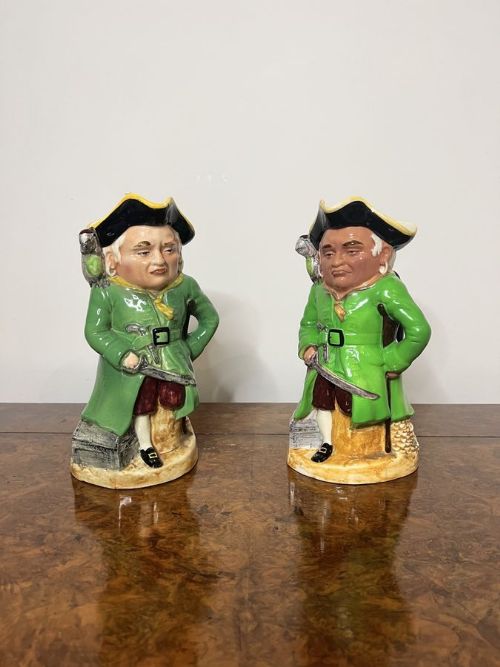


Antique Earthenware Toby Pitcher
These antique earthenware toby pitcher pieces are hearty character jugs depicting notable figures and local personalities, offering a tangible slice of social history for collectors.
Antique Earthenware Toby Pitcher
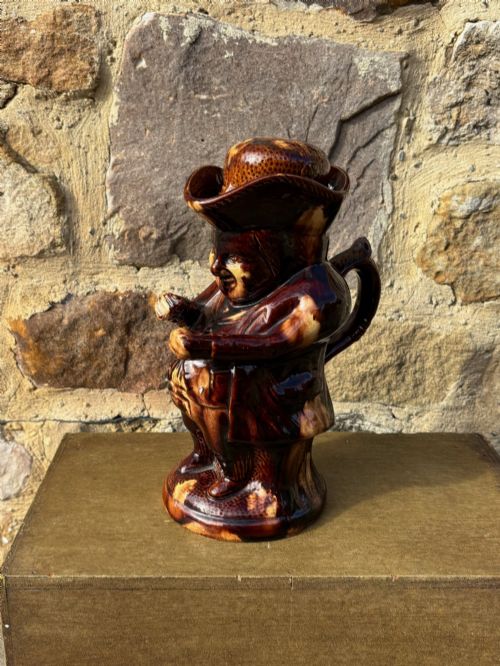
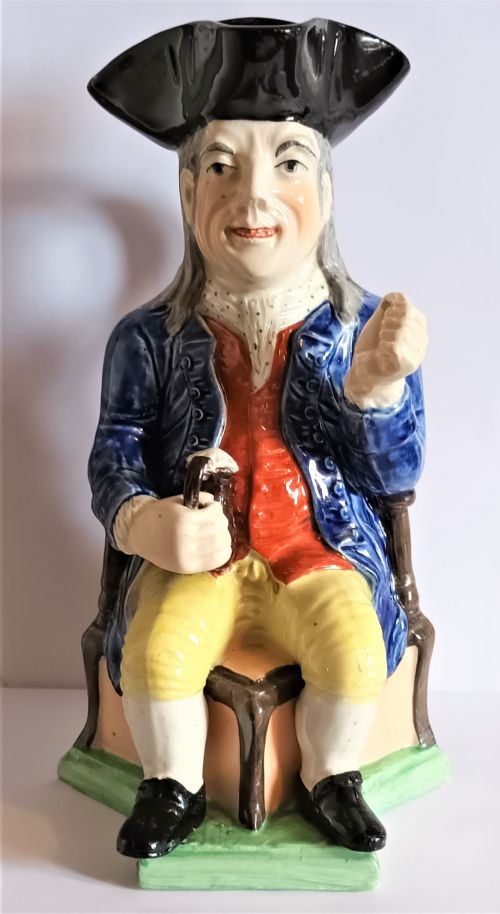
When you search for an antique earthenware toby pitcher, you encounter drinking vessels modelled as stout seated figures holding mugs and jugs, often dressed in eighteenth or nineteenth-century attire. The selections here span Georgian and Victorian eras, alongside Dutch Delftware and Edwardian outputs.
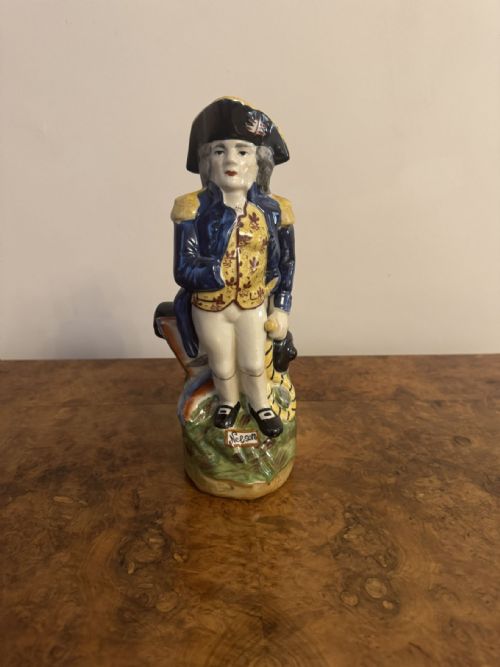
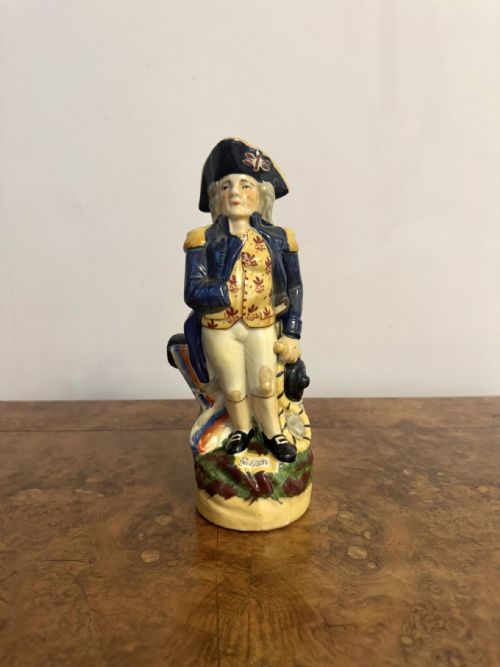
The most common examples you meet on this page are Victorian Staffordshire figures such as Lord Nelson, the Squire, Mr Snuff, and spaniel or monkey subjects. These pieces function as both sculptural ornaments and historical mementos of British and continental ceramic traditions.
Subjects range from military heroes like Lord Kitchener and Admiral Lord Nelson to festive characters and satirical types. Each piece presents a seated personage rendered in glazed ceramic, capturing popular sentiment across different decades.
Materials and construction
Makers formed these items using earthenware and ceramic bodies, shaped by hand or mould before applying tin glaze, enamel, or standard ceramic glaze. The surface treatment often includes polychrome paint to highlight facial expressions and costume details.
Firing techniques varied from early Delft faience methods to nineteenth-century Staffordshire kiln processes, resulting in different surface sheens and glaze depths. Pigments were brushed over the fired glaze or underglaze, determining how sharply the colours endure.
Antique Earthenware Toby Pitcher Retail Price Guide 2026
Typical asking prices for earthenware toby pitcher among the pieces listed under this phrase on Sellingantiques today, from the lower quarter to the upper quarter. They describe what is for sale here now, not the wider market.
Listings feature items spanning the eighteenth, nineteenth, and early twentieth centuries, including Georgian and Victorian periods.
Assessing quality and character
The depth and brilliance of the glaze significantly separate robust outputs from simpler commercial pieces. Early Delftware examples show distinct brushwork and tin-glaze characteristics, whereas Staffordshire pieces rely on rich coloured enamels.
Pieter Verburg
The Antique Earthenware Toby Pitcher Glossary
- Earthenware
- A porous pottery body fired at lower temperatures, requiring a glaze to hold liquids and provide a smooth surface.
- Tin Glaze
- An opaque white glaze containing tin oxide, providing a bright canvas for painted pigments on Dutch Delftware.
- Polychrome
- Decoration utilising multiple distinct colours painted onto the ceramic surface, often seen in bright enamel palettes.
- Staffordshire Pottery
- Ceramics produced in the English Midlands region, famous for figures and utilitarian vessels made during the Victorian and Georgian eras.
- Character Jug
- A specific vessel form focused closely on the head and shoulders of a notable historical or fictional personality.
Antique Earthenware Toby Pitcher: Frequently Asked Questions
What is an antique earthenware toby pitcher?
An antique earthenware toby pitcher is a ceramic jug modelled in the shape of a seated, often portly figure holding a beer mug or pipe. These vessels combine functional pouring design with satirical or celebratory portraiture.
Originating in the eighteenth century, they depict recognizable archetypes, soldiers, and historical figures. Collectors prize them for their folk art appeal and connection to social history.
How were these pitchers used?
Despite their sculptural appearance, many of these pieces served practical roles as jugs for ale, beer, or water in homes and public houses. The hollow body held the liquid while the handle and hat or head rim assisted in pouring.
Over time, many transitioned into purely decorative display items on mantelpieces and dressers. Their humorous and distinct faces made them popular conversation pieces in domestic settings.
How do I date an antique toby pitcher?
Dating relies on examining the ceramic body, glaze characteristics, style of clothing, and any underlying maker marks or named subjects. Georgian examples often display simpler earthenware bodies and distinct enamel palettes compared to later Victorian iterations.
Changes in glazing techniques and manufacturing methods also help narrow the production decade. Comparing the hat style and facial modelling to documented pieces provides further chronological context.
What is the difference between Staffordshire and Delftware?
Staffordshire figures typically utilise local English earthenware with bright overglaze enamel colours depicting domestic or military personalities. They are heavily associated with nineteenth-century Victorian production.
Dutch Delftware employs tin-glaze earthenware featuring blue-and-white or polychrome painting, often referencing earlier European traditions and marked with pseudo or workshop signatures.