





Antique Earthenware Service
An antique earthenware service brings the warmth of historic dining tables into modern homes through durable ceramics and hand-finished glaze patterns.
Antique Earthenware Service
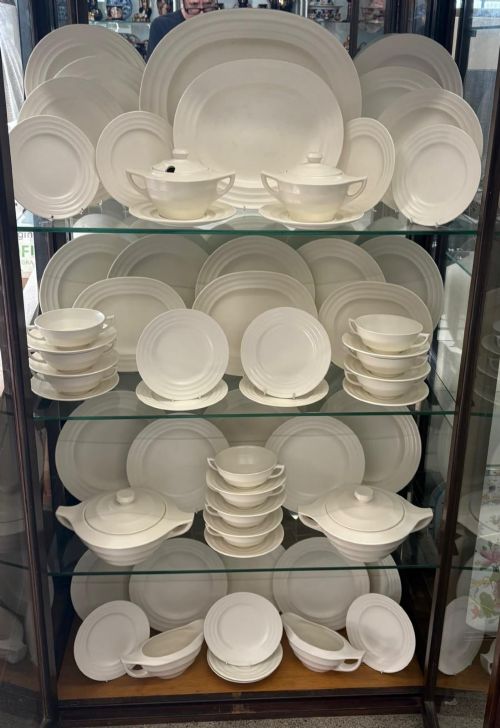
An antique earthenware service comprises matching sets of ceramic tableware intended for dining, dessert, or beverage service. These groupings range from substantial Victorian dinner services down to intimate tea for two sets and child's service pieces. The listings show forms spanning the nineteenth century alongside later Art Deco iterations.
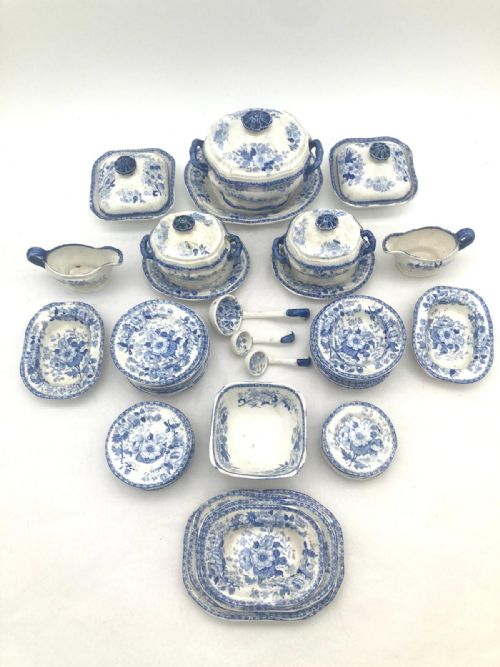
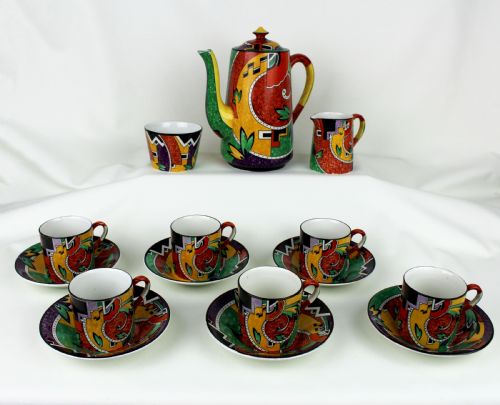
Buyers encountering this material will find diverse stylistic expressions, including transfer-printed blue and white patterns, flow blue decoration, and vivid hand-painted enamel designs. Pieces vary from expansive multicomponent dinnerware sets to specialised custard sets and individual teapots.
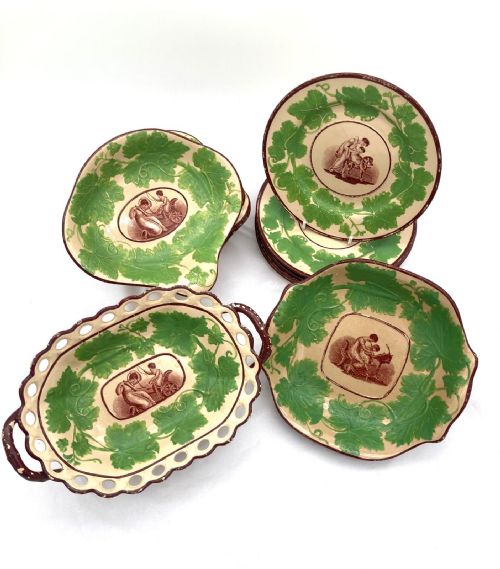
Origins trace across English potteries from the Georgian era through to the early twentieth century. Common configurations include dessert services, coffee sets, and extensive dinnerware designed for formal hospitality.
Materials and production techniques
Production relies on porous earthenware clays, ironstone, pearlware, and creamware bodies shaped into plates, vessels, and serving dishes. Potters applied protective glazes to seal the porous ceramic substrate before adding decorative elements.
Decoration involved transfer printing from engraved copper plates, fluid flow blue techniques, and direct hand painting with coloured enamels. These methods produced the intricate floral motifs, geometric Jazz designs, and pictorial scenes seen across the pieces.
Antique Earthenware Service Retail Price Guide 2026
Typical asking prices for earthenware service among the pieces listed under this phrase on Sellingantiques today, from the lower quarter to the upper quarter. They describe what is for sale here now, not the wider market.
Listings feature earthenware services spanning the nineteenth century through to the Art Deco period, utilising materials including pearlware, ironstone, and enamel-decorated ceramics.
What separates the finest examples
Quality in an antique earthenware service rests upon the crispness of the transfer printing and the precision of any hand-painted enamel work. Finer sets maintain uniform glaze coverage and sharp delineation in complex patterns such as floral sheet designs or pictorial landscapes.
The completeness and integrity of larger sets influence desirability, particularly when numerous matching components survive together. Maker attribution and sophisticated stylistic periods, from Regency Chinoiserie to early Art Deco Bizarre designs, further elevate specific groupings.
Wedgwood·Minton·Booths·Clarice Cliff·Thomas Wolfe·Thomas Harley·Masons Ironstone·Copeland Spode
The Antique Earthenware Service Glossary
- Earthenware
- A type of pottery made from clay fired at relatively low temperatures, resulting in a porous body that requires glazing to hold liquids. It forms the primary material basis for the majority of these historic services.
- Transfer printing
- A method of decorating ceramics by engraving a design onto a copper plate, inking it, and transferring the ink onto paper before pressing it onto the unglazed or bisque-fired ceramic body. This technique allowed for intricate, repeatable patterns.
- Flow blue
- A style of cobalt blue transfer printing where volatile fluxes were introduced into the kiln atmosphere to intentionally blur the printed design into the surrounding glaze. The resulting soft, bleeding effect creates a distinctive misty aesthetic.
- Drabware
- A style of stoneware or earthenware body characterised by a subdued brownish-grey or olive-drab exterior colour, often popular during the nineteenth century. It frequently provided a neutral backdrop for applied white sprigged ornamentation.
- Pearlware
- A refined earthenware developed by Josiah Wedgwood in the late eighteenth century featuring a thin glaze with a slight bluish tinge in the pooling areas to imitate Chinese porcelain. It bridges the aesthetic gap between creamware and later white earthenware.
Antique Earthenware Service: Frequently Asked Questions
What is an antique earthenware service?
An antique earthenware service is a coordinated collection of ceramic tableware, such as plates, serving dishes, and cups, produced from porous clay bodies. These sets were designed for specific dining functions including dinner, dessert, or tea.
Surviving examples reflect shifting domestic habits and decorative tastes across the nineteenth and early twentieth centuries. They combine functional utility with period-specific ceramic artistry.
How were these ceramic services used?
Historic services were employed for serving food and beverages during formal meals, afternoon gatherings, and family dining. Larger dinnerware collections accommodated multi-course meals, while smaller sets served tea or dessert.
Child's services and miniature dinnerware were also utilised, often serving educational purposes or as scale playthings for children in affluent households.
How do I care for an antique earthenware service?
Careful handling and hand washing with mild detergents protect the fragile historic glaze and delicate enamel decorations from damage. Avoiding rapid temperature changes prevents thermal shock to the porous ceramic body.
Displaying pieces in stable environments away from direct sunlight preserves the hand-painted colours and prevents structural stress to older earthenware.
How can I tell the period of a service?
Dating relies on identifying stylistic markers, decorative techniques like flow blue or transfer printing, and any impressed or printed maker marks on the base. Regency and Georgian pieces often feature neoclassical or Chinoiserie motifs, whereas later Victorian and Art Deco sets display bolder floral or geometric patterns.
Comparing glaze characteristics and body types, such as creamware versus ironstone, helps narrow down the manufacturing era.