


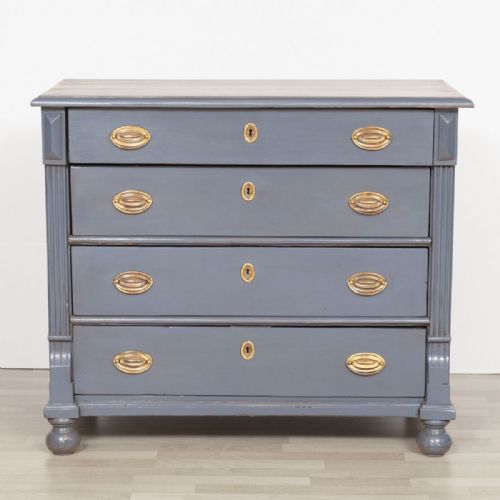


Antique Dutch Commode Drawers
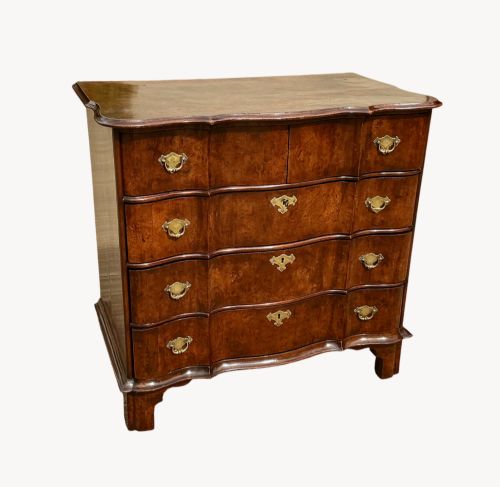
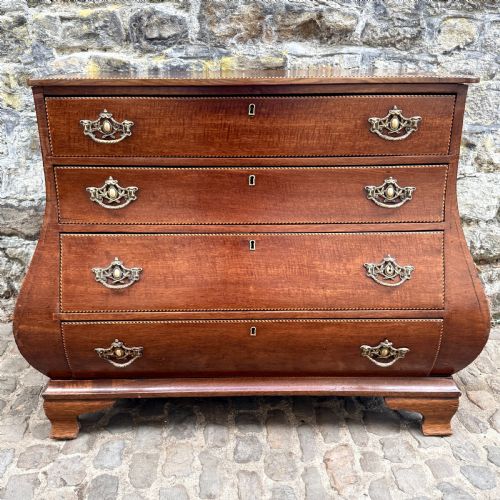
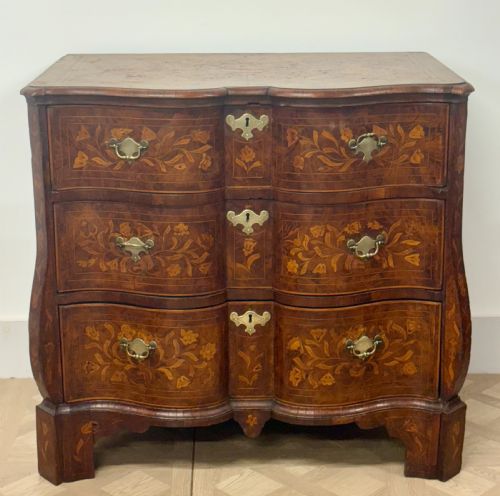
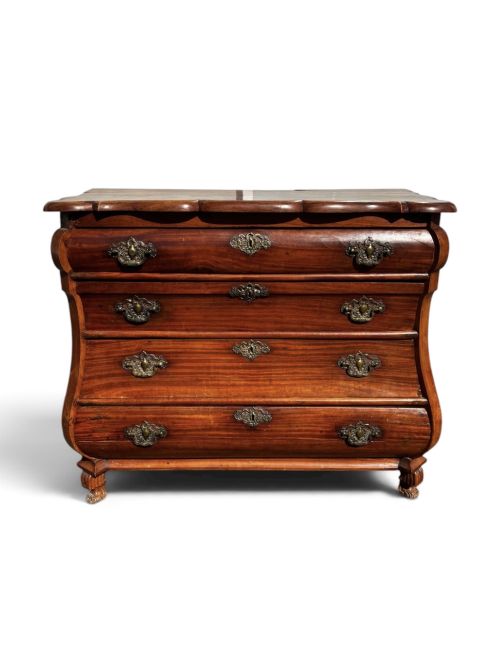
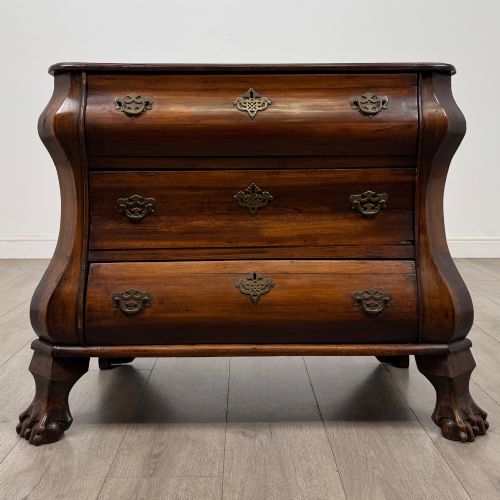
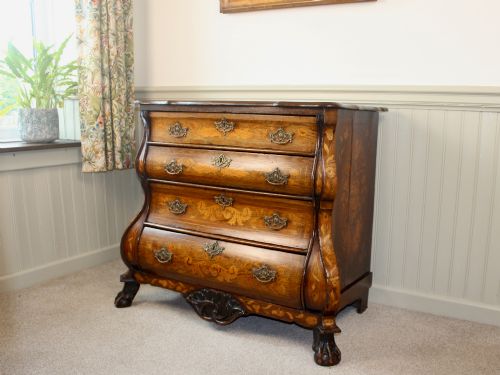
These antique dutch commode drawers bring rich burr walnut, intricate marquetry and swelling bombe shapes into a room with genuine presence.
Antique Dutch Commode Drawers
When you search for antique dutch commode drawers, you encounter storage furniture spanning from the seventeenth century through to the early twentieth century. The selection ranges from robust oak and walnut chests to elaborate marquetry pieces designed with curved fronts.
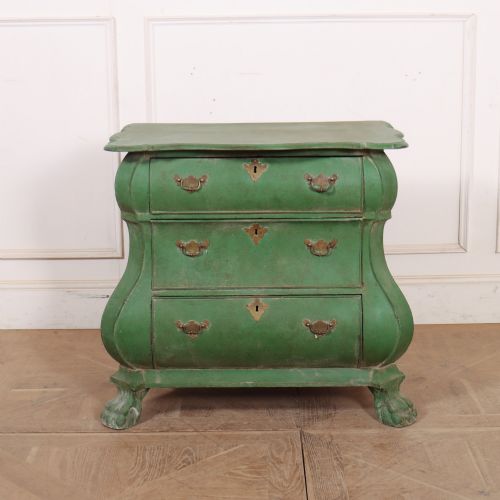
The most prevalent forms are serpentine and bombe commodes, alongside tallboys and neat apprentice pieces. These items originate predominantly from eighteenth and nineteenth century periods, displaying distinct regional traits such as shaped drawer fronts and rich timber veneers.
Buyers look for these items to anchor a room with functional storage that doubles as a focal point. The inventory balances grand baroque revival designs with simpler provincial chests.
How they were made
Cabinet makers built these pieces using structural carcases of oak or pine, applied with decorative veneers of walnut, mahogany, fruitwood or burr elm. Surfaces often display detailed marquetry floral patterns inlaid across the drawer fronts and sides.
The characteristic swelling bombe profile requires skilled shaping of the timber to achieve the curved front and sides. Brass hardware, including drop handles and escutcheons, secures the drawers and complements the rich tones of the wood.
What varies in quality
Quality rests in the precision of the cabinet work and the complexity of the veneer or marquetry patterns. Finer examples display continuous grain matching across drawers and exceptionally crisp floral inlay.
The execution of the bombe contour dictates the refinement of the piece, with superior items maintaining balanced proportions and smooth drawer operation despite the complex curves.
The Antique Dutch Commode Drawers Glossary
- Bombe
- A swelling or bulging chest profile where the front and sides curve outward.
- Marquetry
- The art of applying decorative pieces of veneer to a structure to form intricate floral or pictorial designs.
- Serpentine
- A furniture front shaped with a central convex curve flanked by concave sections.
- Tallboy
- A tall chest of drawers formed by stacking one chest on top of another.
- Apprentice piece
- A smaller scale item created by a trainee to demonstrate cabinet making proficiency to a guild.
Antique Dutch Commode Drawers: Frequently Asked Questions
What is a bombe commode?
A bombe commode is a chest of drawers featuring distinctive convex curves on the front and sides. This swelling profile requires advanced cabinet making techniques.
Such pieces date largely from the eighteenth and nineteenth centuries, often finished with elaborate marquetry veneers.
How do I date an antique Dutch chest?
Dating relies on examining the timber species, construction methods and stylistic markers like baroque or neoclassical details. Eighteenth-century pieces frequently employ burr walnut or oak with hand-cut dovetails.
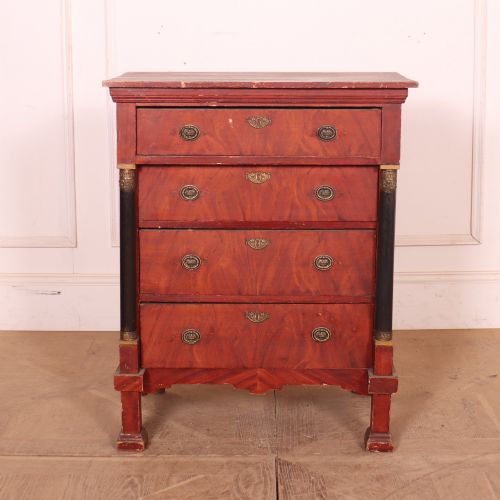
Later nineteenth-century examples often incorporate mahogany and adopt revived styles or simpler proportions.
Where were these chests used?
These commodes served primarily as principal storage furniture in domestic bedchambers and formal reception rooms. Their decorative marquetry and serpentine fronts ensured they functioned as display pieces as well as storage.
Today, they suit living spaces or hallways where the timber grain and curved silhouettes add distinct character.
What woods were commonly used?
Cabinet makers utilised structural timbers such as oak and pine for the carcase frames. Decorative surfaces typically display walnut, mahogany, fruitwood, elm and rosewood veneers.
Many examples incorporate burr walnut or exotic solid woods like satinwood to create patterned contrast.