


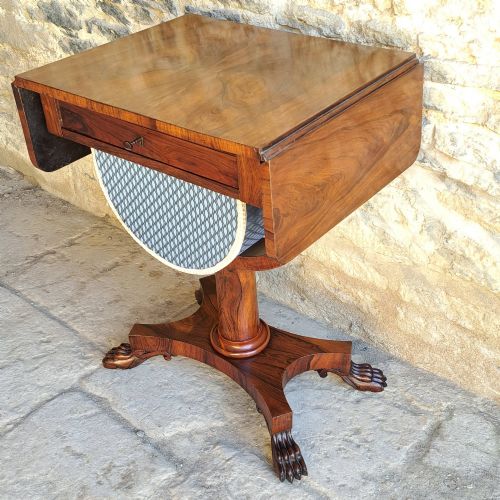


Antique Drop Well Table
An antique drop well table is a specialised piece designed for needlework and crafts, combining fitted compartments with practical surfaces.
Antique Drop Well Table
When you search for an antique drop well table, you are looking at nineteenth-century occasional furniture designed primarily as sewing and work tables. These items typically feature a recessed compartment or fabric bag suspended beneath the top to hold textiles and sewing implements.
The versions you are most likely to meet on this page hail from the Victorian, Georgian, Regency, and William IV periods. They frequently appear in richly figured timbers such as rosewood, burr walnut, mahogany, and pollard oak, often doubling as writing desks or occasional tables.
How they were made
Cabinet makers utilised dense hardwoods like mahogany and rosewood alongside highly decorative veneers such as burr walnut. These timbers were shaped into freestanding occasional and side tables, incorporating drop-leaves and fitted interiors for work boxes.
Textiles and fabrics formed an integral part of the construction, lining the drop wells and hanging compartments where sewing materials were stored. Brass hardware frequently secured the internal lids, handles, and drop-flap mechanisms.
Antique Drop Well Table Retail Price Guide 2026
Typical asking prices for drop well table among the pieces listed under this phrase on Sellingantiques today, from the lower quarter to the upper quarter. They describe what is for sale here now, not the wider market.
Victorian crafters used the drop well to hide half-finished embroidery when unexpected guests knocked on the parlour door.
What varies in quality
The standard of timber selection and veneer matching defines the upper tier of these pieces. Burr walnut and figured rosewood show superior grain patterns that elevate simple side and work tables into high-status furnishings.
Complexity of interior joinery and hardware also separates standard examples from finer work. Tables featuring fitted writing surfaces, intricate compartments, and integrated work boxes demonstrate a higher grade of nineteenth-century craftsmanship.
The Antique Drop Well Table Glossary
- Work table
- A small nineteenth-century table designed for needlework, featuring internal compartments or a suspended bag for textiles.
- Drop-leaf
- A table top with hinged flaps that can be raised to extend the surface area or lowered when space is restricted.
- Burr walnut
- A highly figured timber prized for its swirling grain patterns, frequently utilised for decorative veneer on Victorian furniture.
- Occasional table
- A small, portable piece of furniture intended for light use around a reception room or parlour.
Antique Drop Well Table: Frequently Asked Questions
What is a drop well table used for?
These tables served as functional furniture for sewing, needlework, and writing tasks in nineteenth-century homes. The recessed well held threads, fabrics, and tools close to hand during craft sessions.
Many examples also doubled as occasional tables or small desks in parlours and drawing rooms. The fitted interiors kept small personal items organised and out of sight.
How do I date a work table?
Dating relies on identifying timber choices, stylistic markers, and construction methods associated with specific nineteenth-century periods. Regency and William IV pieces often display heavier classical proportions, whereas Victorian examples favour burr walnut and ornate veneers.
Cabinet-making techniques inside the drawers and compartments also provide clues to the era of manufacture. Examining the hardware and any internal labels helps narrow down the decade.
Are these tables suitable for modern living?
Their compact proportions make them practical for use as bedside tables, lamp stands, or hall surfaces in contemporary homes. The internal compartments remain useful for storing small modern accessories.
Placing them away from direct heat sources helps protect delicate rosewood and walnut veneers. Regular polishing maintains the finish of the timber surfaces.
What materials are common in these tables?
Rosewood and mahogany form the structural basis for many early nineteenth-century examples. Burr walnut became particularly popular during the Victorian era for its decorative grain.
Fabric and textiles appear inside the drop wells to line the suspended work bags. Brass fixtures and inlay details frequently accent the exterior woodwork.