
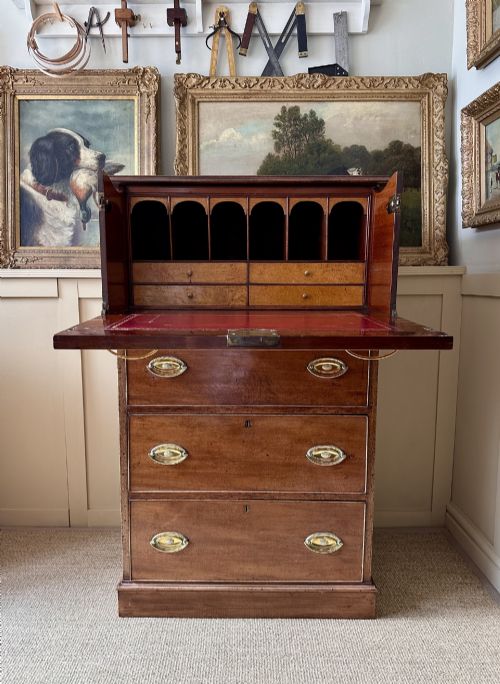
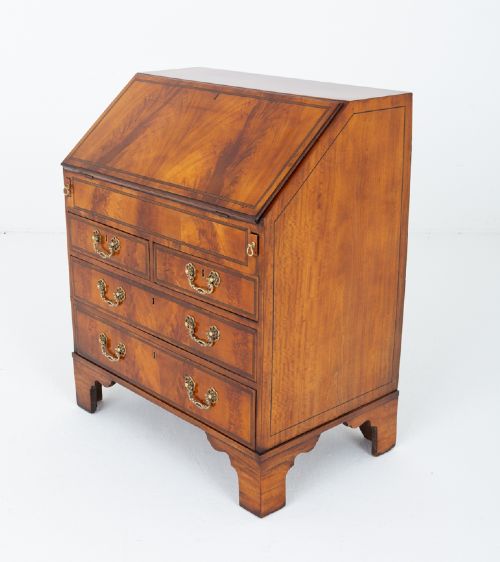
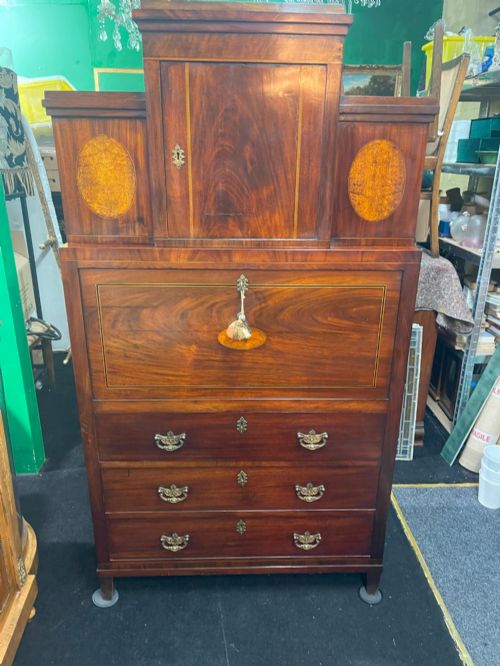
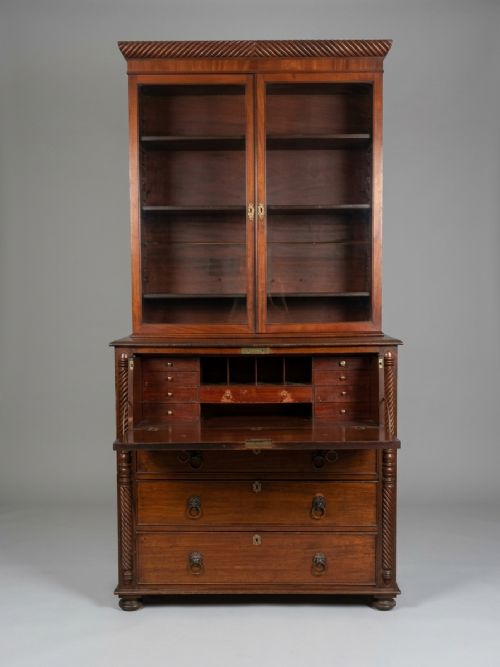
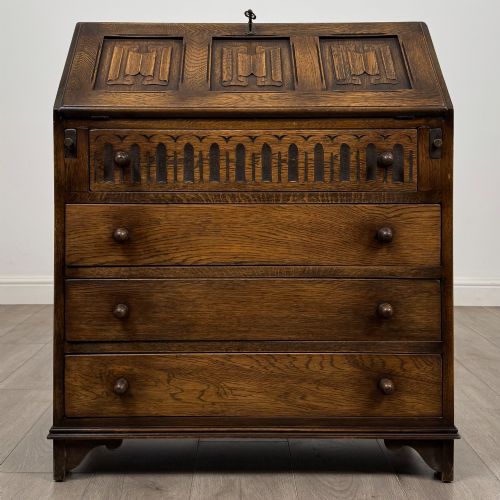
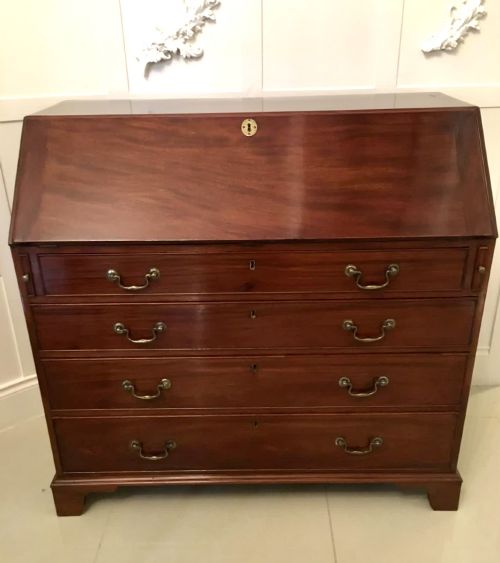
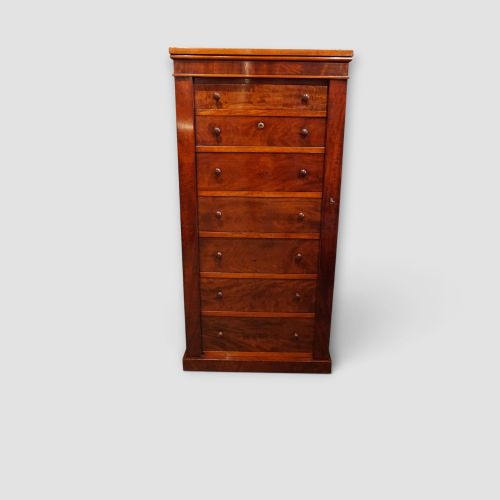
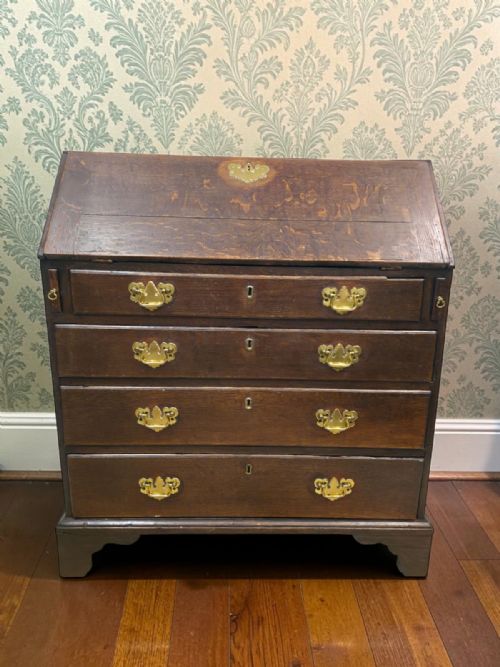
Antique Drop Front Chest
An antique drop front chest provides concealed writing space and generous drawer storage, spanning centuries of fine cabinetmaking.
Antique Drop Front Chest
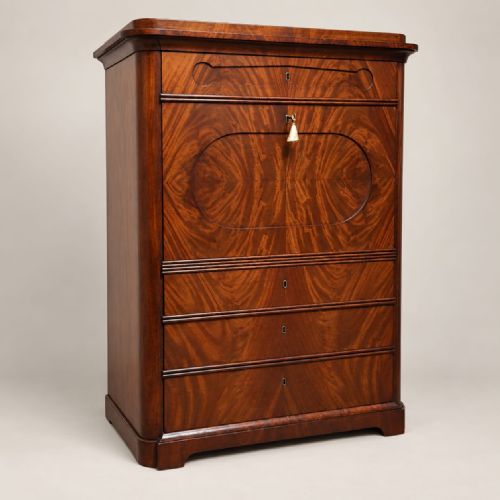
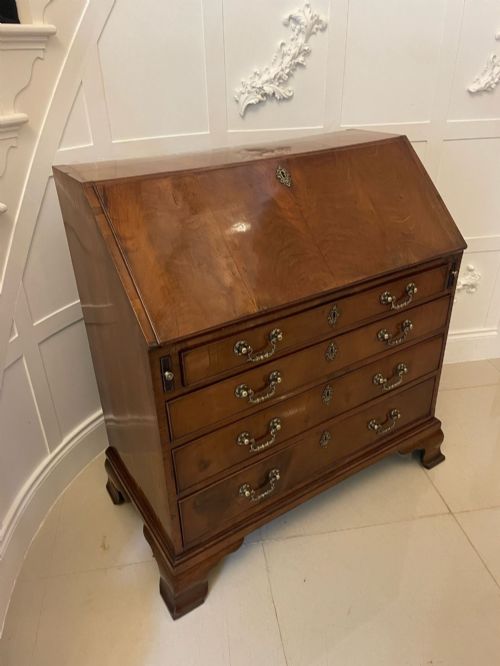
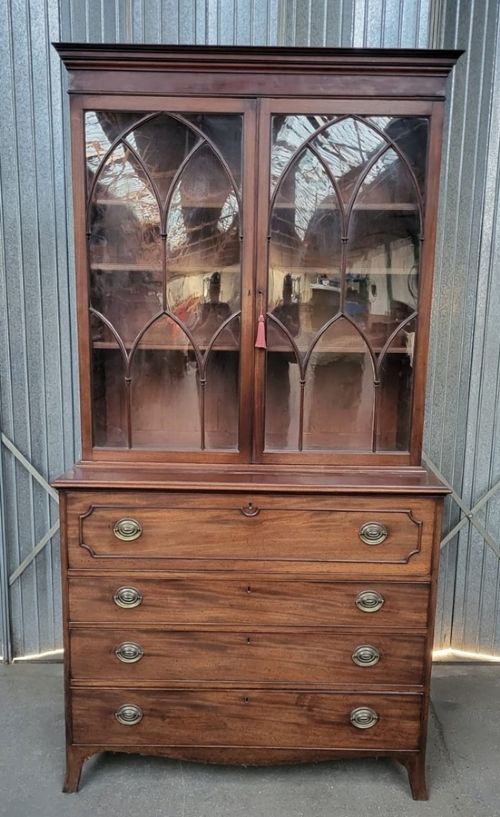
When you search for an antique drop front chest, you encounter a versatile form designed for domestic correspondence and secure storage. These pieces combine a writing surface that hinges downward with multiple drawers positioned beneath.
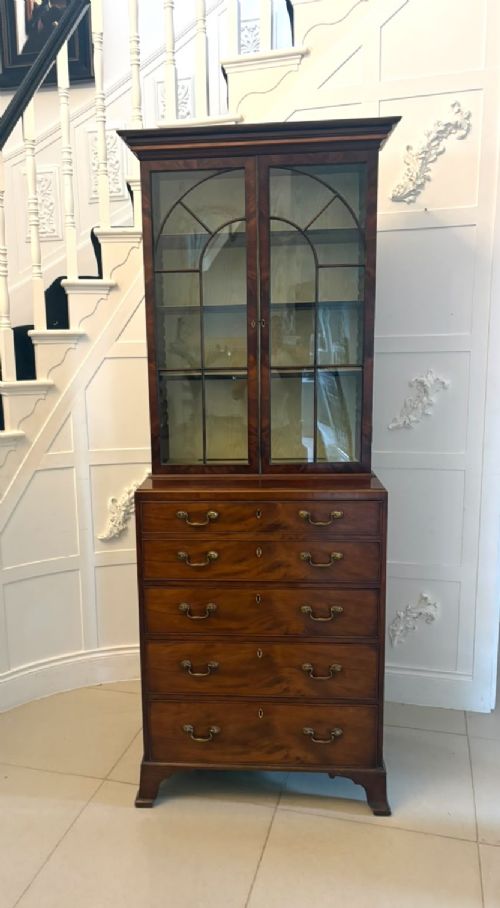
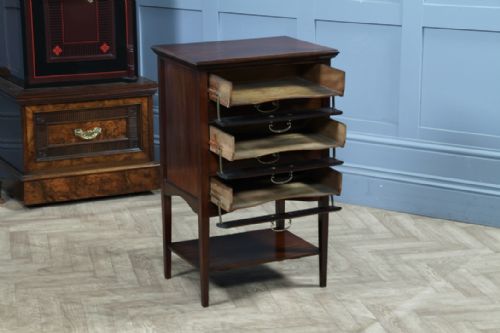
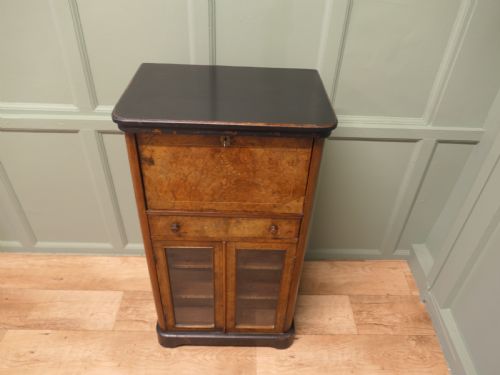
The most common examples on this page date from the Georgian and Victorian eras, rendered primarily in mahogany and walnut. Forms range from compact music cabinets to towering secretaire bookcases and elaborate escritoires.
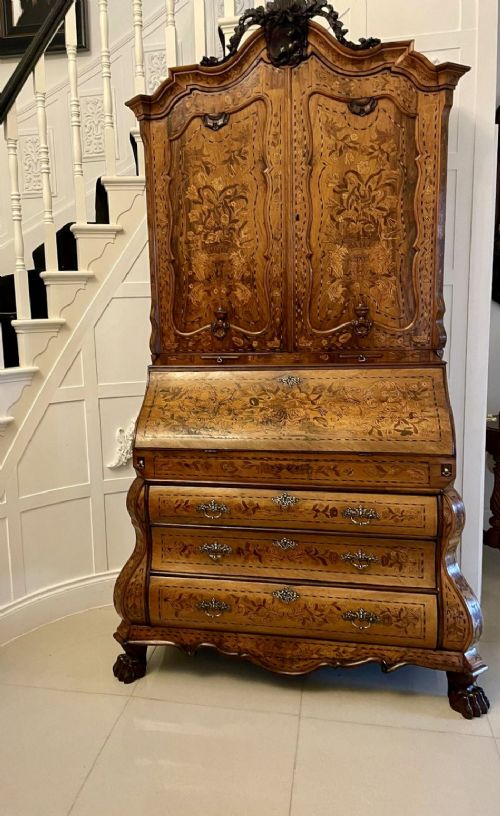
Earlier pieces from the seventeenth and eighteenth centuries often utilise figured walnut or oak, displaying herringbone inlay and marquetry. Later nineteenth and twentieth-century examples bring regional Continental woods like burr birch and masur birch into the selection.
How they were made
Cabinetmakers constructed these pieces using dense hardwoods such as mahogany, oak and walnut, frequently applying burr veneers to principal surfaces. Interior compartments utilised secondary timbers for drawer linings and pigeonhole dividers.
Joining techniques relied on hand-cut dovetails for drawer construction and mortise and tenon joints for the main carcase frames. Brass hardware, including drop handles and escutcheons, secured operational doors and drop flaps.
Materials across the selection range from traditional mahogany and oak to burr birch and masur birch.
What varies in quality
The standard of an antique drop front chest rests upon the choice of timber and the precision of its grain matching across the fall front and drawers. Elaborate marquetry, floral inlay and herringbone banding distinguish superior workshops from standard output.
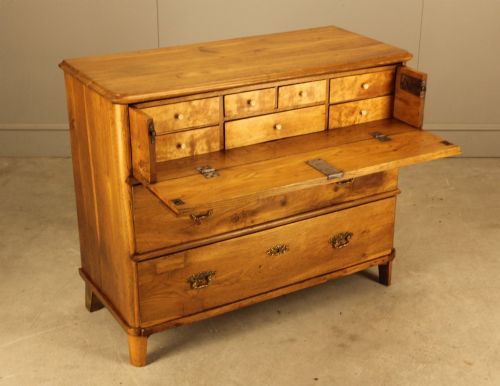
Internal complexity also separates the work, with fitted stationery compartments, secret drawers and pigeonholes indicating high-grade commission pieces. Structural integrity in the hinges and the drawer runners determines the enduring utility of the furniture.
George Oakley
The Antique Drop Front Chest Glossary
- Bureau
- A desk featuring a sloping drop front that opens to reveal a fitted interior of small drawers and pigeonholes. It sits atop a chest of standard drawers.
- Secretaire
- A cabinet or chest containing a concealed writing drawer or drop-down writing flap that disguises a desk within a drawer chest.
- Escritoire
- A tall writing cabinet or writing desk, typically originating in the seventeenth or eighteenth centuries, featuring a fall-front writing flap.
- Marquetry
- Decorative veneer work formed by fitting together small pieces of wood, bone or ivory into pictorial or geometric patterns on a carcase.
- Herringbone
- A V-shaped pattern of wood veneer laid in alternating directions, commonly utilised as a border decoration on walnut furniture.
- Bargueño
- A Spanish chest or desk on a stand, featuring a drop front that opens to numerous small drawers and architectural compartments.
Antique Drop Front Chest: Frequently Asked Questions
What is an antique drop front chest?
An antique drop front chest is a storage piece featuring a hinged writing flap that opens forward to create a desktop, concealing internal compartments.
Beneath this writing surface, the furniture incorporates several functional drawers for domestic storage.
How were these cabinets used historically?
These pieces served primarily for private correspondence, record keeping and the storage of writing instruments or sheet music.
The drop front provided a stable horizontal surface for writing letters before folding away to secure the contents out of sight.
How do I date an antique drop front chest?
Dating relies on identifying timber species, construction methods, hardware styles and decorative motifs like marquetry or inlay.
Early pieces frequently employ oak or walnut with hand-cut dovetails, while later nineteenth-century examples often feature mahogany and rosewood.
Where should I place one in a room?
These cabinets suit studies, living rooms or hallways where surface space and concealed storage are both required.
Ensure adequate floor clearance in front of the piece so the drop flap can open fully without obstruction.