
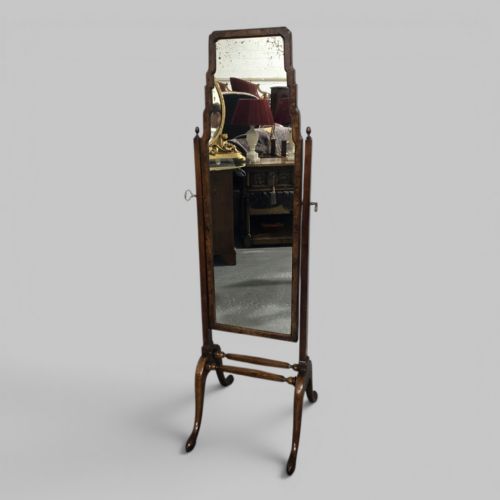


Antique Dressing Room Stand
An antique dressing room stand offers a full-length reflection framed in timber and brass, grounding a dressing room with period presence.
Antique Dressing Room Stand
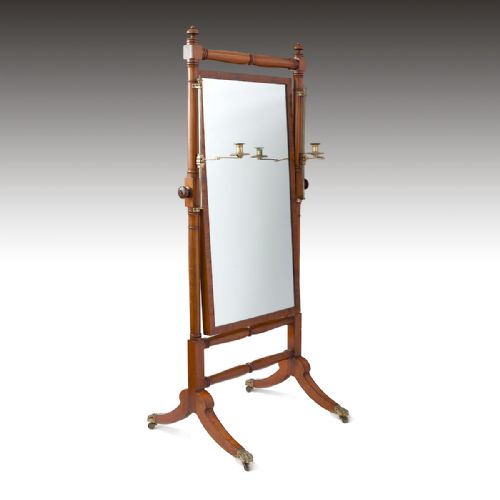
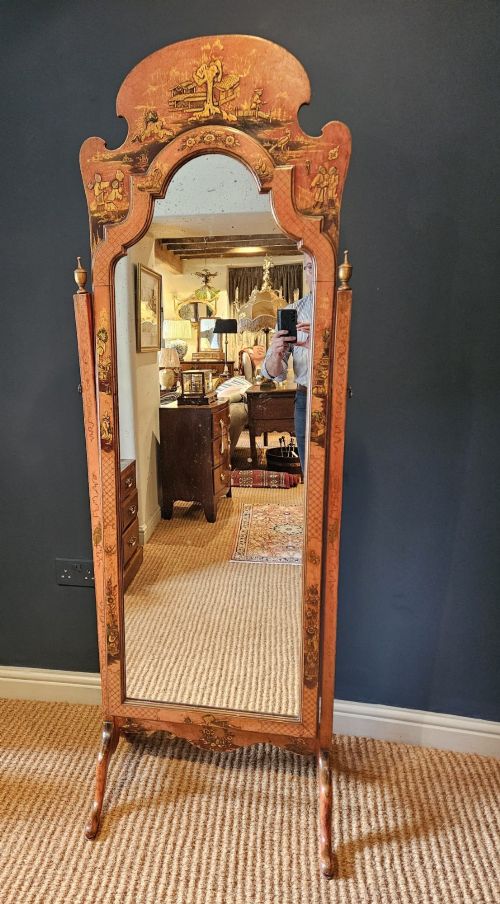
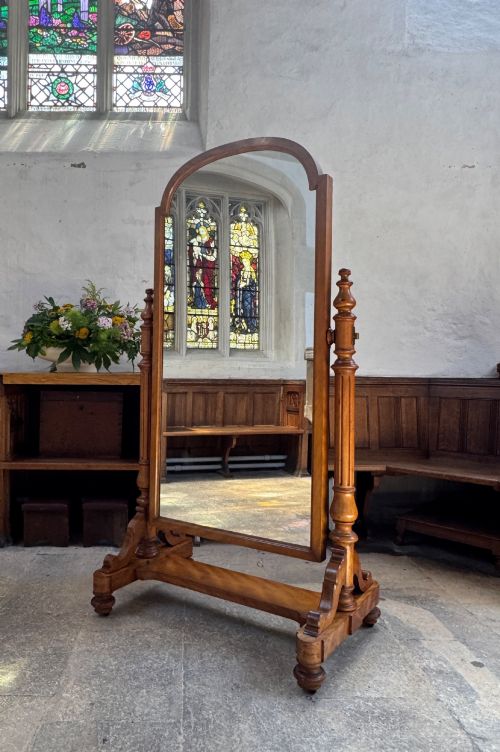
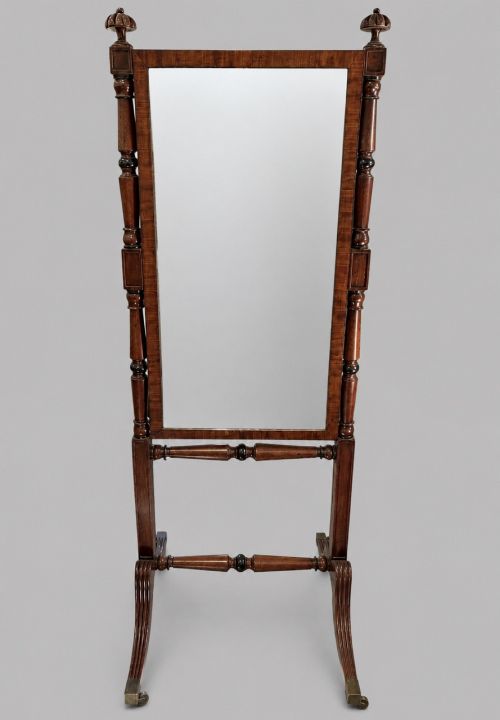
An antique dressing room stand most commonly takes the form of a cheval mirror, standing upright on a frame designed to pivot for full-length viewing. The pieces recorded here span from the Regency era through the Victorian period and into the 1920s, showcasing diverse iterations of floor-standing mirrors and mirrored bedroom furniture.
While earlier examples rely on robust timbers such as mahogany and walnut supported by sabre legs or brass castors, later twentieth-century iterations introduce painted finishes, Chinoiserie decoration, and double-sided glass. Buyers seeking this phrase encounter both standalone floor mirrors and dressing tables integrated into larger bedroom suites.
How they were made
The glazing relies on traditional mirror glass and mercury mirror plates set within substantial wooden frames. Decorative styles range from restrained Regency and Victorian lines to ornate Louis XV and Chinoiserie motifs executed in painted finishes.
Materials recorded across the archive include brass, glass, mahogany, walnut, satinwood, and lacquered wood.
What varies in quality
Quality in a dressing room stand reveals itself through the depth of timber selection, such as the choicefigured burr walnut or well-grained mahogany, and the substance of the framing. Finer examples display superior joinery in the pivoting mechanism and substantial cast brass hardware rather than light pressed metal.
The character of the mirror plate and the execution of decorative details, from hand-painted Chinoiserie scenes to finely turned uprights, separate standard utility pieces from exhibition-quality commissions.
The Antique Dressing Room Stand Glossary
- Cheval mirror
- A large freestanding mirror supported on a frame with four legs, designed to pivot vertically so the user can see their full attire. The term derives from the French word for horse.
- Sabots
- Metal sleeves or caps fitted to the foot of a furniture leg for protection and ornamentation. They appear frequently in brass on Regency and later stands.
- Chinoiserie
- European interpretations of Chinese and East Asian artistic traditions, expressed here through painted or lacquered frame decorations popular in the 1920s.
- Mercury mirror
- An older type of mirror plate backed with a tin-mercury amalgam before the modern silvering process was adopted, often showing characteristic soft speckling.
Antique Dressing Room Stand: Frequently Asked Questions
What is a cheval mirror?
A cheval mirror is a full-length floor mirror mounted on a vertical pivoting frame, allowing the glass to tilt at various angles.
Such pieces were essential additions to private dressing rooms and bedchambers from the Georgian era onward.
How do I date an antique mirror?
Dating relies on identifying the underlying timber species, the turning of the support columns, and the style of the brass castors or mounting hardware.
Cabinet construction methods and the characteristics of the mirror glass itself provide further chronological clues.
Where should I place a dressing room stand?
These tall mirrors require sufficient floor space and clearance to allow the frame to pivot freely without striking surrounding furniture or walls.
Placing them near a natural light source enhances their practical function as a full-length dressing aid.
Are these mirrors fixed or adjustable?
The defining feature of a cheval stand is its adjustable pivoting frame, held by side screws that permit the glass to tilt.
This mechanism allows users of different heights to adjust the angle of reflection.