
Antique Dress Mirror
An antique dress mirror brings practical reflection and period craft into a bedroom, spanning compact table swing frames to tall floor-standing cheval designs.
Antique Dress Mirror
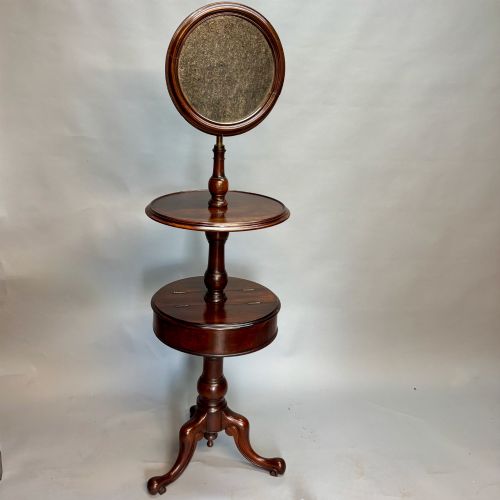
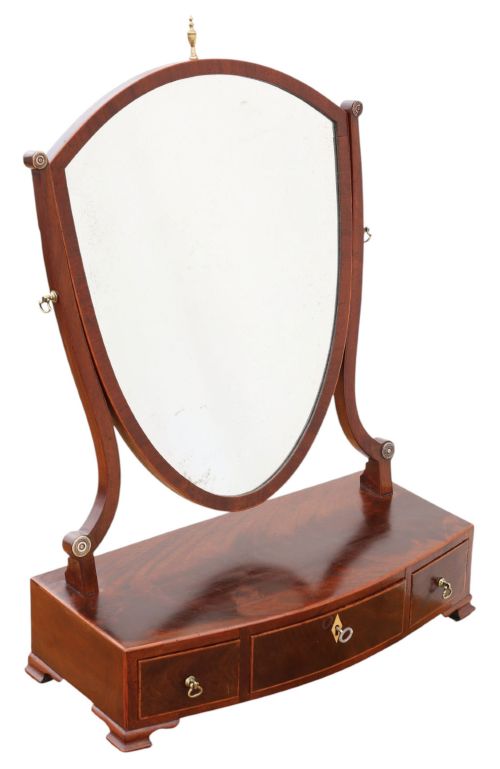
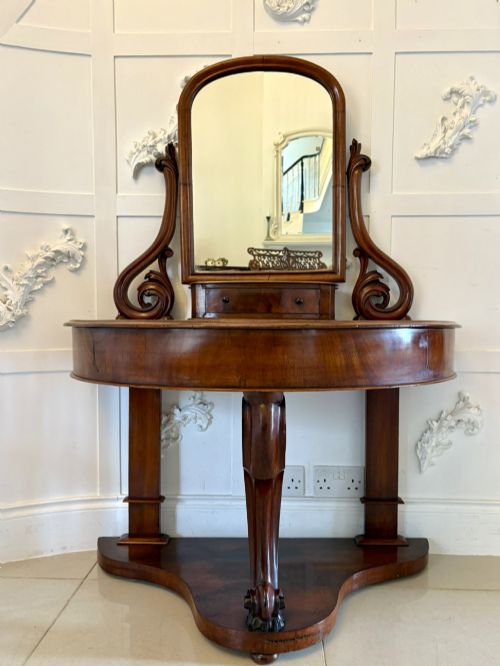
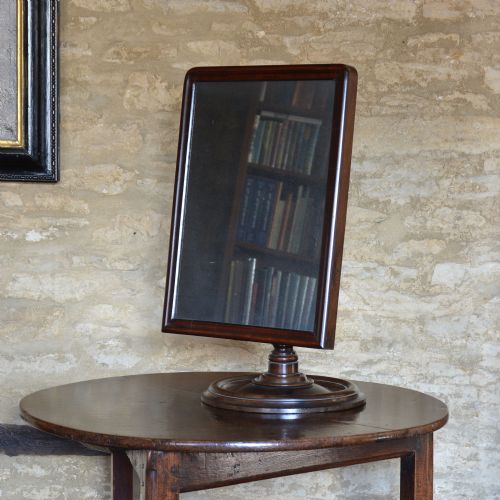
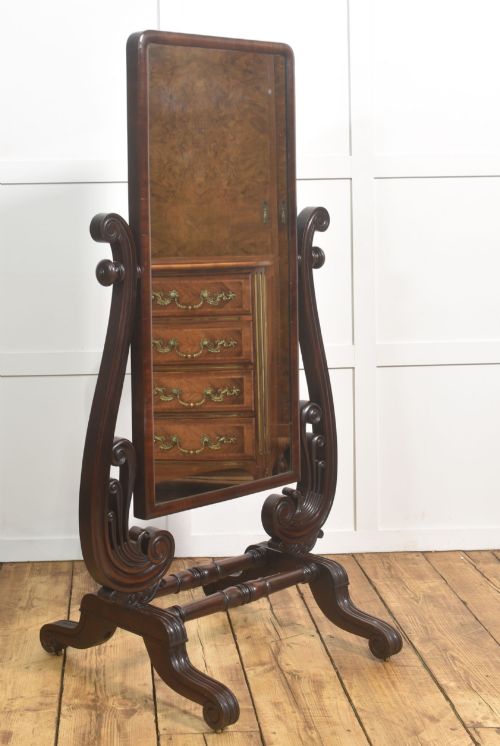
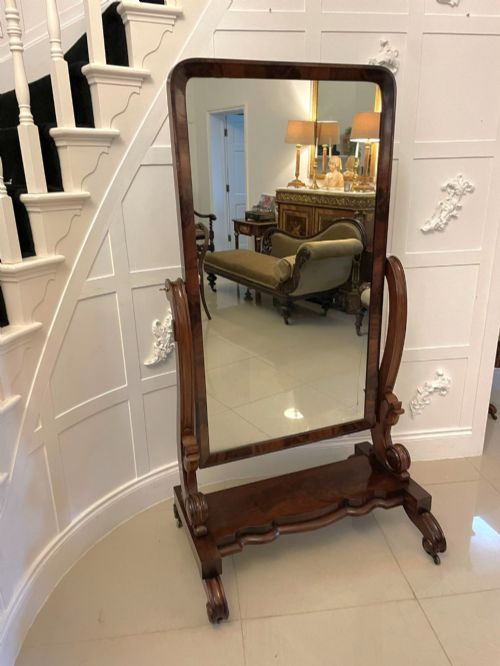
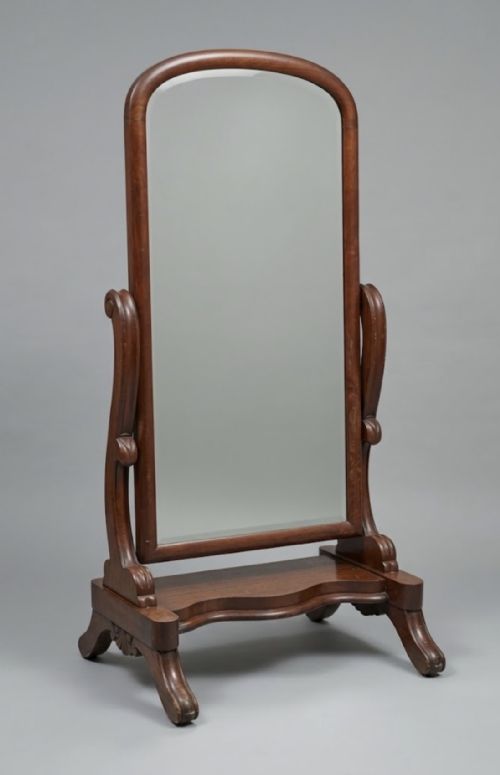
An antique dress mirror covers a diverse array of forms designed for personal grooming and dressing rooms over multiple centuries. The most common varieties met on this page include smaller table-top swing mirrors, chest-top toilet mirrors, and full-length floor-standing cheval mirrors.
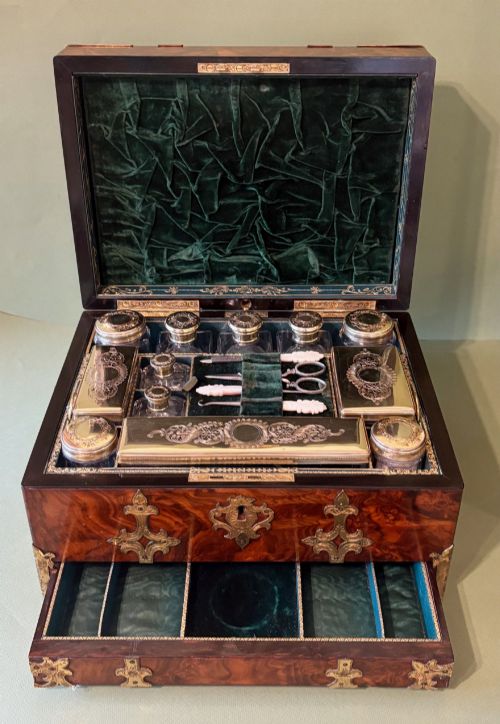
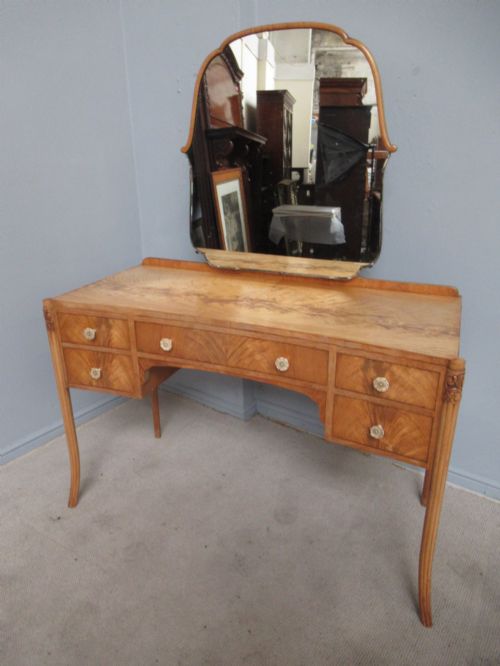
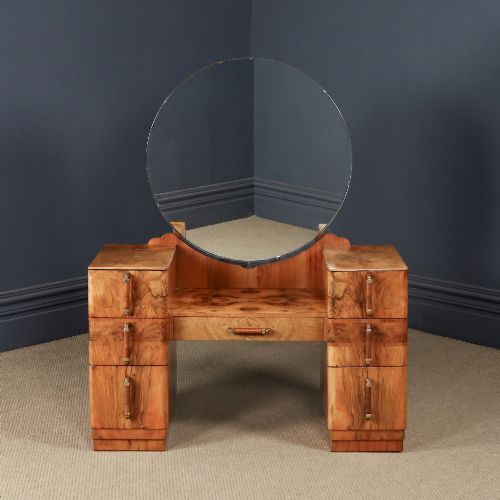
Pieces span from compact Georgian toilet boxes with pivoting plates to substantial Victorian and Edwardian cheval frames mounted on pivots or stands. Later examples move into Art Deco walnut pedestals and 1930s dressing tables complete with integrated or matching mirrors.
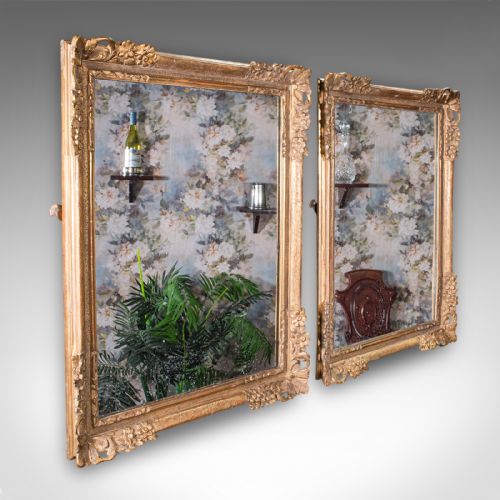
Originating largely from British workshops alongside continental European and Chinese export traditions, these objects reflect the changing domestic habits of elite and middle-class households. Buyers encounter everything from simple mahogany swing frames to elaborate giltwood and champleve bronze vanity pieces.
Materials and construction
Timbers form the structural backbone of these pieces, with native and imported hardwoods like mahogany, walnut, burr walnut, and oak dominating the record. Cabinetmakers utilised solid cuts and fine veneers, often pairing mahogany and walnut with secondary woods such as boxwood stringing or maple.
Glass production and silvering techniques dictate the age and visual character of the reflective plate, whilst brass fittings, handles, and adjustable pivot screws provide mechanical function. More decorative iterations incorporate giltwood, hand-painted lacquer, pewter, and sterling silver mounts alongside champleve enamel.
One Victorian traveller carried a compact mirror set across the empire, proving that early road warriors still insisted on proper grooming.
Distinguishing quality
The refinement of the cabinetmaking distinguishes standard utility furniture from superior examples, visible in the selection of heavily figured timbers like burr walnut or Cuban mahogany. Joinery details such as dovetailed drawer boxes and well-balanced pivot mechanisms indicate skilled workshop production.
Proportion and decorative restraint elevate certain pieces, where carved crests, fine boxwood inlay, or original mercury-silvered glass survive intact. Maker attribution, whether associated with established London firms or regional country house workshops, adds historical depth to the construction.
Heal And Sons·Maple And Co·Gillow·P And MA Nicholson·WMF
The Antique Dress Mirror Glossary
- Cheval mirror
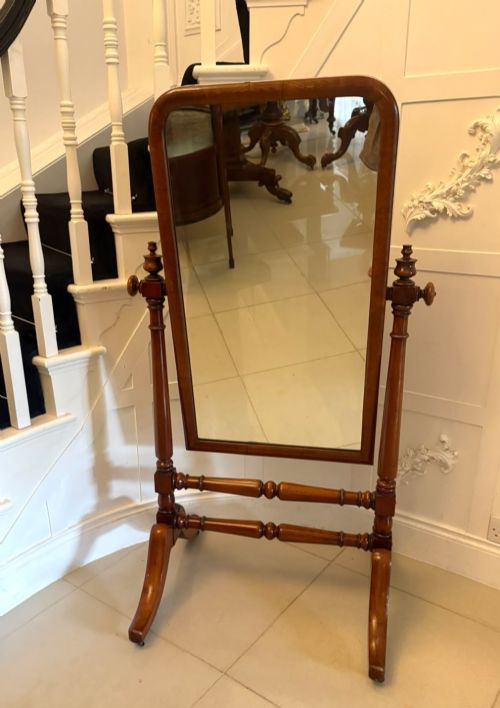
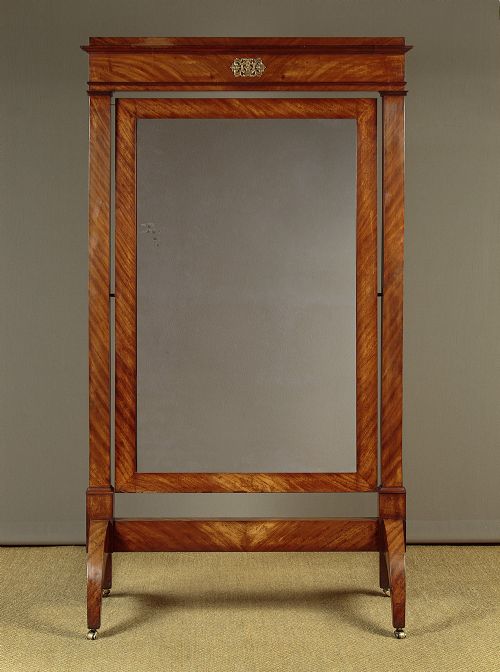
- A large floor-standing dressing mirror supported on a vertical frame with side pivots allowing the glass to tilt. This freestanding form became popular in the late eighteenth century for full-length viewing.
- Toilet mirror
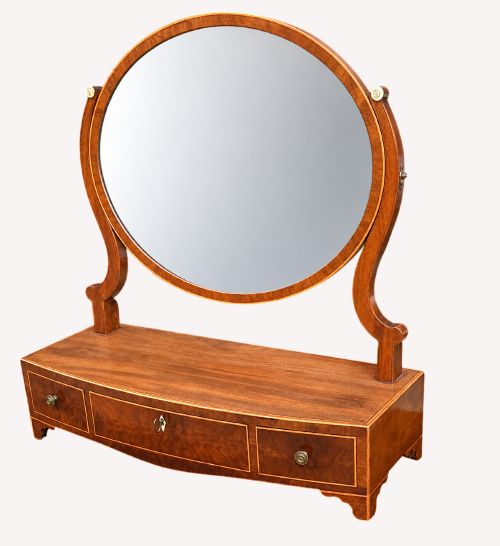
- A smaller mirror designed to sit upon a dressing table, chest, or washstand, often fitted with small storage drawers in the base. They were essential bedroom accessories throughout the Georgian and Victorian eras.
- Swing mirror
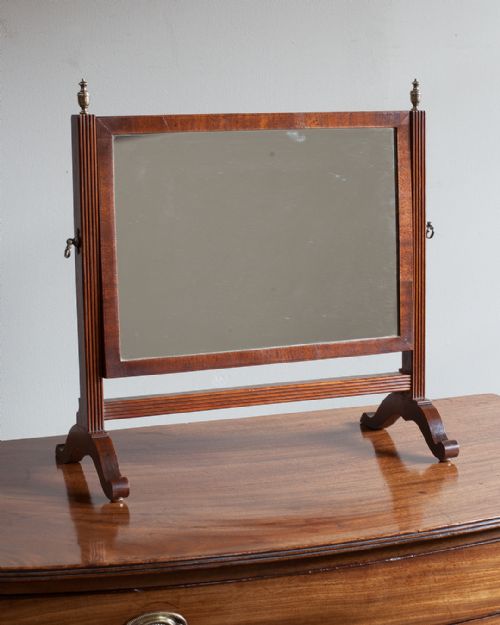
- A reflective plate suspended within upright side arms by pivot screws, enabling the user to adjust the angle of tilt. This configuration appears on both table-top and larger floor-standing models.
- Champleve
- An enamelling technique where troughs or cells are hollowed out of a metal surface and filled with vitreous enamel before firing. It appears on decorative late nineteenth-century dressing table accessories.
Antique Dress Mirror: Frequently Asked Questions
What is a cheval mirror?
A cheval mirror is a tall, floor-standing glass mounted on a vertical frame with side pivots. This design allows the entire assembly to tilt for full-length viewing.
First appearing in the late Georgian era, these pieces served as functional dressing furniture in bedrooms and dressing rooms.
How do I date a mahogany dressing mirror?
Dating relies on timber selection, structural joinery, and the method used to silver the glass plate. Early Georgian examples often feature slender proportions with boxwood stringing and hand-beveled mirror glass.
Victorian and Edwardian versions tend to be heavier, utilising denser mahogany or walnut stocks with more robust brass pivot hardware.
Where should I place a dressing mirror?
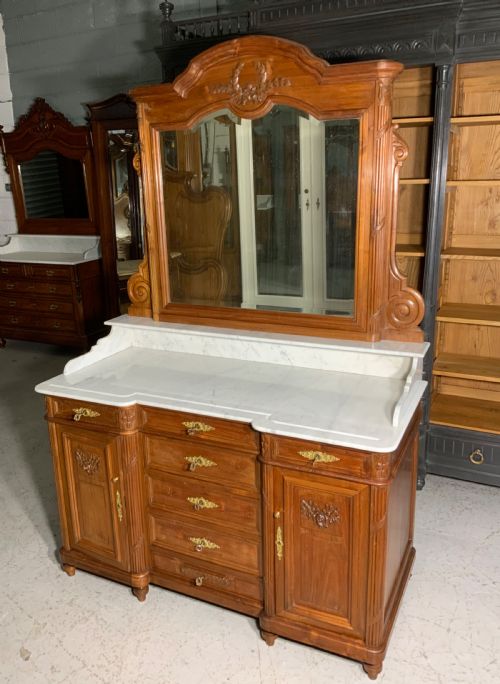
These mirrors suit bedrooms, dressing rooms, and hallways, depending on whether you choose a table-top swing version or a floor-standing cheval. Table models sit comfortably atop antique chests of drawers or dedicated dressing tables.
Freestanding floor mirrors require stable placement on flat flooring where the pivoting frame has adequate clearance to tilt safely.
What is the difference between a toilet mirror and a dressing mirror?
A toilet mirror specifically refers to a smaller table-top glass, traditionally used for close-up grooming and often incorporating small drawers for trinkets. A dressing mirror is a broader term that also encompasses full-length floor-standing cheval formats.
Both types share pivoting mechanisms, though table variants are scaled to sit upon furniture rather than the floor.