



Antique Drafting Desk
An antique drafting desk is a sturdy, adjustable workspace built for drawing and design, prized for its mechanical ingenuity and timber character.
Antique Drafting Desk
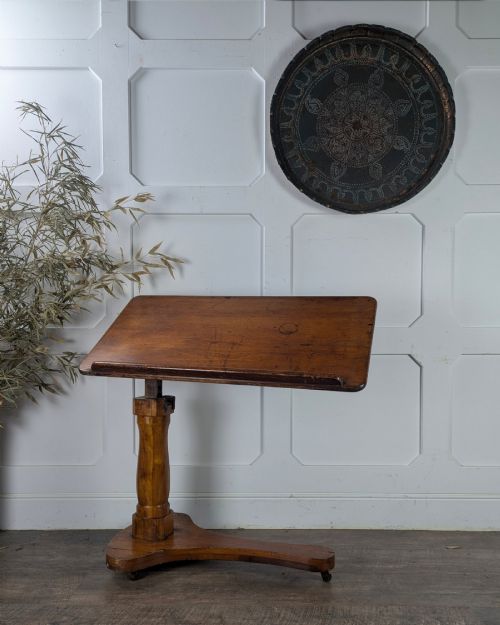
When you search for an antique drafting desk, you are looking at practical workspaces designed for draughtsmen, architects, and cartographers. These pieces span the eighteenth century, the Georgian and Regency periods, and the nineteenth and early twentieth centuries, appearing in forms such as reading tables, lecterns, and writing desks. Mahogany remains the most common timber encountered here, alongside oak, pine, walnut, and rosewood.
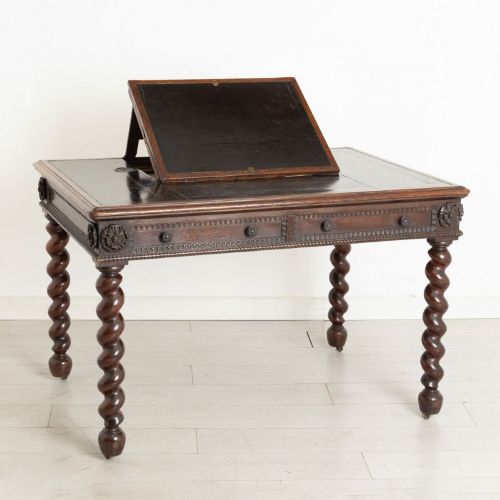
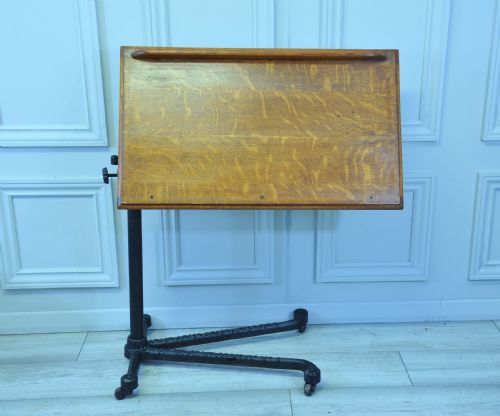
The versions most frequently met on this page include Georgian and Late Georgian mahogany pieces, alongside Victorian and Edwardian examples featuring adjustable mechanisms. Some specimens incorporate leather tops or display marquetry inlay, while others utilise cast iron and brass fittings. Styles range from plain utilitarian formats to Dutch Baroque and Neo-Jacobean expressions.
How they were made
Joiners and cabinetmakers built these tables using dense timbers like mahogany and oak for the primary framework, sometimes incorporating rosewood or walnut for decorative impact. Surfaces frequently integrated inset leather panels to provide a smooth, non-reflective plane for drawing and writing.
Makers integrated brass ratchets, hinges, and cast-iron adjustments to allow the top to tilt and rise according to the user's requirements. Marquetry inlay appeared on select continental pieces, while structural framing relied on traditional mortise and tenon joinery.
Listings span the eighteenth to the early twentieth century, utilising mahogany, oak, pine, walnut, and rosewood alongside brass and cast iron.
What varies in quality
The refinement of the mechanical adjustments sets one piece apart from another, particularly the smooth operation of brass ratchets and rising mechanisms. Tables featuring secondary timbers of high grade and precise dovetailing reflect superior workshop standards.
The complexity of the joinery and the preservation of original hardware dictate the standing of a desk. Finer examples display meticulous inlay work and uncompromised structural integrity in the timber framing.
Carters Of London·Edwards And Roberts·Gillows
The Antique Drafting Desk Glossary
- Marquetry
- The art of applying pieces of veneer to a structure to form decorative patterns. This technique appears on eighteenth-century continental pieces.
- Ratchet
- A mechanism consisting of a cog and tooth that allows a hinged desk top to lock at various angles. It provides the core adjustability for draughts work.
- Metamorphic
- Describing furniture designed to transform from one form into another, such as a table converting into a raised stand. These pieces rely on clever internal hinges.
- Lectern
- A slanted stand designed to hold books or papers at an elevated reading angle. Several early twentieth-century examples take this specific form.
Antique Drafting Desk: Frequently Asked Questions
What is an antique drafting desk?
An antique drafting desk is a specialised piece of furniture designed with a tilting or rising top to facilitate drawing, reading, and architectural work. These tables date from the eighteenth to the early twentieth century and were constructed by cabinetmakers for professional use.
They appear in various timbers including mahogany, oak, and rosewood, often fitted with brass hardware and adjustable ratchets. Their primary purpose was to hold large folios, maps, and heavy books at a comfortable working angle.
How do adjustable mechanisms work?
Adjustable mechanisms on these desks typically rely on a brass ratchet or a series of supporting arms mounted beneath the writing surface. Lifting the top engages these catches to hold the board at the desired angle.
Some later examples incorporate cast-iron screws or counterweights to manage the height and tilt of heavy timber surfaces. These components allowed draftsmen to switch easily between flat writing positions and elevated drawing angles.
Which woods were used?
Mahogany is the predominant timber found across these listings, favored by Georgian and Regency makers for its stability and rich grain. Oak also appears frequently, particularly in earlier utilitarian pieces and Neo-Jacobean variations.
Other materials include walnut, rosewood, pine, and exotic veneers used for marquetry work. Brass and cast iron appear extensively as structural mounts and mechanical components.
How to tell periods apart?
Georgian and Regency pieces tend to feature fine mahogany construction, subtle brass hardware, and classical proportions. Victorian and Edwardian examples often introduce heavier cast-iron elements and more complex mechanical adjustments.
Eighteenth-century items may display intricate marquetry or plain solid timber frames built strictly for utility. Examining the internal secondary woods and the style of the joinery helps clarify the era of manufacture.