

Antique Double Wall Lights
Antique double wall lights bring balanced illumination and formal proportion to a room, drawing the eye with their paired arms and metallic surfaces.
Antique Double Wall Lights
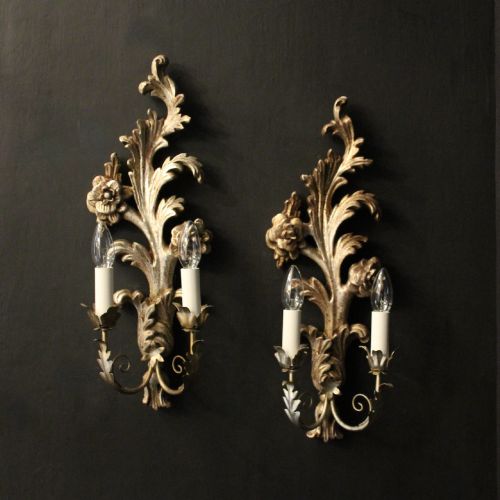
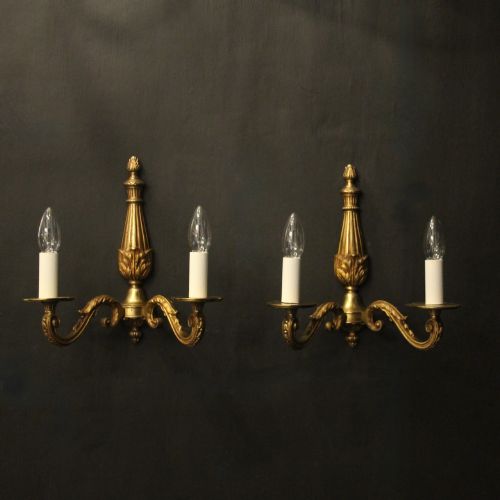
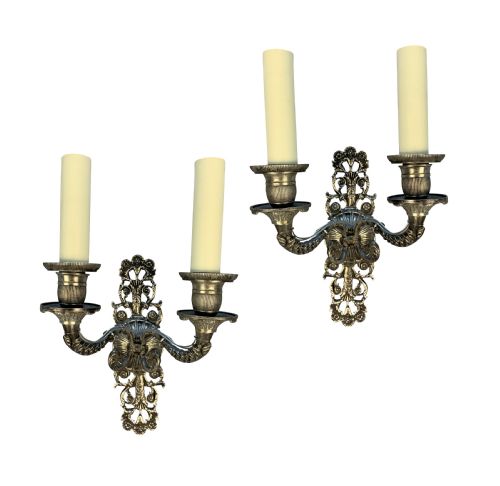
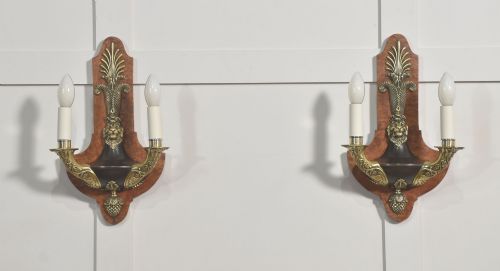
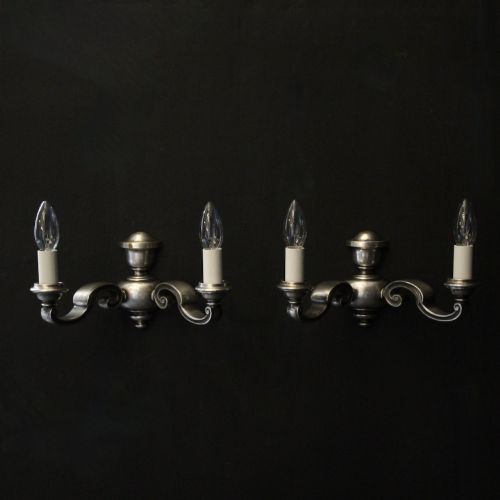
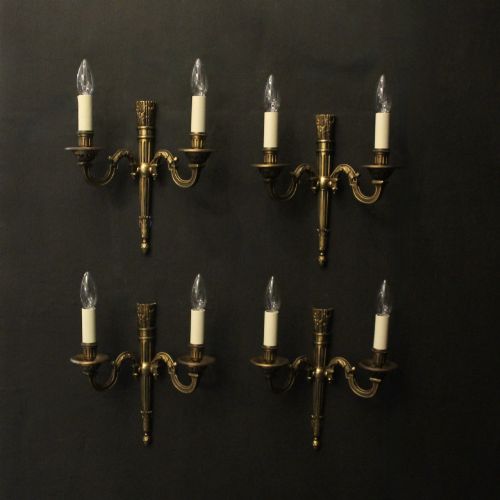
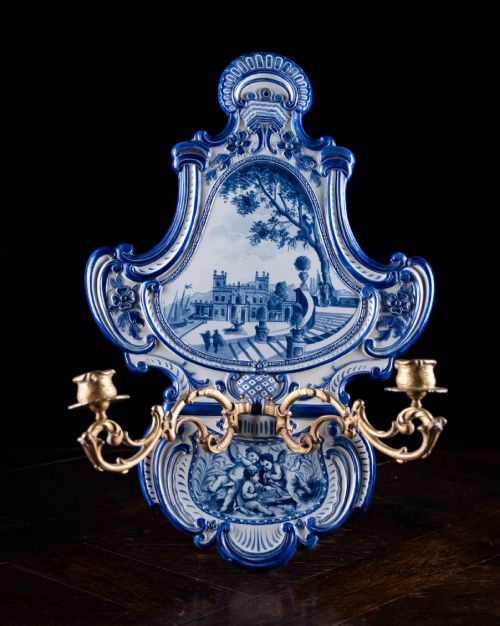
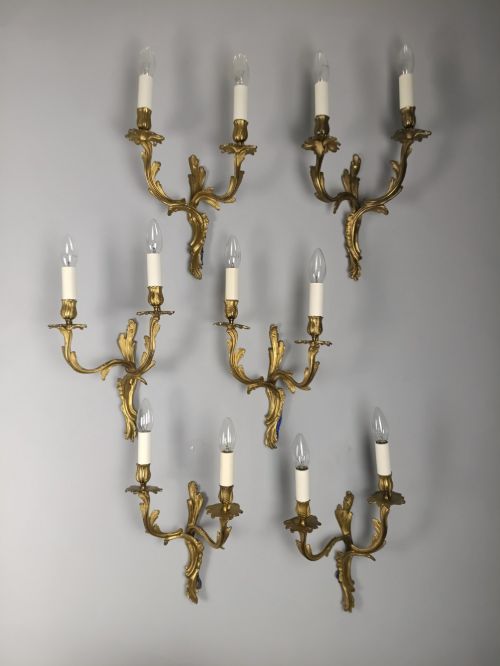
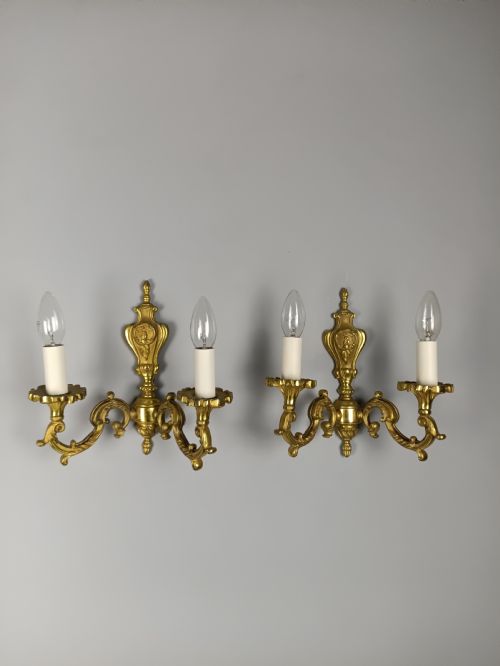
When you search for antique double wall lights, you encounter fixtures designed to hold two candles or bulbs upon twin arms projecting from a backplate. These pieces originate across the nineteenth and early twentieth centuries, spanning Victorian, Edwardian, and interwar periods.
The selections available here lean heavily toward French designs employing gilt bronze, ormolu, and gilded brass, alongside English examples in brass, bronze, and silver plate. Pairs and larger sets dominate the records, reflecting formal domestic schemes that required balanced lighting flanking mirrors or fireplaces.
How they were made
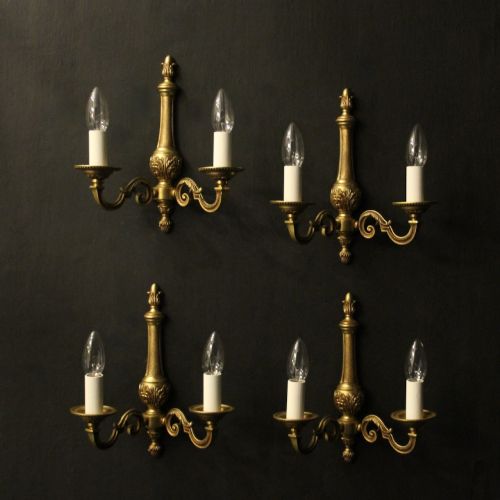
Maker workshops utilised foundational metals such as brass, bronze, and copper as the structural body for these sconces. Artisans then applied surface treatments including fire gilding, silver plating, and ormolu to achieve a lustrous finish.
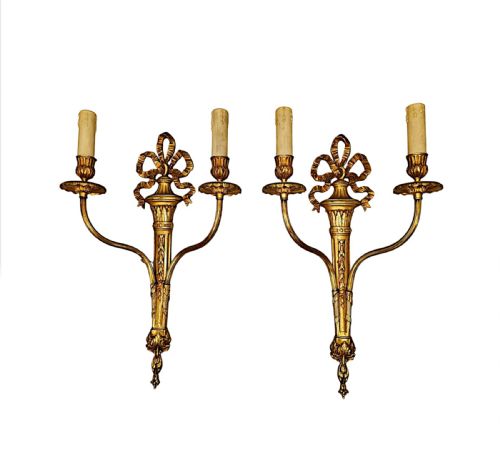
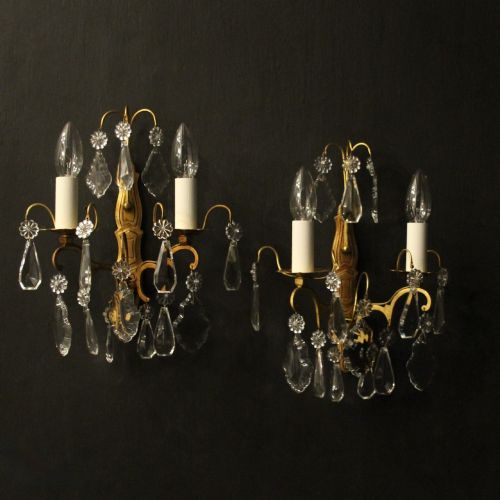
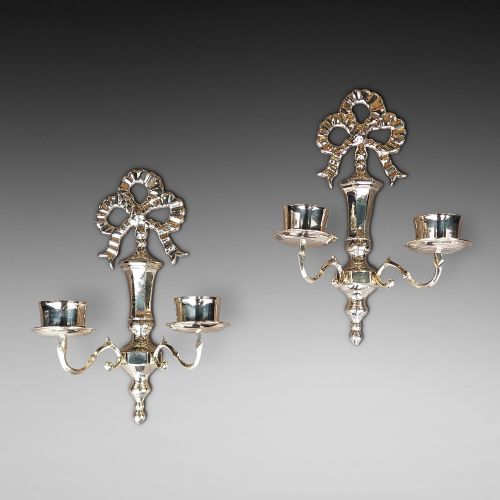
Stylistic ornamentation drew heavily from established vocabularies like French Rococo, Empire, and Adam Revival, often integrating cast ribbons, floral motifs, and crystal elements. Metal casting and chasing allowed workshops to produce intricate backplates and scrolled twin branches.
Antique Double Wall Lights Retail Price Guide 2026
Typical asking prices for double wall lights among the pieces listed under this phrase on Sellingantiques today, from the lower quarter to the upper quarter. They describe what is for sale here now, not the wider market.
French Rococo and Empire Revival styles account for a significant portion of the recorded twin-arm lighting designs.
What varies in quality
Quality rests in the crispness of the metal chasing and the depth of the original gilding or silver plating. Finer examples retain sharp relief in cast scrollwork and foliage, whereas lesser pieces show smoothed details from worn moulds.
The integrity of the construction, from the sturdiness of the backplate to the clean joinery of the twin arms, separates standard production pieces from masterwork foundry output.
Casier·F. & C. Osler·Villeroy & Boch
The Antique Double Wall Lights Glossary
- Ormolu
- A gilded bronze technique utilising finely ground gold mercury amalgam applied to a bronze base. This process creates a rich, matte yellow surface texture characteristic of high-status nineteenth-century lighting.
- Sconce
- A wall-mounted lighting fixture designed to project illumination into a space using candles or electric bulbs. These objects typically feature decorative backplates to reflect light.
- Girandole
- An ornamental wall light featuring a mirror plate incorporated into the backplate to amplify the candle illumination. These pieces often combine glass surfaces with gilded metal arms.
- Rococo
- An ornate design style characterised by asymmetrical scrolls, shell motifs, and naturalistic curves. This aesthetic heavily influences many nineteenth-century French bronze light fittings.
- Empire
- A neoclassical style originating in France during the early nineteenth century, drawing inspiration from ancient Roman and Greek motifs. The aesthetic favours symmetry, laurel wreaths, and formal geometry.
Antique Double Wall Lights: Frequently Asked Questions
How were antique double wall lights originally powered?
These fixtures were originally designed to hold two wax or tallow candles in sockets positioned at the ends of each arm.
Many surviving examples have since been safely converted to electricity for modern interior use.
How do I distinguish French styles from English ones?
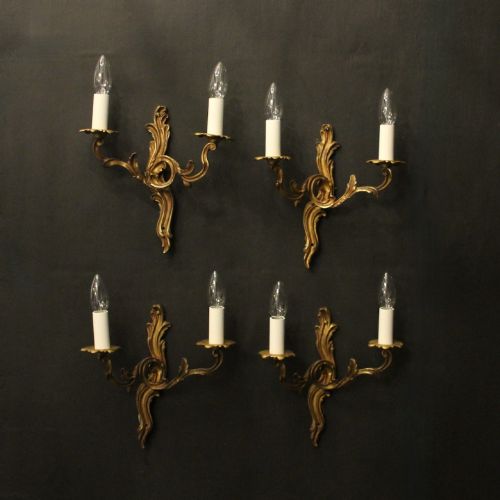
French pieces from this selection frequently exhibit Rococo or Empire motifs rendered in gilt bronze and ormolu, with elaborate cast scrollwork.
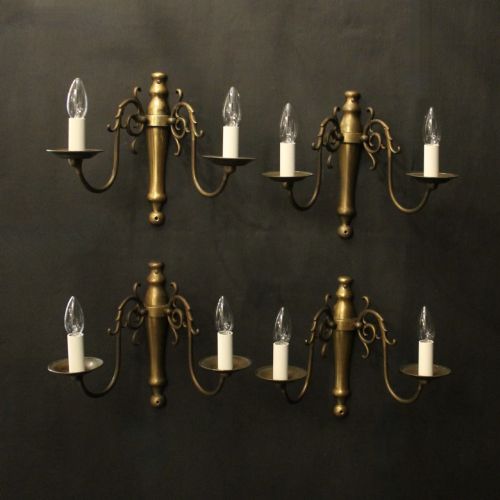
English equivalents tend toward cleaner classical revivals like the Adam style, utilising brass, bronze, and silver plate.
What materials are most common on these wall lights?
Brass and gilded bronze form the primary structural materials across the majority of the recorded pieces.
Silver plate, burr walnut, and crystal accents appear less frequently as secondary decorative elements.