
Antique Display Cabinet Mirror
An antique display cabinet mirror combines reflective glass and fitted shelving to brighten a room while storing treasured objects.
Antique Display Cabinet Mirror
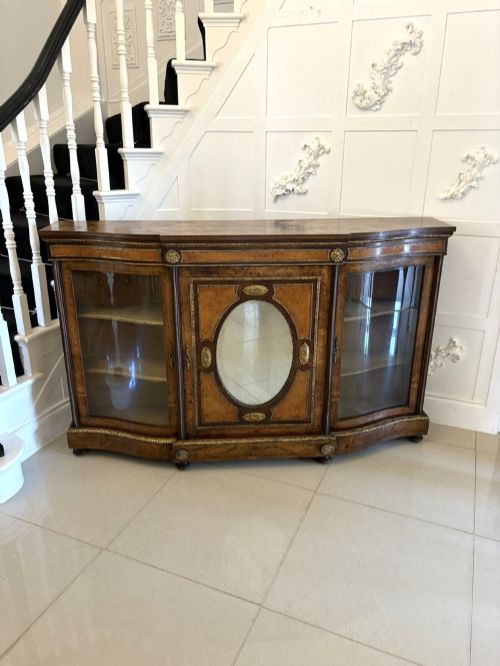
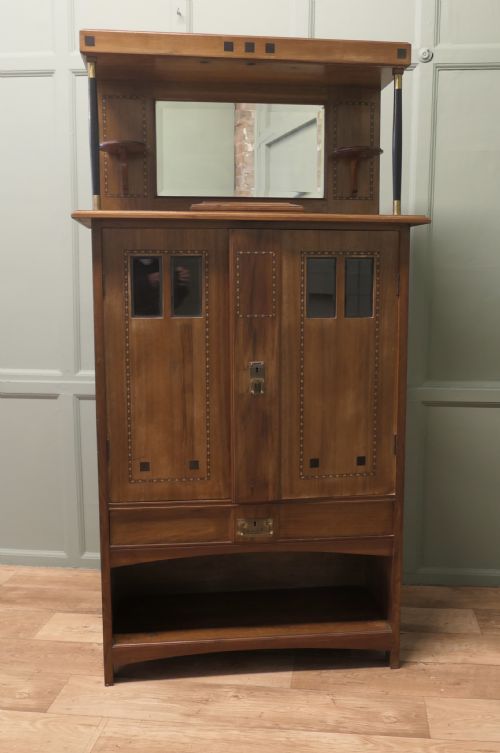
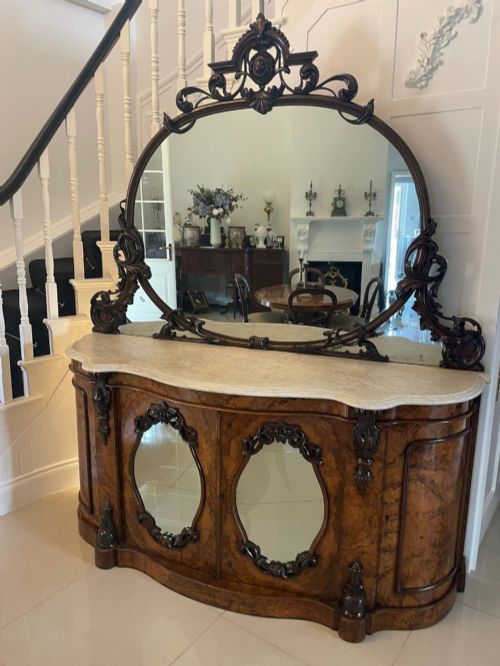
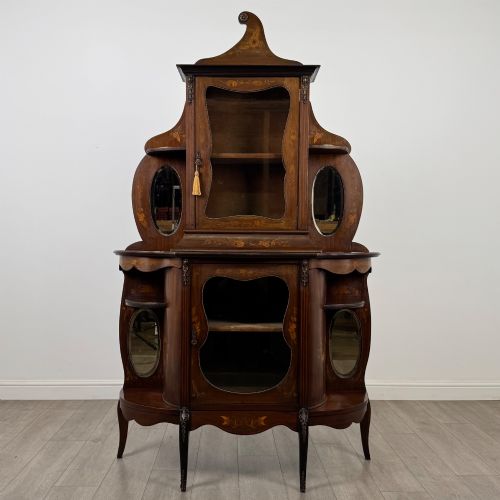
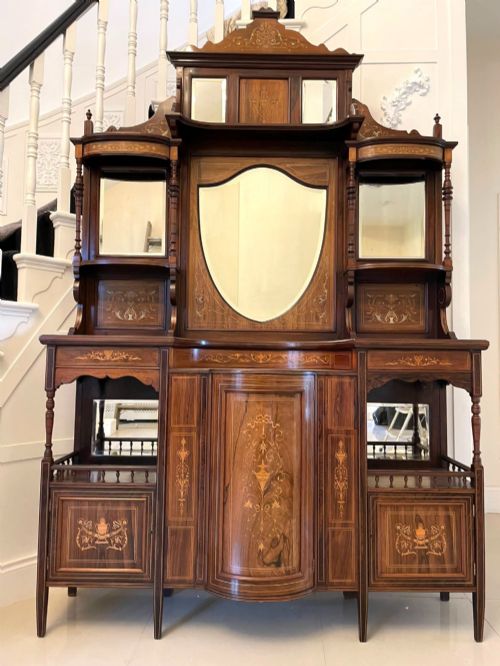
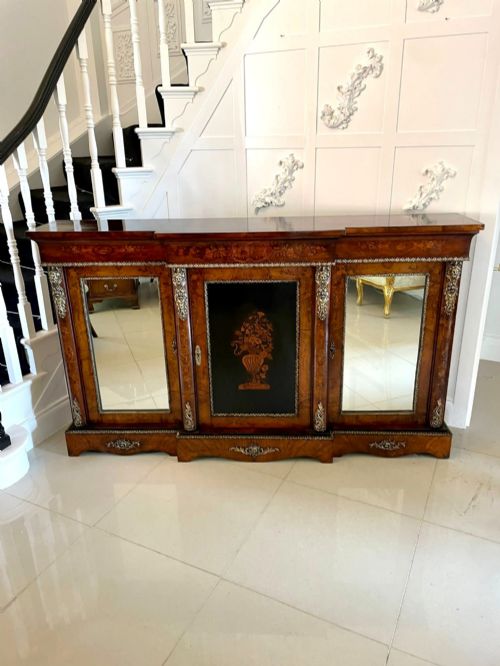
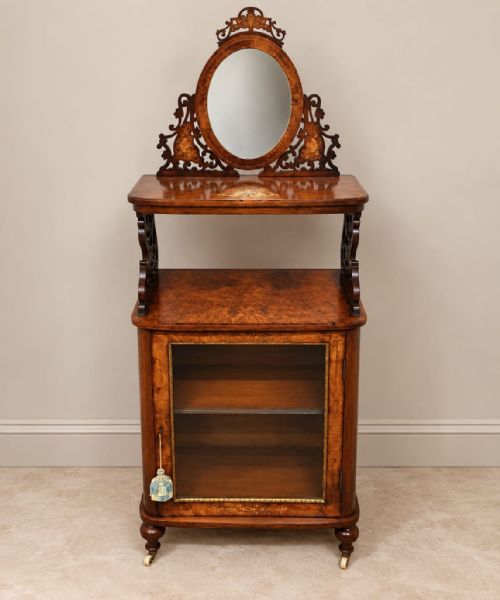
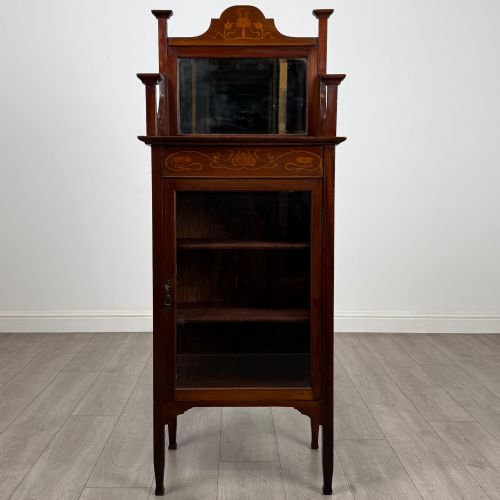
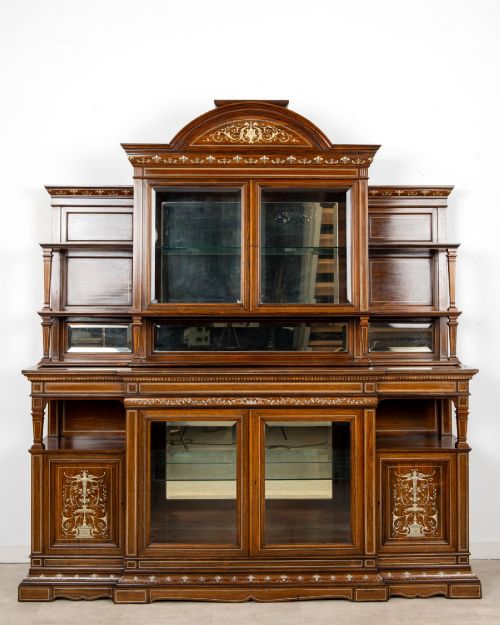
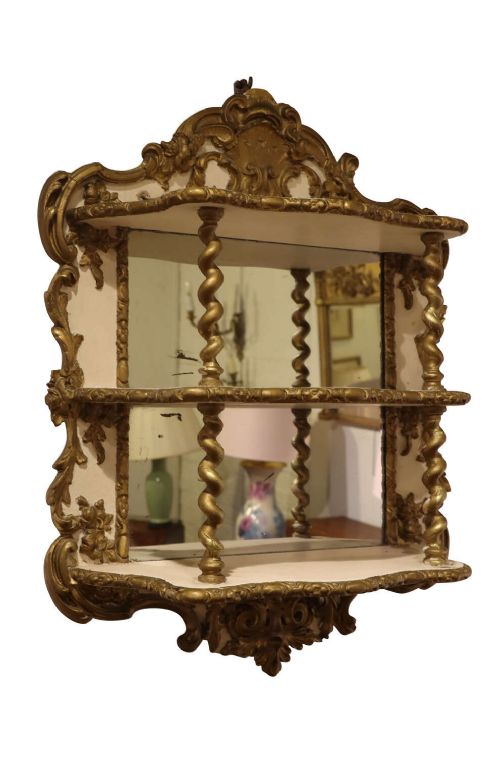
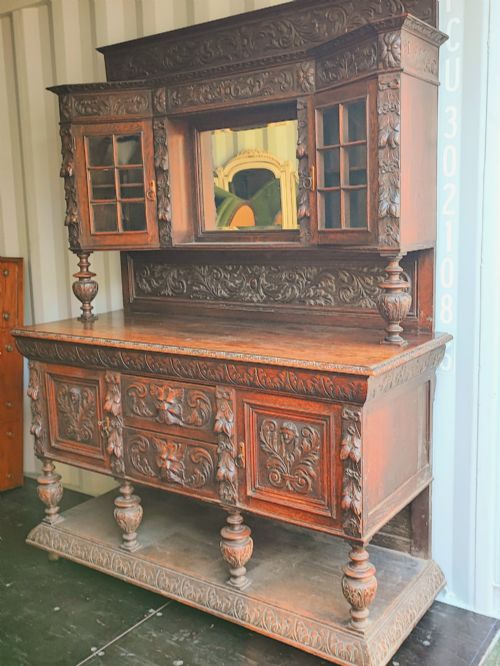
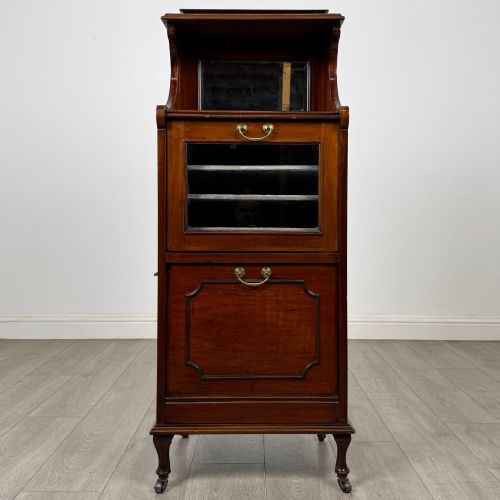
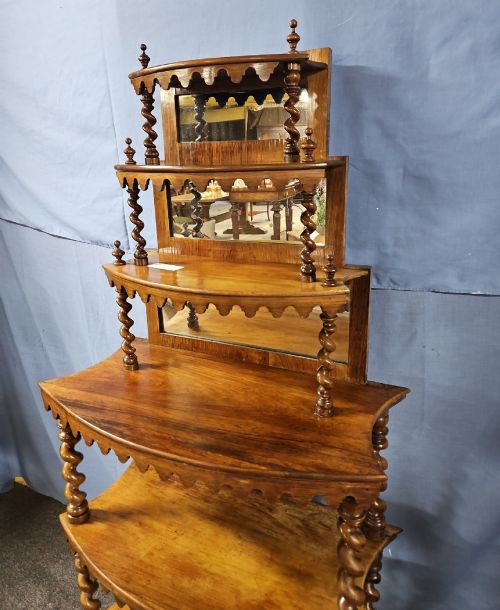
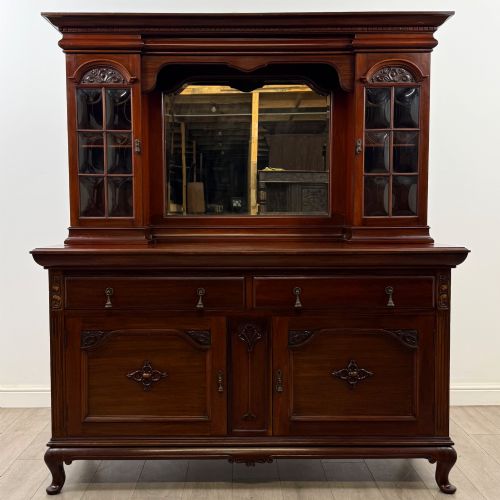
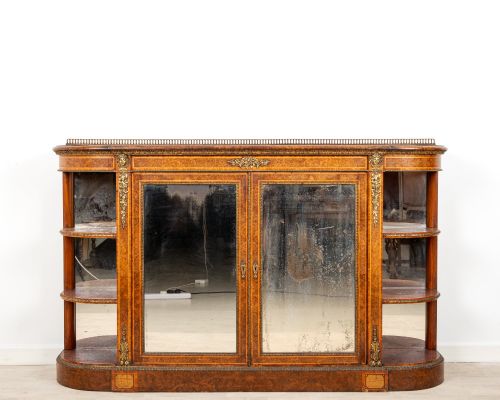
The antique display cabinet mirror groups together glazed storage furniture and mirrored backboards spanning the nineteenth and early twentieth centuries. These pieces emerge in styles ranging from Victorian burr walnut credenzas to Edwardian mahogany corner units and Arts and Crafts oak sideboards.
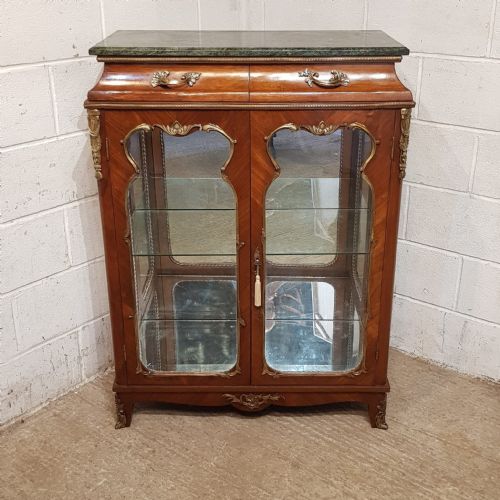
Buyers most frequently encounter Victorian mirror-back cabinets and Edwardian inlaid display cases featuring glazed doors alongside open mirrored sections. Walnut and mahogany predominate, often paired with marquetry inlay or ormolu mounts depending on the period.
Materials and Techniques
Cabinet makers utilised dense hardwoods such as mahogany, rosewood, and burr walnut, frequently applying fine veneer and marquetry decoration to primary surfaces. Mirror glass and clear window glass were set into doors and back panels to bounce light across the interior.
Metal elements including brass inlay, gilt bronze ormolu mounts, and cast handles secure structural components and embellish the exterior. Carved wooden details and inlaid satinwood stringing complete the decorative vocabulary seen across these items.
Secret drawers tucked beneath mirror hoods provided Victorian householders a private spot to stash calling cards.
Judging Quality
Superior examples display crisp hand-carved ornamentation, tight veneer matching on burr walnut surfaces, and heavy cast ormolu mounts that sit flush against the timber. The depth of the wood grain and precision of the marquetry inlay distinguish workshop pieces from standard production items.
Structural integrity reveals itself in the weight of the timber, the smoothness of drawer runners, and the clarity of the original mirror glass without excessive foxing. Maker stamps or attribution to known cabinet makers elevate the standing of a piece within any room.
Collinson & Lock·Gillows·François Linke·Edwards & Roberts·Garnett & Sons·Lamb of Manchester
The Antique Display Cabinet Mirror Glossary
- Credenza
- A low cabinet or sideboard, frequently fitted with mirrored doors and ormolu mounts during the Victorian period.
- Marquetry
- Decorative veneer work forming pictorial or geometric patterns using various tinted woods.
- Ormolu
- Gilt bronze mounts applied as decorative highlights on nineteenth-century furniture cabinets.
- Vitrine
- A glass-fronted display cabinet designed specifically for showcasing porcelain and small collectibles.
- Chiffonier
- A small sideboard or low cabinet typically featuring a raised shelf or mirror back.
Antique Display Cabinet Mirror: Frequently Asked Questions
Where should I place a mirror back cabinet?
These cabinets suit dining rooms, living spaces, or hallways where they can reflect natural light from windows.
Position them away from direct sunlight to protect antique wood finishes and delicate veneer work.
How do I clean antique mirror glass?
Use a soft microfiber cloth and a mild vinegar solution applied directly to the cloth rather than the glass.
Avoid letting moisture seep behind the mirror plate where it can damage the original silvering.
Can I adjust the shelves inside?
Many Edwardian and Victorian display cabinets feature fixed wooden shelving or traditional plate grooves.
Certain shop display variations and later pieces include adjustable glass shelves for accommodating taller items.
How do I distinguish Victorian from Edwardian styles?
Victorian pieces tend to feature darker, heavier timbers like burr walnut and rosewood with ornate carvings and ormolu mounts.
Edwardian cabinets often display lighter mahogany and satinwood finishes with simpler inlaid lines and airier proportions.