


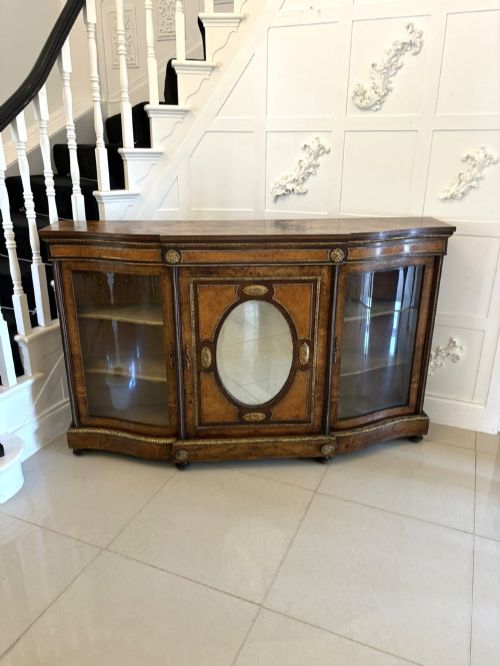
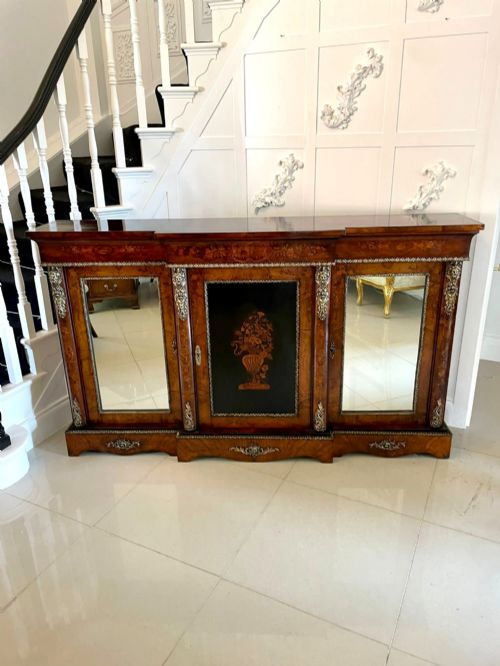
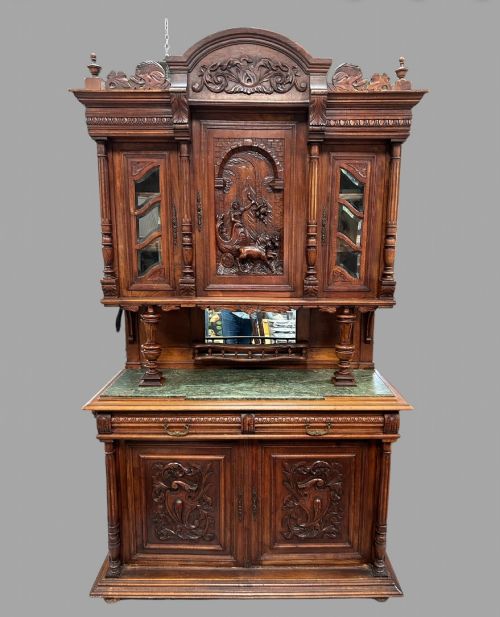
Antique Display Buffet
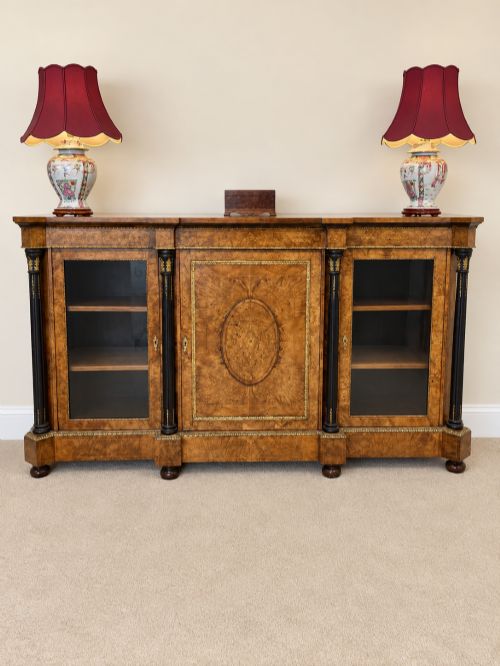
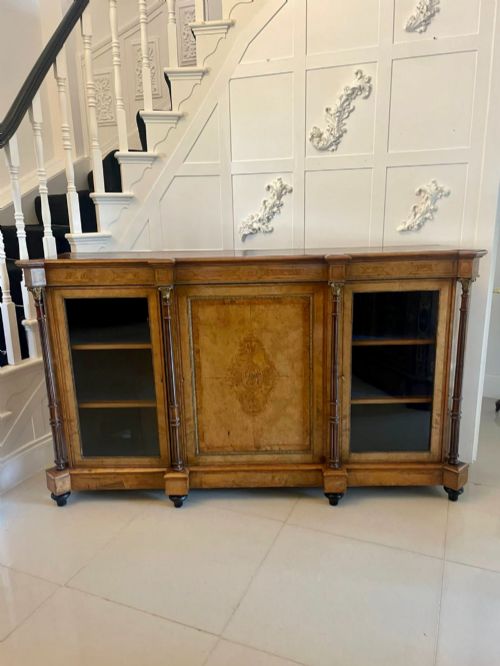
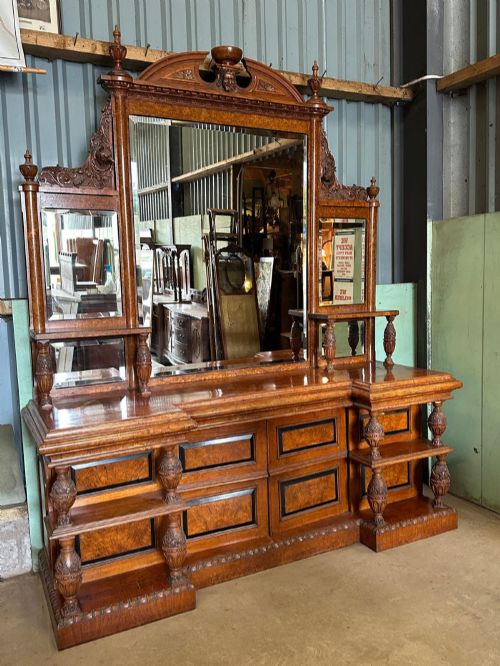
An antique display buffet brings heavy Victorian timber, glazed doors and mirrored backs into a dining room or hall to hold silver and show glass.
Antique Display Buffet
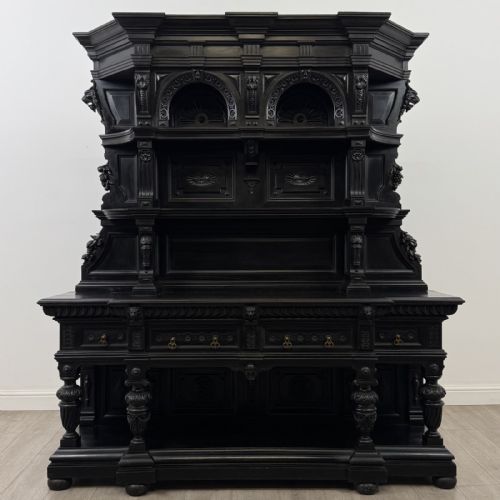
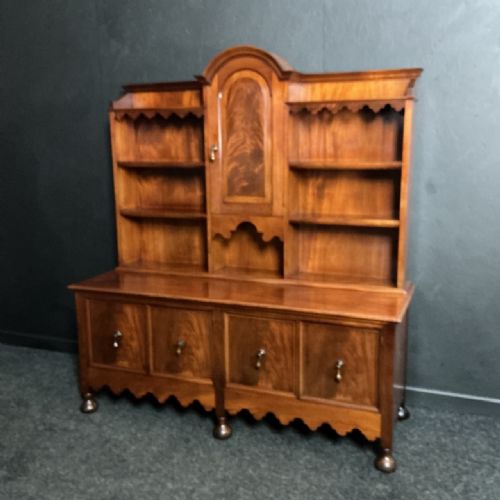
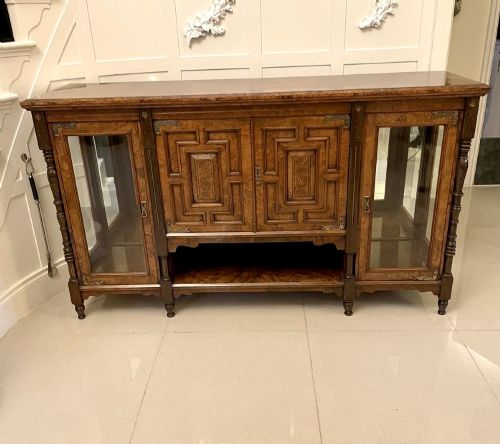
When searching for an antique display buffet, collectors encounter a heavy mix of Victorian sideboards, credenzas, glazed dressers and multi-tiered serving pieces in rooms that demand practical storage alongside surface display.
The pieces appearing on this page span the eighteenth, nineteenth and early twentieth centuries, drawing heavily on Victorian and Edwardian periods with French Revival and Arts and Crafts touches.
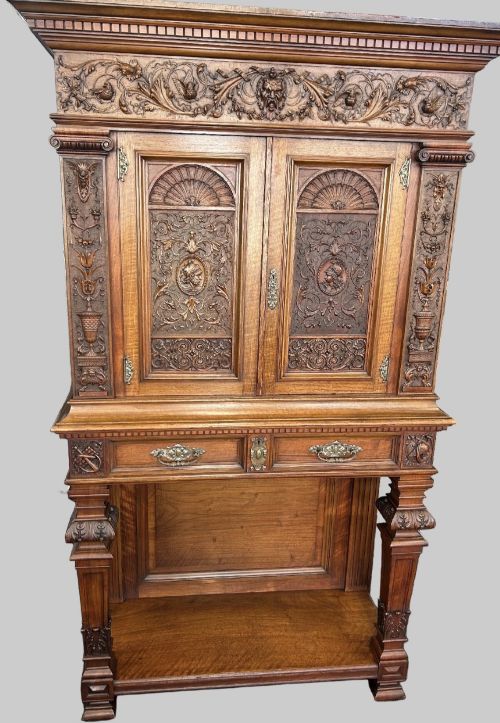
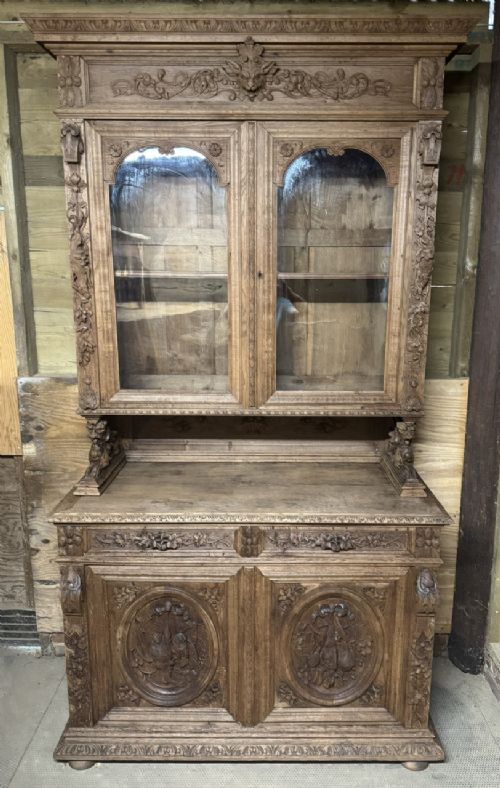
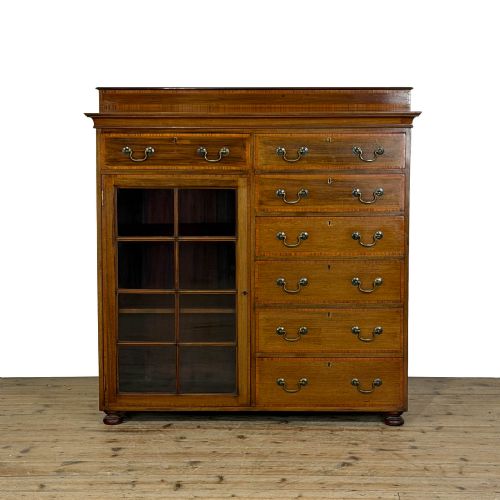
Most examples function as side cabinets, credenzas or kitchen dressers, merging enclosed cupboard space with upper shelving or glass fronts designed to show ceramics and glassware.
Materials and Construction
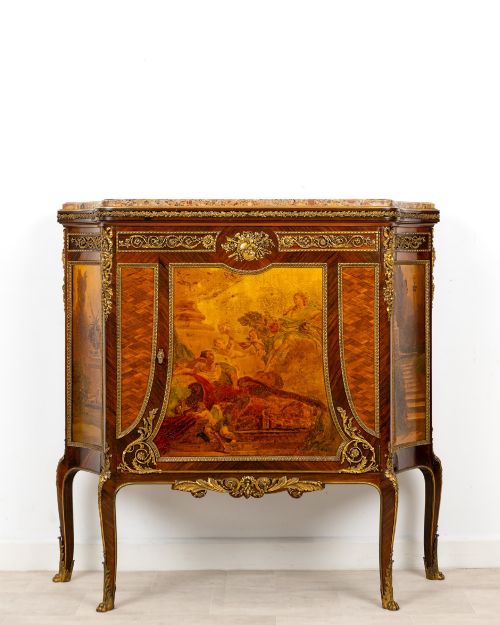
Cabinetmakers built these heavy frames using solid oak, mahogany and walnut, frequently applying burr walnut, kingwood or amboyna veneers to create patterned surfaces on the main body.
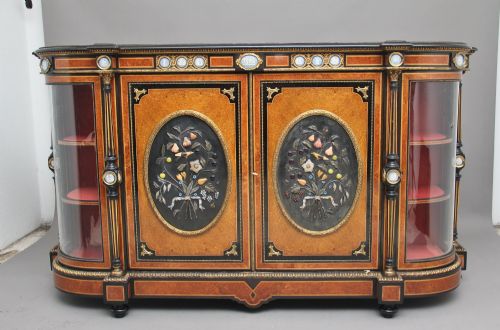
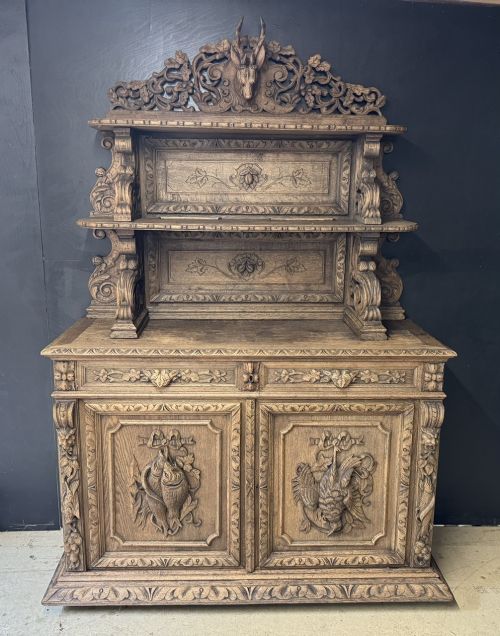
Decorative details rely on cast brass or ormolu mounts, carved lion masks, green man carvings and marquetry inlays alongside inset marble tops on specific credenza forms.
Glazing secures the front panels of display sections, while mirror backs reflect light through upper shelving units and tiered serving trolleys.
Antique Display Buffet Retail Price Guide 2026
Typical asking prices for display buffet among the pieces listed under this phrase on Sellingantiques today, from the lower quarter to the upper quarter. They describe what is for sale here now, not the wider market.
Listings feature eighteenth-century oak pieces alongside nineteenth-century pollard oak, mahogany, and burr walnut furniture.
Standards of Execution
The distinction between ordinary utility furniture and high workshop production rests on the depth of timber selection, such as the richness of pollard oak or figured burr walnut veneers.
Carved ornamentation reveals the hand of the maker, moving from stiff machine cuts to deep, undercut foliage, figural panels and crisp brass mounts.
Structural integrity depends on the retention of original mirrored glass, heavy marble slabs and functioning door locks rather than replacement timber sections.
Gillows·François Linke
The Antique Display Buffet Glossary
- Credenza
- A low cabinet, typically enclosed by doors, originating in Italy and widely adopted in Victorian drawing rooms for display and storage.
- Marquetry
- The art of applying pieces of veneer to a structure to form decorative patterns, frequently seen in floral motifs on walnut surfaces.
- Ormolu
- Gilded bronze mounts applied to cabinet doors and cornices to accentuate the stylistic lines of French Revival furniture.
- Etagere
- An open piece of furniture consisting of a number of tiers or shelves for displaying small objects or serving food.
- Dresser
- A kitchen or dining room piece combining lower cupboards or drawers with an upper rack of open shelves.
Antique Display Buffet: Frequently Asked Questions
What is an antique display buffet used for?
These large storage items serve to house dining silver, linen and ceramics while offering flat top surfaces and upper glass shelves for display.
They sit in dining rooms, hallways and large kitchens to anchor the wall space and organise household inventory.
How do I date an antique sideboard?
Dating relies on identifying timber choices, such as the shift from eighteenth-century oak to Victorian burr walnut and Edwardian mahogany.
Tool marks, drawer construction and decorative carving styles like green man masks or classical revival motifs help narrow the decade.
Where did credenzas originate?
The credenza began in Renaissance Italy as a side table for checking food for poison before it reached the main dining table.
By the nineteenth century, British and French makers adapted the form into a low glazed cabinet for the Victorian parlour.
How do I care for burr walnut veneer?
Burr walnut requires stable indoor humidity away from direct sunlight to prevent the thin decorative wood layers from lifting or drying out.
Regular dusting with a dry cloth and occasional application of traditional wax maintains the natural sheen of the grain.